Small patio storage ideas for garden tools and soil should solve one everyday problem: keeping the things you use close enough to be helpful without turning a compact outdoor space into a cluttered corner. A beginner container garden usually needs only a few hand tools, a watering can, extra potting mix, plant food, gloves, labels, and spare pots, but those items can quickly take over a balcony or patio if they do not have clear homes.
The goal is not to buy a large storage shed. For many renters and small-space gardeners, the better answer is a few weather-aware zones: one dry place for soil, one easy-reach spot for daily tools, and one contained area for messy extras. When each item has a job and a location, watering, repotting, sweeping, and seasonal swaps feel less frustrating.
Why Small Patio Storage Ideas for Garden Tools and Soil Matter
A tidy patio is easier to use because you can water, prune, and repot without hunting for supplies. It is also easier to notice problems. A leaking soil bag, rusty trowel, or pile of empty nursery pots is much simpler to fix when it is not hidden under a chair or behind a planter.
Storage matters for the plants, too. University of Maryland Extension advises storing used growing media in a trash can or heavy-duty trash bags when saving it for next season, and it cautions against saving media if root diseases were a problem. That is a practical reminder that soil storage is not only about neatness; it also affects whether the material stays useful for container gardening: growing media for containers.
Start With Renter-Friendly Outdoor Upgrades
Renter-friendly outdoor upgrades should be removable, modest in weight, and easy to reset when you move. That means freestanding storage usually makes more sense than wall-mounted hooks, drilled shelving, or attached cabinets unless your lease or building rules clearly allow them.
If your patio layout still feels unsettled, start with PatioSprout's guide to planning a container garden before buying plants. Storage should support that plan. It should not block sun, pinch the walkway, hide drainage problems, or make it harder to reach the plants you actually care for each week.
Sort by use, not by category
Instead of asking where all garden supplies should go, sort them by how often you use them. Daily items, such as a watering can, small pruners, and gloves, need a quick-reach spot. Occasional items, such as extra pots, potting mix, plant ties, and fertilizer, can sit farther back or lower down.
Keep messy work separate
Repotting creates spilled mix, loose leaves, tags, and damp tools. If you can, give that task one tray, bin, or mat. A contained work zone keeps the patio easier to sweep and prevents soil from spreading into seating areas.
What to Check Before Choosing Patio Storage
Before buying a bench, deck box, shelf, cart, or storage bin, check the real conditions of the patio. Small spaces often have awkward corners, exposed wind, shared walls, and surfaces that stain if wet soil sits too long.
- Weather exposure: decide whether the storage spot gets direct rain, strong sun, reflected heat, or wind-driven moisture.
- Floor protection: avoid trapping wet soil bags directly against wood, painted concrete, or balcony surfaces.
- Weight: soil is heavier when damp, so keep bags, bins, and ceramic pots low and easy to lift safely.
- Drainage path: make sure storage does not block water flow from pots, saucers, or patio drains.
- Walkway width: leave a clear path to doors, chairs, railings, and the plants you water most often.
- Building rules: check lease, HOA, or balcony guidance before adding tall shelves, heavy boxes, or anything attached to a wall or railing.
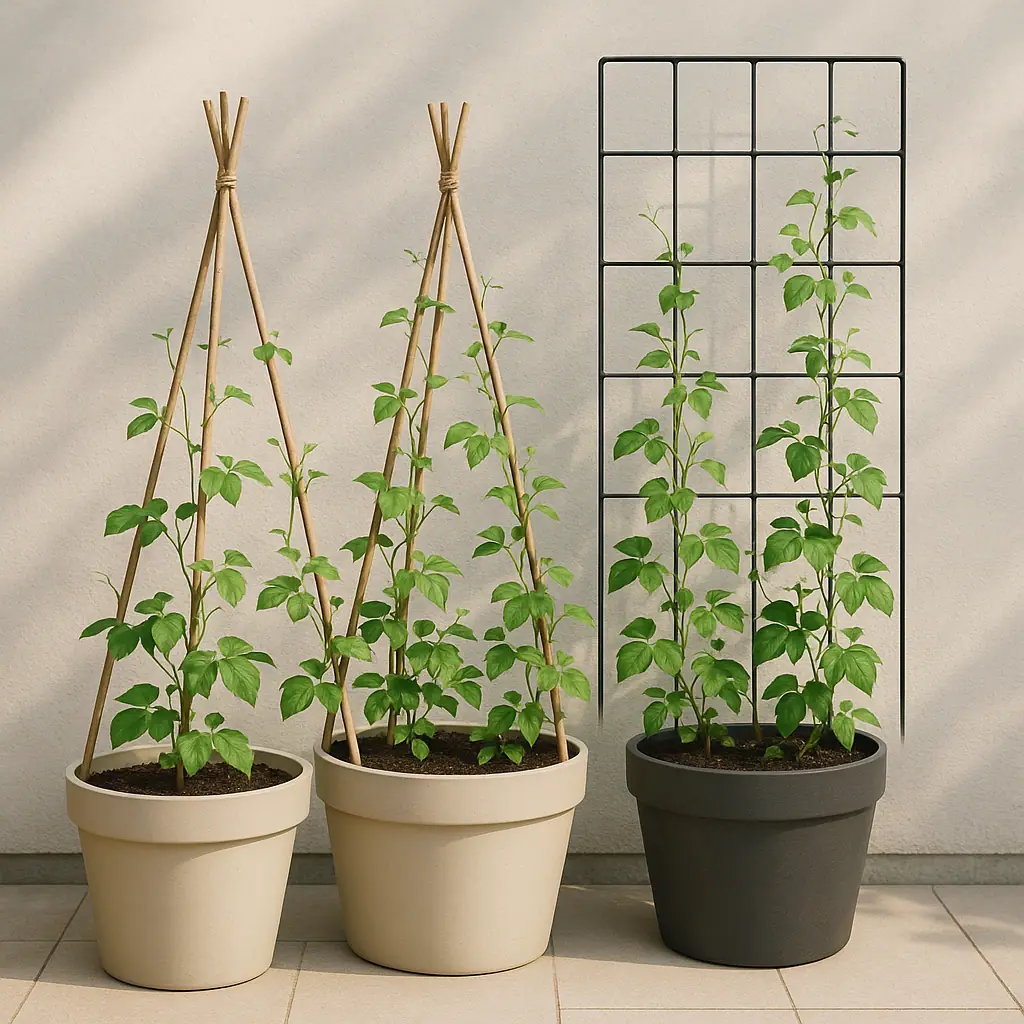
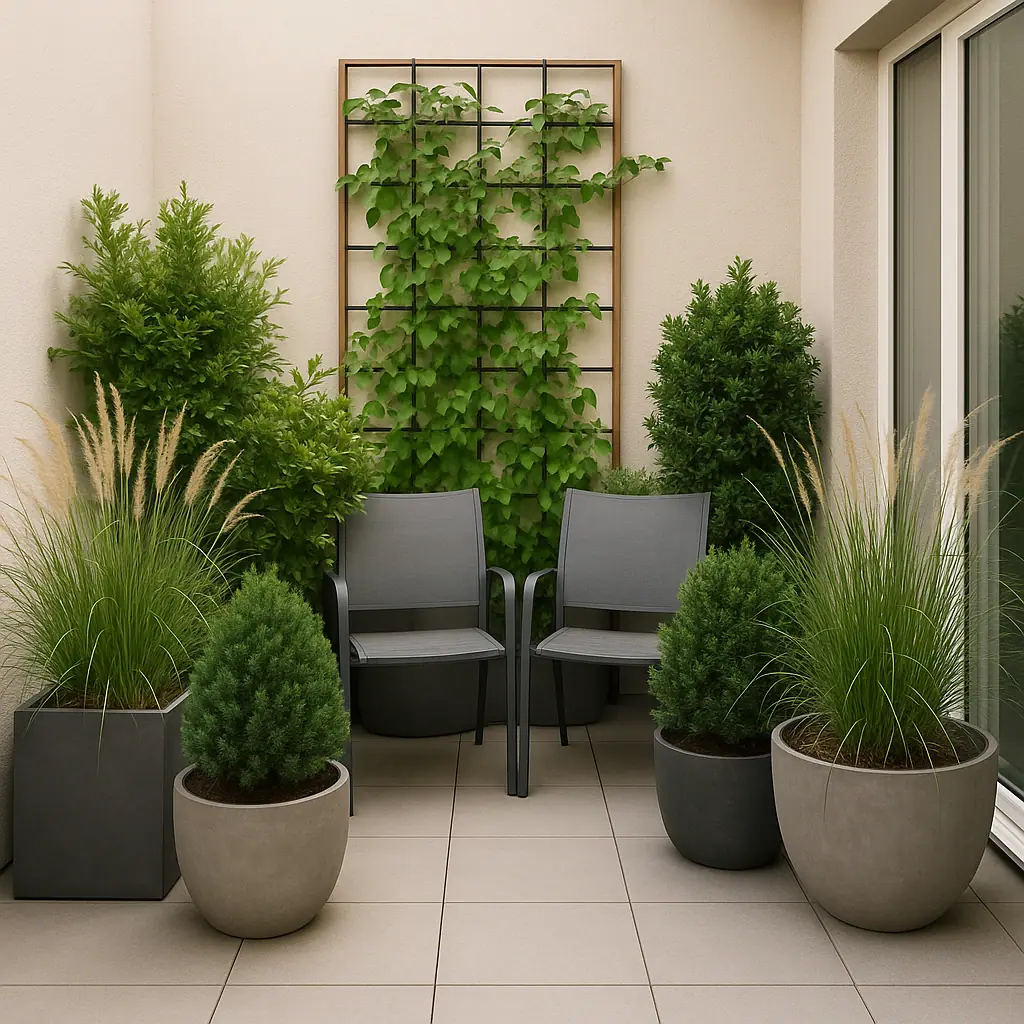
This is especially important if you also use privacy or trellis containers. A patio that already has vertical plant supports may need low storage instead of another tall piece. PatioSprout's guide to no-drill trellis ideas for patio containers can help you think through freestanding supports without adding permanent changes.
How to Organize Garden Tools and Soil Step by Step
Use a simple setup first. You can always upgrade later, but a small test prevents overbuying storage that looks good online and feels awkward in daily use.
- Empty the patio corner: remove loose bags, pots, tools, and old tags so you can see the actual available space.
- Group supplies by routine: make one pile for daily care, one for repotting, one for spare containers, and one for products you rarely use.
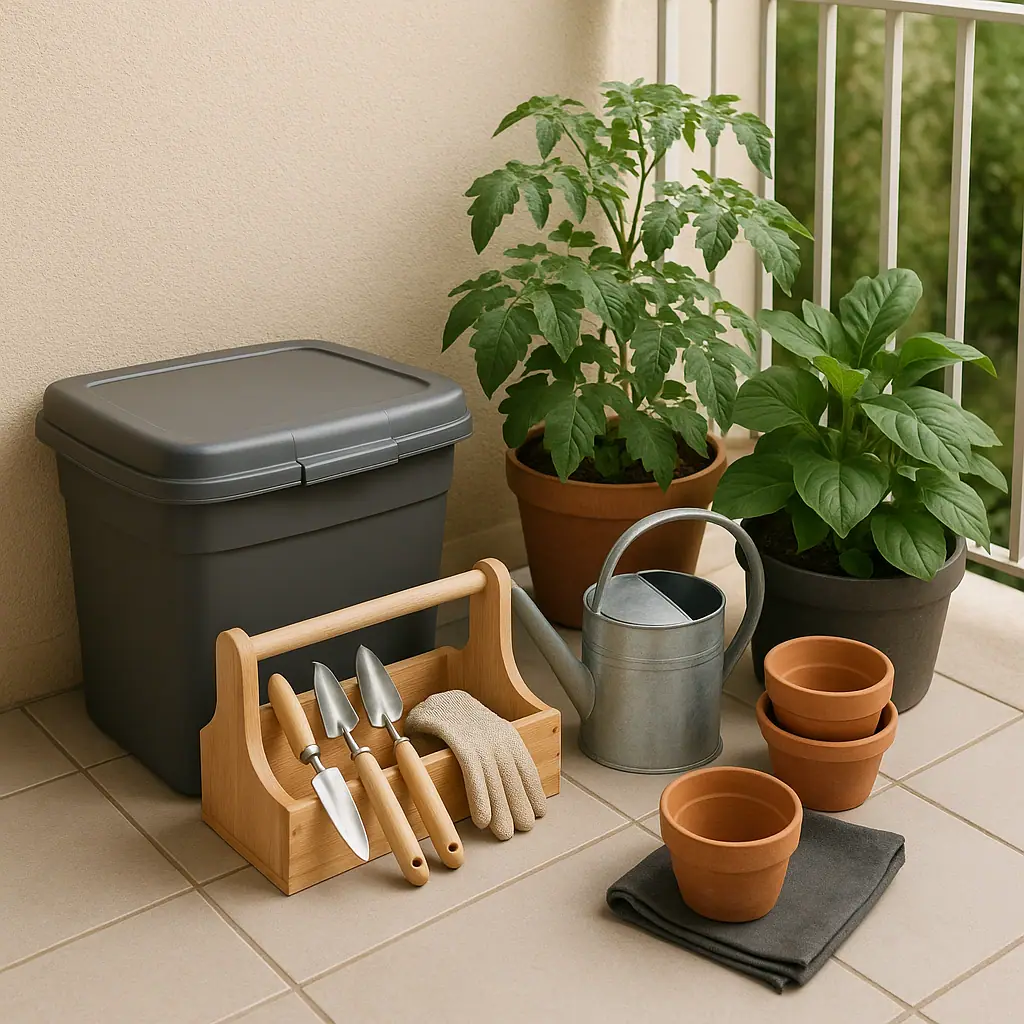
- Choose a dry soil container: use a lidded bin, heavy-duty bag, or small trash can that keeps moisture out and is easy to open.
- Give tools one visible home: use a small caddy, bucket, wall-free rack, or shelf basket so trowels and pruners do not disappear.
- Store heavy items low: keep soil, gravel, ceramic pots, and full watering cans near the floor rather than overhead.
- Contain repotting mess: add a tray, shallow tote, or foldable mat for mixing, filling, and cleaning up loose potting mix.
- Leave room to water: test the path with your watering can in hand before deciding the layout is finished.
- Review after one week: move anything you did not reach easily or anything that stayed damp, dusty, or in the way.
Use a three-zone layout
A small patio storage plan is easier when it has three zones. The daily zone holds gloves, pruners, a trowel, and watering gear. The soil zone holds potting mix, amendments, and a scoop. The overflow zone holds spare pots, plant tags, stakes, clips, and seasonal supplies.
Label only what helps
You do not need a complicated labeling system. One small tag for potting mix, one for plant food, and one for spare pots may be enough. The point is to avoid guessing later, especially when bags or containers look similar.
Storage Options That Work in Small Outdoor Spaces
The best option depends on your patio shape and what you actually store. Choose storage that fits the routine, then check whether it can handle weather, weight, and cleaning.
- Lidded soil bin: helpful for opened potting mix, especially when rain or humidity reaches the patio.
- Small deck box: useful for gloves, hand tools, plant ties, labels, and lightweight seasonal supplies.
- Storage bench: practical when seating and storage both matter, but only if the lid opens easily in the space.
- Rolling cart: good for renters who need movable storage, though wheels should lock or sit securely on uneven surfaces.
- Tool caddy: ideal for hand tools because you can carry everything to the plant instead of making repeated trips.
- Stackable bins: useful for spare nursery pots, saucers, and clips, as long as the stack stays low and stable.
- Repotting tray: not storage by itself, but it keeps loose soil from spreading while you work.
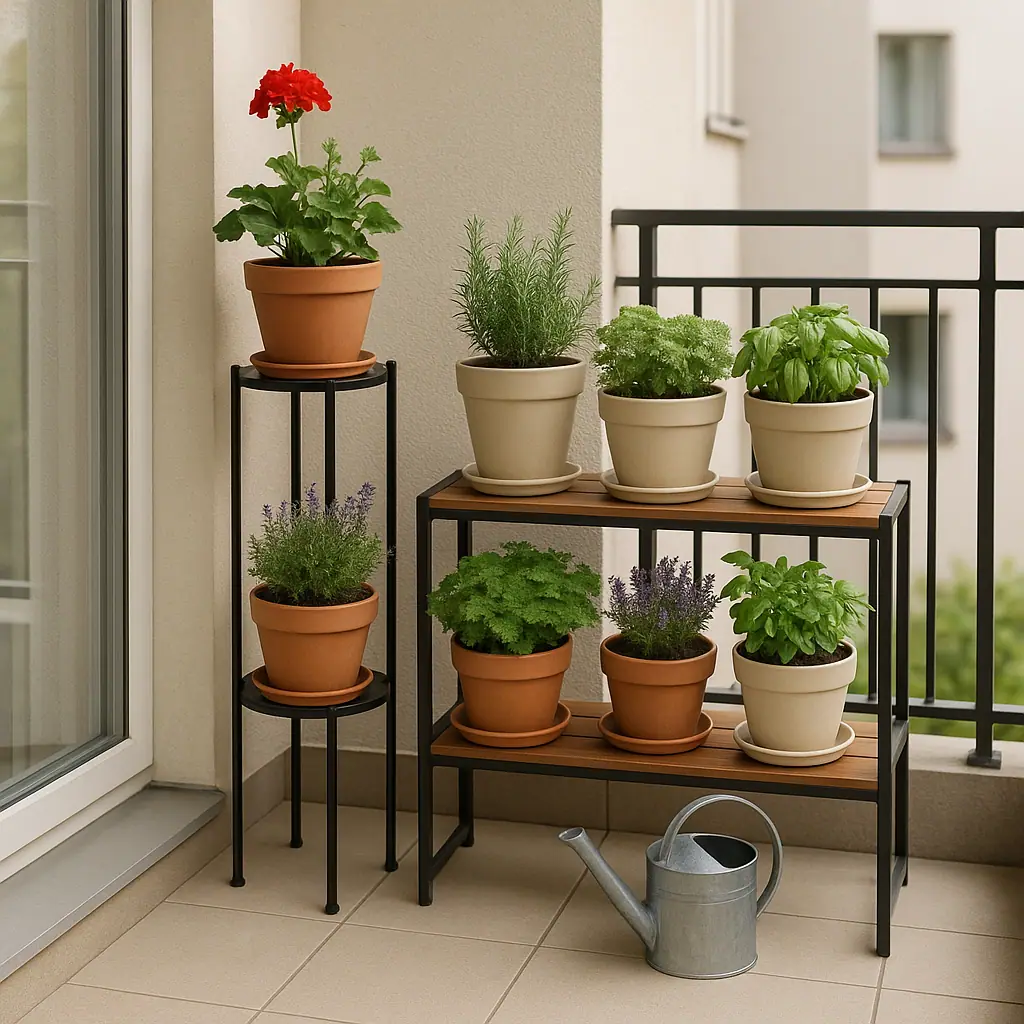
For edible container gardeners, storage also needs to protect the watering and care routine. If your patio includes herbs, the guide to one-pot herb garden ideas for small outdoor spaces shows why keeping care supplies close can make small plantings easier to maintain.
Pros and Cons of Compact Patio Storage
Makes care easier
When tools, gloves, soil, and labels are easy to reach, quick plant care is less likely to become a delayed chore.
Reduces patio clutter
A defined storage spot keeps loose bags, empty pots, and small tools from spreading into seating and walking areas.
Works well for renters
Freestanding bins, caddies, benches, and carts can usually move with you and do not require permanent changes.
Can hide moisture
Closed storage can trap damp bags or tools if you put items away wet or leave bins in a rainy spot.
Easy to overfill
Small boxes become hard to use when they hold every spare pot, old bag, broken label, and unused product.
Common Storage Mistakes to Avoid
The most common mistake is buying storage before sorting supplies. A large box can feel productive, but it may simply hide clutter and make useful items harder to reach.
- Saving every nursery pot: keep only the sizes you realistically reuse and recycle or discard cracked extras where allowed.
- Storing soil in a wet corner: damp mix can become clumpy, unpleasant to handle, and less useful for clean repotting.
- Putting sharp tools loose in a box: use a caddy, sleeve, or contained pocket so blades do not damage hands or supplies.
- Blocking plant access: storage should not make it harder to water, rotate, prune, or sweep around containers.
- Going too vertical: tall shelves can tip, catch wind, or feel visually heavy on a narrow balcony.
- Keeping mystery products: if you cannot identify a bag, bottle, or old amendment, do not use it blindly on edible or ornamental plants.
A Simple Checklist Before You Buy Storage
Use this checklist for any patio storage idea that looks promising.
- Does it fit the walkway? Open doors, pull out chairs, and walk through the space before measuring only the empty corner.
- Can it stay dry? Soil and plant products need protection from rain, runoff, and damp patio surfaces.
- Can you lift it safely? Avoid high shelves for heavy soil, ceramic pots, or full watering cans.
- Does it need drilling? If yes, check rules first or choose a freestanding option instead.
- Will it clean easily? Pick surfaces that can be wiped, rinsed, or swept after repotting.
- Does it match your real routine? Daily tools should be easier to reach than once-a-season supplies.
When to Get Extra Help
Ask your property manager, HOA, or building office before adding heavy storage to a balcony, placing boxes near shared railings, or using anything attached to walls, fences, exterior trim, or rail systems. Rules can vary, and guessing is not worth the stress.
Ask a local extension office, nursery, or experienced gardener if you are unsure whether stored potting mix is safe to reuse, especially after root disease, pests, sour smells, or unusual mold. When in doubt, keep edible container gardening conservative and use fresh, appropriate growing media.
Frequently Asked Questions
What should I check first before organizing patio garden storage?
Check what you use most often. Give daily tools and watering gear the easiest spot, then store soil and seasonal supplies in a drier, lower, less prominent place.
How often should I review small patio garden storage?
Review it monthly during the growing season and after any repotting day. Remove empty bags, broken pots, and items that stayed wet or unused.
What should I do if I am not sure whether old potting mix is usable?
Do not guess. Check a reliable extension resource, ask a local nursery, and avoid reusing mix from containers that had serious root disease or pest problems.
Can I change the storage setup later?
Yes. That is the advantage of freestanding storage. Start small, watch what you actually use, then move bins, caddies, and carts as your garden routine changes.
Final Thoughts
Small patio storage ideas for garden tools and soil work best when they are plain, movable, and tied to your real care routine. A tidy setup does not need to be large. It needs to keep soil dry, tools contained, and the patio comfortable enough to use.
Start with one lidded soil container, one easy tool caddy, and one cleanup tray. After a week of watering and plant care, adjust the layout based on what felt helpful, what stayed in the way, and what you actually reached for.