Learning how to add patio privacy with potted plants can make a small outdoor space feel calmer without building a permanent wall. The goal is not to hide everything at once. A good beginner setup softens one sightline, gives plants enough light and air, and stays easy to water, move, and reset when the season changes.
This matters because privacy planters behave differently from decorative pots. They are usually taller, heavier, and placed near edges, seating areas, railings, or walkways. If you choose the plant before checking the location, you may end up with a screen that dries out too fast, tips in wind, blocks the path, or needs more pruning than you expected.
Why Patio Privacy Plants in Pots Matter
Patio privacy plants in pots are useful when you rent, share a building, or simply want a softer screen than a fence panel. A row of containers can blur a neighbor's view, make a dining corner feel more settled, and bring greenery into a compact outdoor space.
Containers also give you flexibility. University of Maryland Extension notes that container gardens can fit into small spaces and let gardeners adjust container size, material, potting mix, and light exposure. That flexibility is exactly why privacy planting works well on patios and balconies when the setup is planned carefully: growing vegetables in containers and salad tables.
Start With Renter-Friendly Outdoor Upgrades
A renter-friendly outdoor upgrade should be removable, stable, and respectful of building rules. Potted plants usually fit that idea better than drilled lattice, attached panels, or permanent screens, but they still need a practical check before you buy anything.
If you are still shaping the whole layout, review PatioSprout's guide to planning a container garden before buying plants. Privacy pots take up visual and physical space, so they should support the seating, walking path, and watering routine instead of crowding them.
Choose the sightline, not just the plant
Stand or sit where you actually want privacy. Notice whether the view comes from the side, above, straight ahead, or through a railing. A low row of shrubs may help beside a chair, while a taller pot with grass or a trellised vine may work better near a narrow opening.
Keep the setup movable
Renters should be able to remove or rearrange privacy pots without damaging surfaces. Use containers, saucers, stands, or caddies that can be moved safely when empty or lightly loaded, and avoid anything that depends on drilling, fastening, or leaning hard against the building.
What to Check First for Patio Privacy Plants in Pots
Before choosing plants, check the real conditions of the patio. Privacy plants are often placed at the edge of a space, where wind, reflected heat, shade, and runoff are more noticeable.
- Light: track how many hours of direct sun the privacy area gets, not just whether it feels bright.
- Wind: avoid tall, narrow pots in exposed corners or upper balconies where gusts can push foliage.
- Weight: wet potting mix, mature roots, and large containers can become difficult to move.
- Drainage: keep drainage holes open and prevent water from dripping onto shared spaces below.
- Width: leave enough walking room so the privacy screen does not turn into an obstacle.
- Rules: check lease, HOA, balcony, or building guidance before placing heavy containers near railings or shared edges.
Penn State Extension describes containers as useful for patios, stoops, balconies, and porches when gardeners choose plants with the site in mind. That small-space mindset is helpful here: the privacy screen has to fit the actual spot, not just the photo you liked online: resources for gardening in small spaces.
How to Add Patio Privacy With Potted Plants Step by Step
Treat your first privacy planting as a small layout test. You can always add more containers later, but it is easier to start with a stable arrangement than to rescue an overbuilt screen.
- Pick one privacy zone: choose a chair, table, door view, or railing gap where a plant screen would make the biggest difference.
- Measure the space: note the available width, walking clearance, and the approximate height you need to soften the view.
- Check sun and wind: observe the spot in morning, afternoon, and evening before choosing plants.
- Choose stable containers: use wider, heavier pots for taller plants, especially near exposed edges.
- Select plant types: combine upright plants, bushy fillers, or trellised vines based on light and maintenance.
- Place pots before planting: arrange empty containers first so you can test the walkway and sightline.
- Plant with care access: leave room to water, prune, sweep, rotate pots, and remove dead leaves.
- Review after watering: check whether pots wobble, saucers overflow, or leaves block the path.
Use three container roles
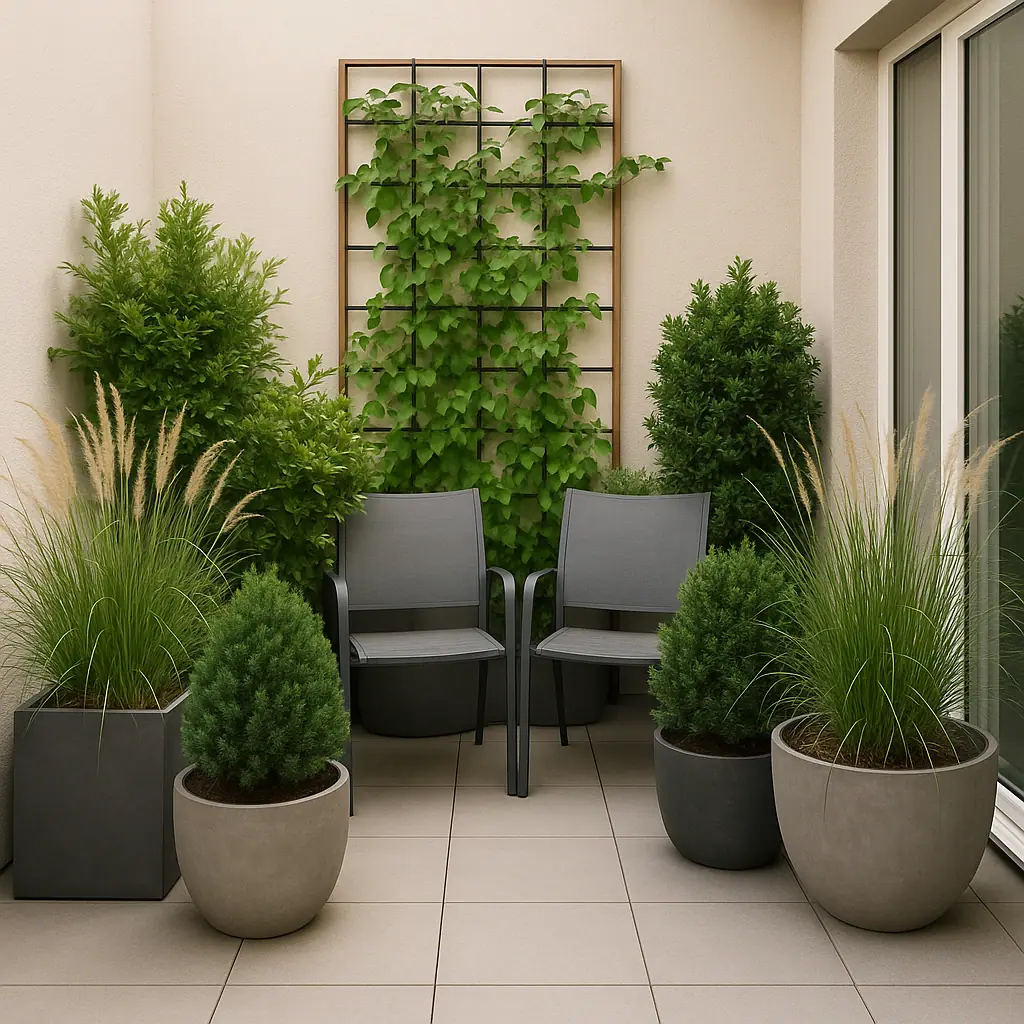
A privacy layout is easier to plan when each pot has a role. Use one taller anchor plant for height, one medium plant for fullness, and one lower container to soften the base. This creates privacy without making every pot oversized.
Try a staggered layout
Instead of lining every pot in a straight row, stagger containers slightly. A staggered layout can block more of the sightline while keeping airflow around the plants and leaving room for your feet, watering can, and patio chair.
Plant Ideas for Patio Privacy in Containers
The best plant choice depends on your climate, light, wind, and local rules. Think in categories first, then choose a specific plant that fits your region.
- Ornamental grasses: useful for soft movement and partial screening, especially in modern patio layouts.
- Compact shrubs: good for a fuller screen when the container is large enough and winter care is realistic.
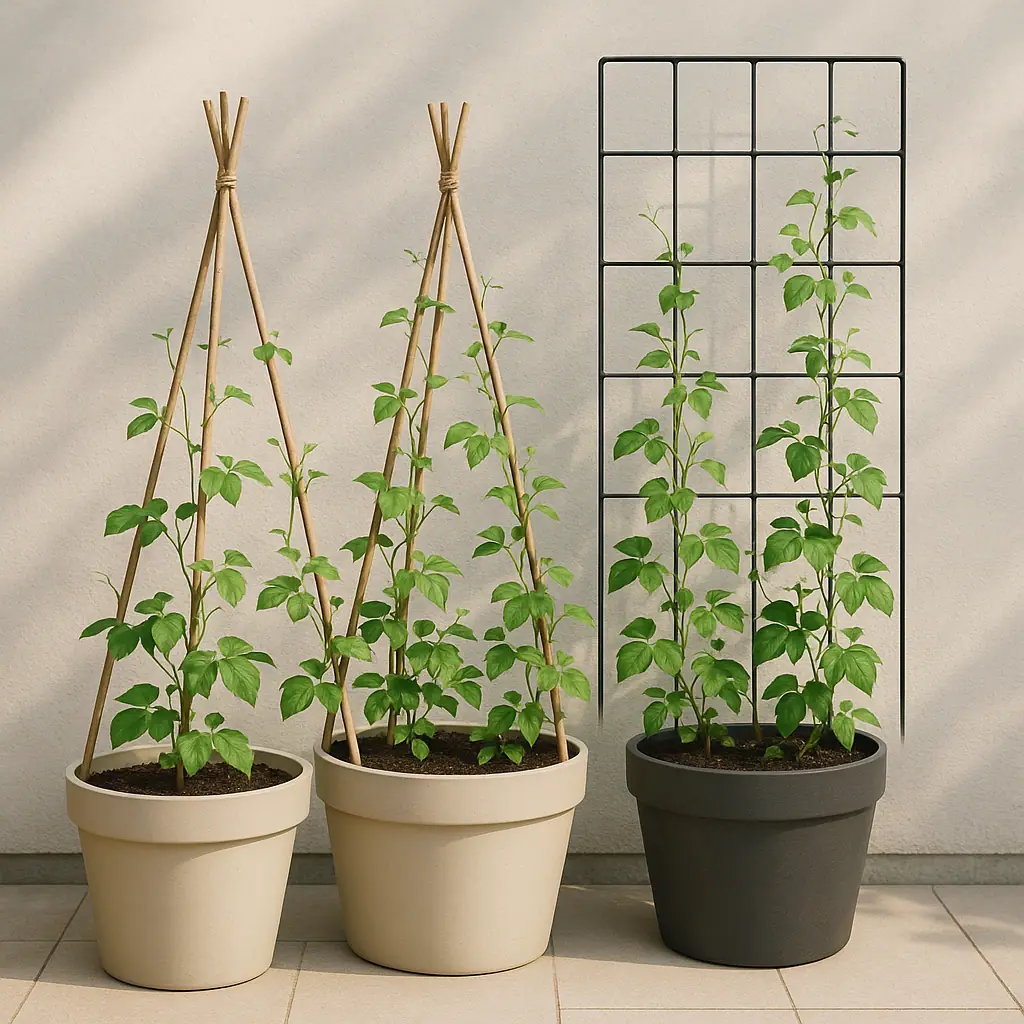
- Trellised vines: helpful for narrow spaces, but they need support, pruning, and a stable pot.
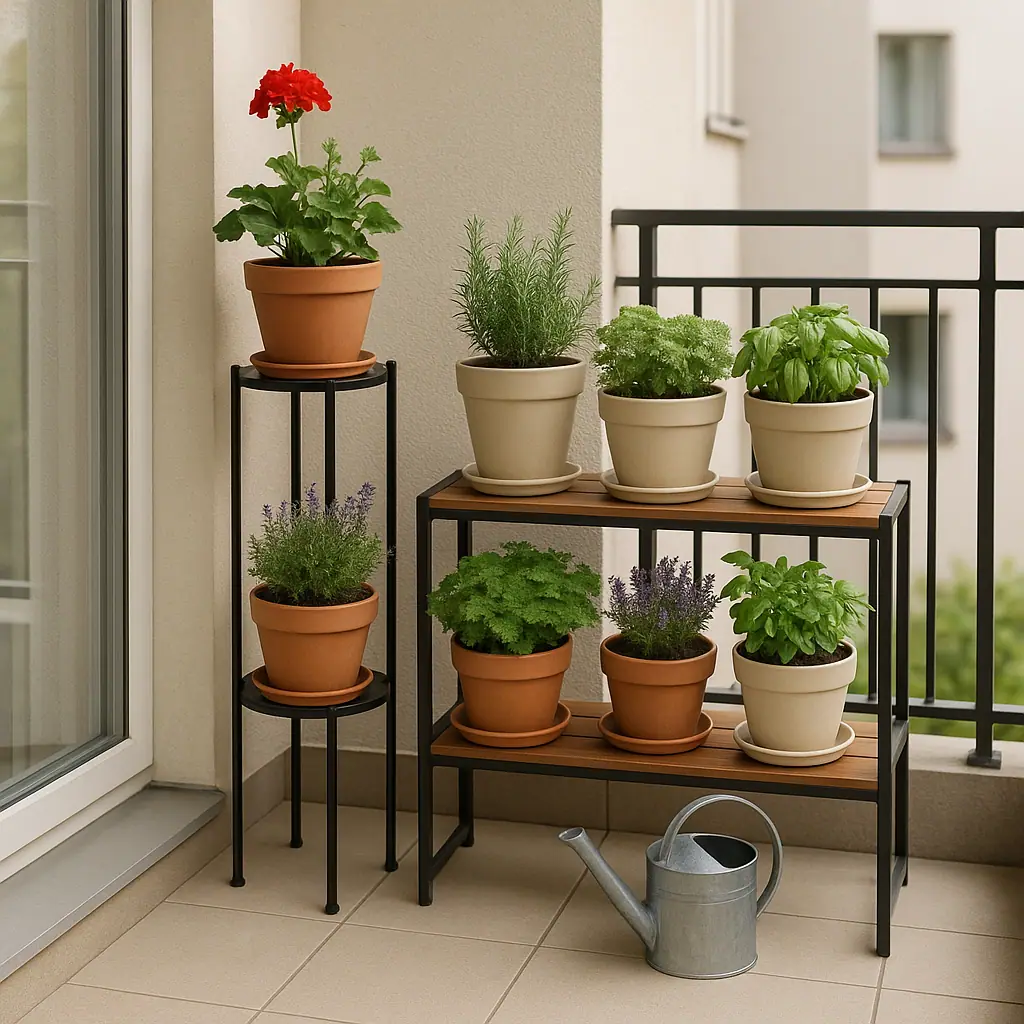
- Tall herbs: rosemary, lavender, and bay can add light privacy in sunny spots, though they vary by climate.
- Layered annuals: fast seasonal color can fill gaps while slower plants grow.
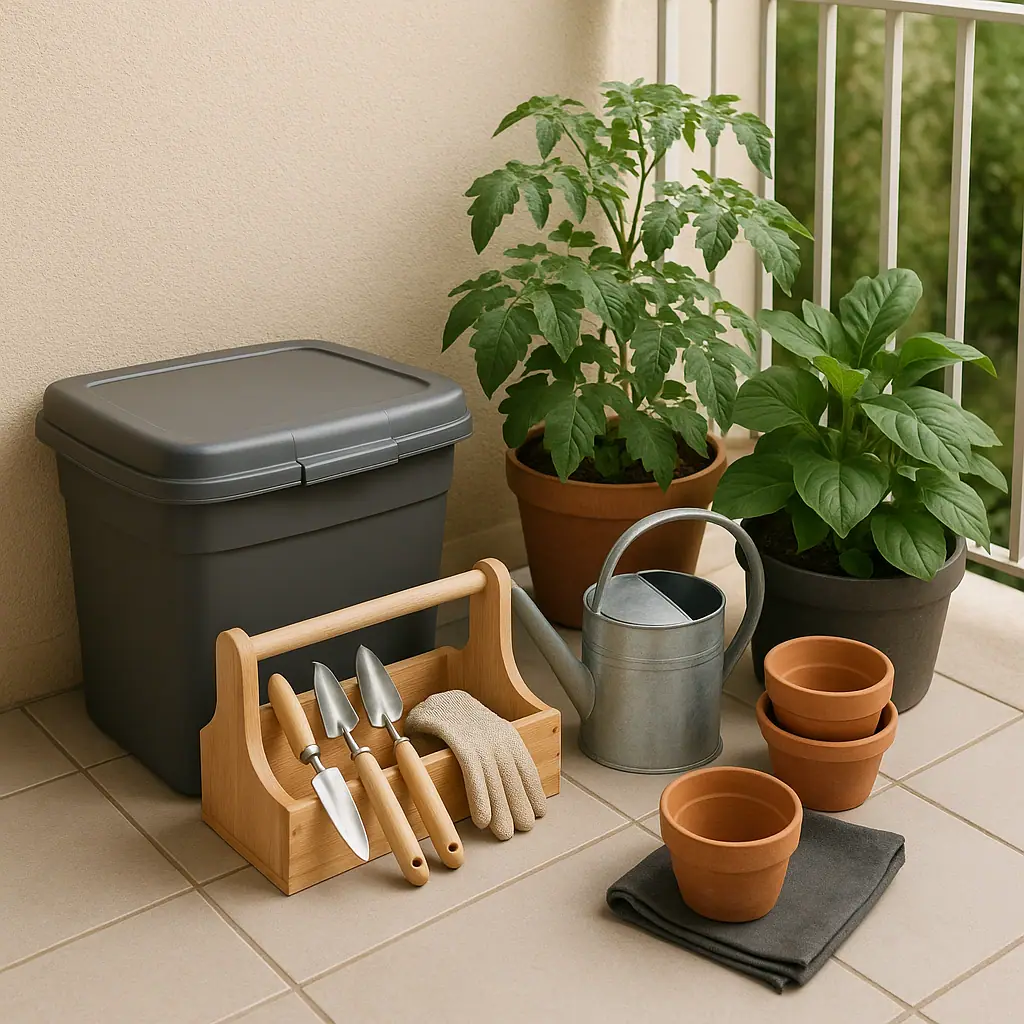
- Edible containers: tomatoes, peppers, or herbs can add greenery, but choose them for growing conditions first, not privacy alone.
If you want edible plants near the privacy zone, PatioSprout's guide to compact vegetables that work well in containers can help you choose plants that stay more manageable in small outdoor spaces.
Pros and Cons of Potted Privacy Screens
Renter-friendly flexibility
Potted privacy screens can usually be moved, reduced, or removed without permanent changes to the patio.
Softer than hard panels
Plants add texture, shade, and seasonal interest while still helping a seating area feel more private.
Easy to scale slowly
You can begin with one or two containers, learn the light and watering routine, then add more if the setup works.
Can get heavy
Large pots, wet mix, mature roots, and plant stands can become harder to move than expected.
Needs steady care
A living privacy screen depends on watering, pruning, seasonal replacement, and watching for stress.
Common Renter-Friendly Outdoor Upgrade Mistakes to Avoid
The most common mistake is shopping for the tallest plant first. Height helps only when the pot is stable, the plant likes the light, and the setup stays easy to maintain.
- Blocking airflow: dense plant walls can trap heat and humidity around foliage.
- Choosing narrow containers: tall plants in slim pots can become top-heavy after watering or wind.
- Ignoring drainage: overflowing saucers can stain surfaces or annoy neighbors below.
- Forgetting seasonal change: annuals fade, perennials go dormant, and some shrubs need winter protection.
- Overcrowding the patio: a privacy screen should not block exits, chairs, doors, or routine sweeping.
- Skipping local checks: plant hardiness, pet safety, invasive guidance, and building rules can vary by region.
A Simple Checklist Before You Buy
Use this checklist when a plant, pot, or privacy idea looks promising.
- Sightline: do you know exactly what view you are trying to soften?
- Light: does the plant match the number of sun hours in that spot?
- Wind: will the container stay stable on gusty days?
- Water: can you water without runoff reaching shared areas?
- Width: will people still move through the patio comfortably?
- Maintenance: can you prune, sweep, and replace tired plants without moving everything?
- Rules: have you checked lease, HOA, balcony, or local restrictions where needed?
When to Get Extra Help
Ask your property manager or building office before placing large containers near railings, balcony edges, shared walkways, or exterior walls. Also ask before using any planter, screen, hook, or stand that touches building surfaces in a way that could mark, scrape, or shift.
Ask a local extension office, nursery, or experienced gardener for plant help if you are unsure about wind exposure, winter survival, pet safety, invasive plants, or container size. A plant that grows beautifully in one region may struggle or become too aggressive in another.
Frequently Asked Questions
What should I check first before adding patio privacy plants in pots?
Check the sightline first, then confirm light, wind, drainage, container stability, and any building rules before buying plants.
How often should I review a potted privacy screen?
Review it weekly during active growth, and check again after heavy watering, strong wind, heat waves, or a major pruning.
What should I do if I am not sure a container is stable enough?
Use a shorter plant, choose a wider container, move the pot to a less exposed spot, or ask a local garden expert before taking a risk.
Can I undo a potted privacy setup later?
Usually, yes. That is one of the advantages of container privacy. You can rearrange pots, replace seasonal plants, or remove the screen when your needs change.
Final Thoughts
How to add patio privacy with potted plants starts with one clear view, one stable container plan, and one realistic care routine. You do not need a full green wall to make a small patio feel more comfortable.
Begin with a modest grouping, watch how the plants handle light, water, and wind, then adjust slowly. A good privacy screen should make your patio easier to enjoy, not harder to manage.