Choosing compact vegetables for containers is one of the easiest ways to make an edible patio garden feel realistic. You are not trying to turn a balcony into a farm. You are choosing plants that can produce something useful while staying small enough for a pot, a railing-safe corner, or a few square feet of outdoor space.
The best choices are not always the smallest seedlings at the nursery. A tomato, cucumber, pepper, lettuce, carrot, or radish can behave very differently once roots fill a container and summer heat reaches the patio floor. Start with vegetables that match your sun, pot size, watering routine, and willingness to add simple support.
Why Compact Vegetables for Containers Need a Different Plan
Vegetables in the ground can send roots through a larger soil area. Container vegetables live inside a fixed volume of potting mix. That means the plant has less buffer when the weather turns hot, windy, wet, or dry. A compact variety helps, but container size, drainage, and care still matter.
Penn State Extension recommends matching container vegetables with the right pot, potting mix, plant choice, water, and fertilizer. It also notes that tomatoes and peppers need strong sun, while lettuces and kale can prefer some shade: container vegetable gardening guidance. For a patio beginner, that means plant selection starts with the site, not the seed packet photo.
Start With the Easiest Compact Edibles
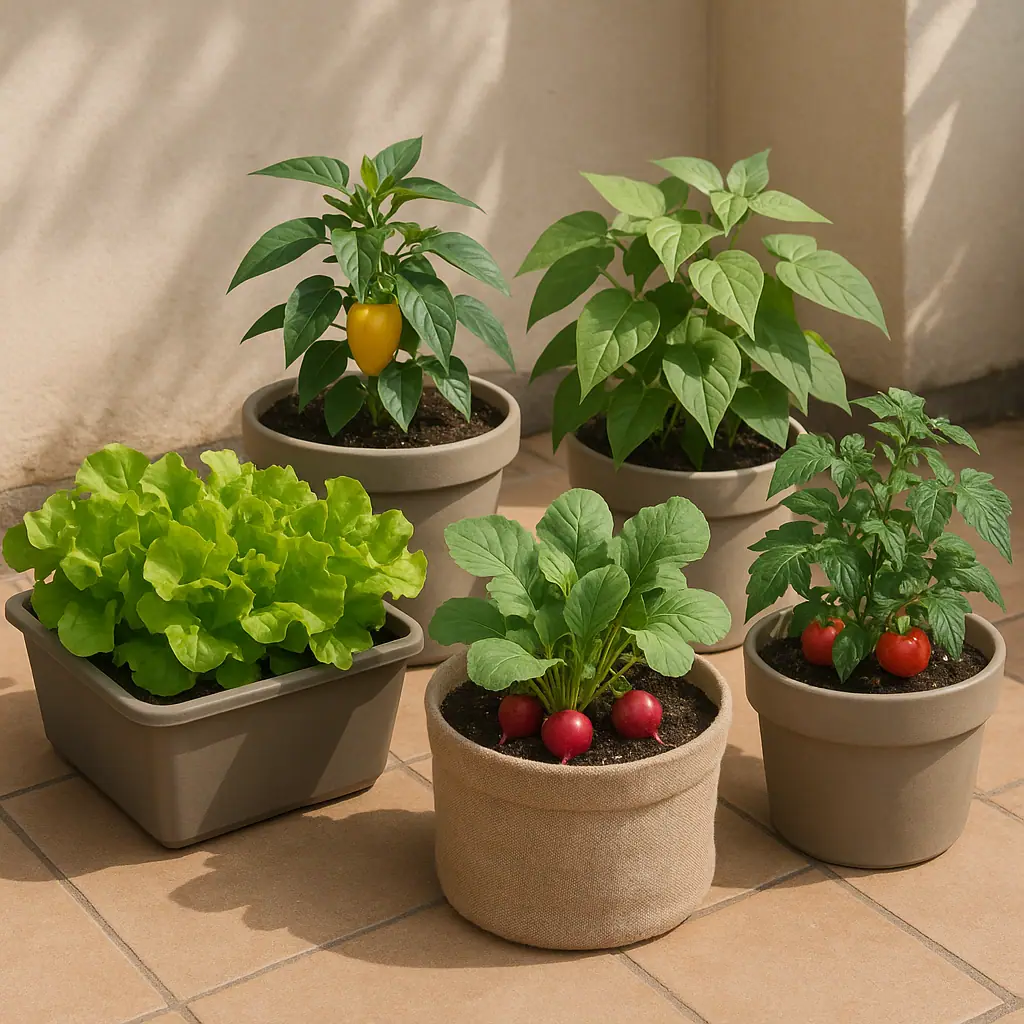
The most forgiving first choices are usually leafy greens, radishes, compact peppers, bush beans, patio tomatoes, and short-root carrots. These crops give useful feedback. Lettuce wilts when it is too hot or dry. Radishes show whether spacing is too tight. Peppers and tomatoes make it obvious when they need a larger pot or support.
Illinois Extension lists container size and variety examples for vegetables, including leaf lettuce, spinach, Swiss chard, cherry or patio tomatoes, carrots, peppers, radishes, cucumbers, and green beans. Its container chart is a useful reminder that one pot size does not fit every crop: vegetables in container gardens.
Good first choices for small patios
- Leaf lettuce and salad greens: useful for shallow, wide containers and cooler parts of the season.
- Radishes: fast-growing and good for learning spacing, thinning, and harvest timing.
- Compact peppers: slower than greens, but tidy enough for a sunny patio with a stable pot.
- Bush beans: more compact than pole beans and easier to manage without a tall trellis.
- Patio or dwarf tomatoes: productive when they have enough sun, a larger pot, and a cage or stake.
- Short-root carrots: better suited to containers than long carrot types, as long as the pot is deep enough.
Vegetables to treat with caution
Sweet corn, full-size pumpkins, large winter squash, and sprawling melons are usually frustrating in small patio containers. They need more space, heavier support, or more plants than most compact outdoor spaces can offer. If you want a vine crop, look for bush or container-labeled varieties and plan the support before planting.
What to Check Before You Buy Seeds or Transplants
Read the plant tag or seed packet for words such as dwarf, bush, patio, compact, container, determinate, or short. These labels are not magic, but they tell you the breeder or seller expects a smaller growth habit than a standard garden variety.
Also look at the real patio conditions. A west-facing concrete patio may be much hotter than a morning-sun balcony. A windy upper-floor balcony may dry containers quickly and may not be safe for top-heavy plants. A shaded patio may be better for greens than tomatoes. Local climate, building rules, pet safety, and drainage limits should shape the final choice.
- Sun: fruiting vegetables such as tomatoes and peppers usually need stronger sun than leafy greens.
- Pot depth: carrots and beets need room below the soil surface, while greens can work in wider, shallower containers.
- Drainage: every edible container should have a real drainage path, not just decorative gravel at the bottom.
- Weight: large wet containers can become heavy, so check balcony and renter rules before scaling up.
- Support: compact tomatoes, cucumbers, and some beans may still need a cage, stake, or short trellis.
How to Match Compact Vegetables With Containers Step by Step
- Pick one crop group: start with greens, roots, peppers, beans, or patio tomatoes instead of buying one of everything.
- Choose the plant habit: look for compact, bush, patio, dwarf, or container-labeled varieties where possible.
- Match the pot to the crop: use wider containers for greens, deeper containers for roots, and larger stable pots for fruiting plants.
- Use fresh potting mix: avoid straight garden soil, which can compact and drain poorly inside a container.
- Water after planting: water until excess drains, then learn how quickly that pot dries in your exact location.
- Add support early: place a cage or stake while roots are small if the crop is likely to lean or fruit heavily.
- Harvest on time: pick greens, radishes, beans, peppers, and tomatoes when ready so the plant does not waste energy on overmature growth.
Pros and Cons of Growing Compact Vegetables in Pots
Fits real small spaces
Compact vegetables can work on patios, balconies, decks, and porch corners where a full garden bed is not available.
Easier to start small
A few containers let beginners test sun, watering, and harvest habits before investing in a larger edible garden.
Flexible placement
Many pots can be moved slightly as seasons, heat, shade, or wind patterns change.
Containers dry quickly
Small pots may need frequent moisture checks during hot or windy weather, especially with fruiting crops.
Not every vegetable scales down
Large sprawling crops can overwhelm a patio even when the seedling looks harmless at the store.
A Simple Compact Vegetable Checklist
Before you bring a plant home, run through this short checklist. It prevents most beginner mistakes and keeps the setup manageable.
- Is the variety compact? Look for dwarf, bush, patio, container, or determinate wording.
- Does the pot fit the crop? Match root depth and mature plant size, not just the nursery pot size.
- Can water drain? Use containers with holes and keep saucers from holding water for too long.
- Can you reach it daily? Edible containers work best when watering and harvest checks are convenient.
- Does it need support? Add cages, stakes, or short trellises before stems become heavy.
- Is the crop right for your light? Choose greens for gentler light and fruiting vegetables for sunnier locations.
Container Ideas by Crop Type
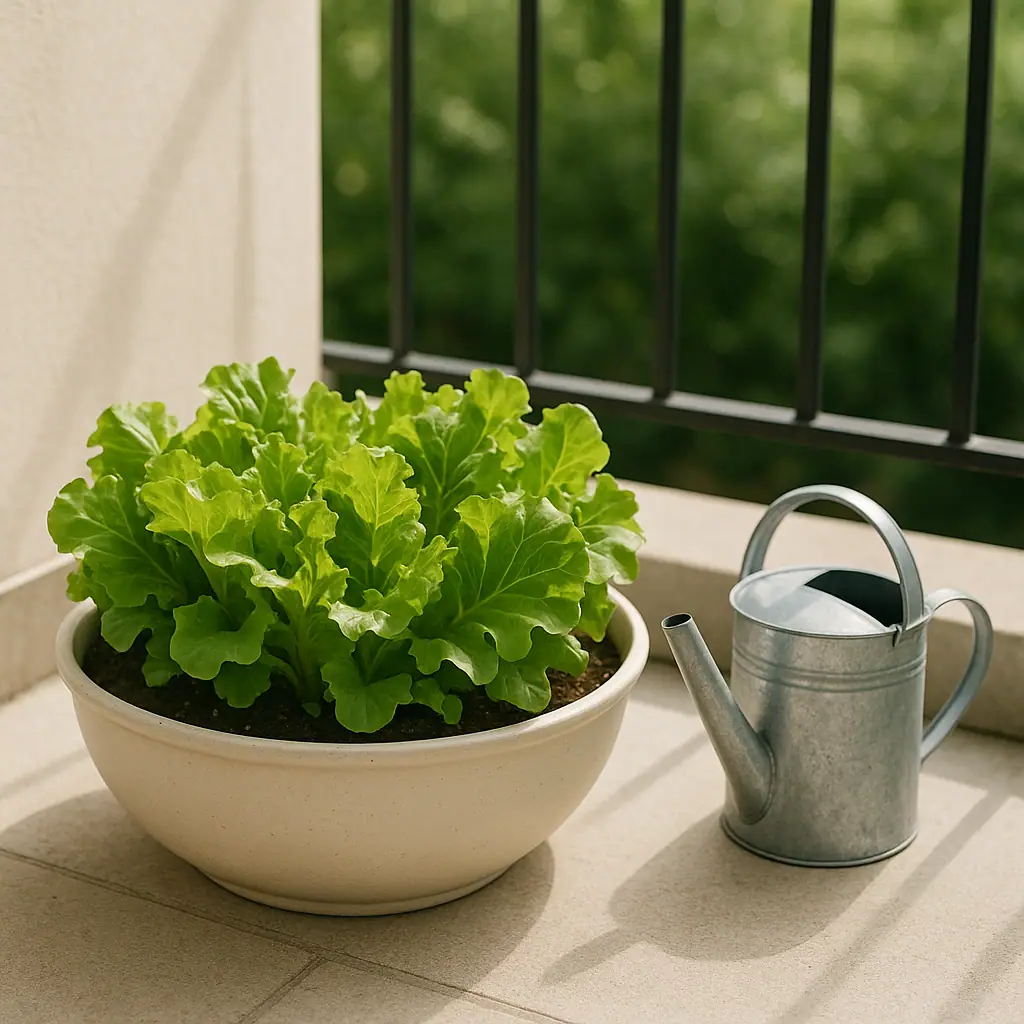
For salad greens, try a wide rectangular planter or bowl-shaped container in a spot with morning sun and some afternoon relief. Sow lightly, thin as needed, and harvest outer leaves before heat makes the crop bitter or tired.
For radishes and short carrots, choose a container deep enough for the root type and keep moisture steady while seeds germinate. Crowding is the easiest mistake here. Thin seedlings so each plant has room to form a usable root.
For peppers or patio tomatoes, choose a larger, stable pot and add support early. Illinois Extension notes that small-space gardeners can use compact varieties such as smaller tomatoes, peppers, cucumbers, peas, beets, carrots, and other container-suitable vegetables: small-space container vegetable examples.
Between each crop, refresh the plan rather than simply replanting in tired mix. Remove old roots, check drainage holes, and decide whether the next vegetable needs a different pot, season, or sun exposure.
Frequently Asked Questions
What compact vegetable should I try first?
Leaf lettuce, radishes, bush beans, compact peppers, and patio tomatoes are friendly starting points. Choose based on your sun and pot size.
Do compact vegetables still need large pots?
Some do. Compact describes the plant habit, not unlimited root tolerance. Fruiting vegetables usually need more soil volume than greens or radishes.
Can I grow tomatoes in a small patio container?
Yes, if you choose a patio, dwarf, or determinate type and give it a stable container, strong sun, support, and steady watering.
What should I do if my container vegetables keep wilting?
Check whether the pot is too small, the patio is too hot or windy, the mix is drying too quickly, or drainage is failing. Adjust one factor at a time.
Final Thoughts
Compact vegetables for containers work best when the plant, pot, sun, drainage, and daily routine all match. The goal is not to grow every vegetable in one season. The goal is to choose a small group that fits your patio and teaches you what your space can support.
Start with one or two containers: maybe lettuce and radishes for quick feedback, or one compact pepper or patio tomato if you have strong sun. Watch how the pots behave for a few weeks, then expand only when the watering and harvest rhythm feels easy to repeat.