Learning how to grow lettuce bowls on a small patio is a friendly first edible-container project because lettuce does not need a huge planter, a tall trellis, or a permanent garden bed. A wide bowl, fresh potting mix, drainage holes, and a spot with gentle sun can give you a useful crop without taking over the outdoor space.
If you have been wondering whether you can grow lettuce in containers on a balcony, patio, doorstep, or compact deck, the answer is often yes. The important part is matching the bowl to the way lettuce actually grows: shallow roots, steady moisture, cooler conditions, and enough space for leaves to expand without turning into a crowded mat.
Why a Lettuce Bowl Works Well on a Small Patio
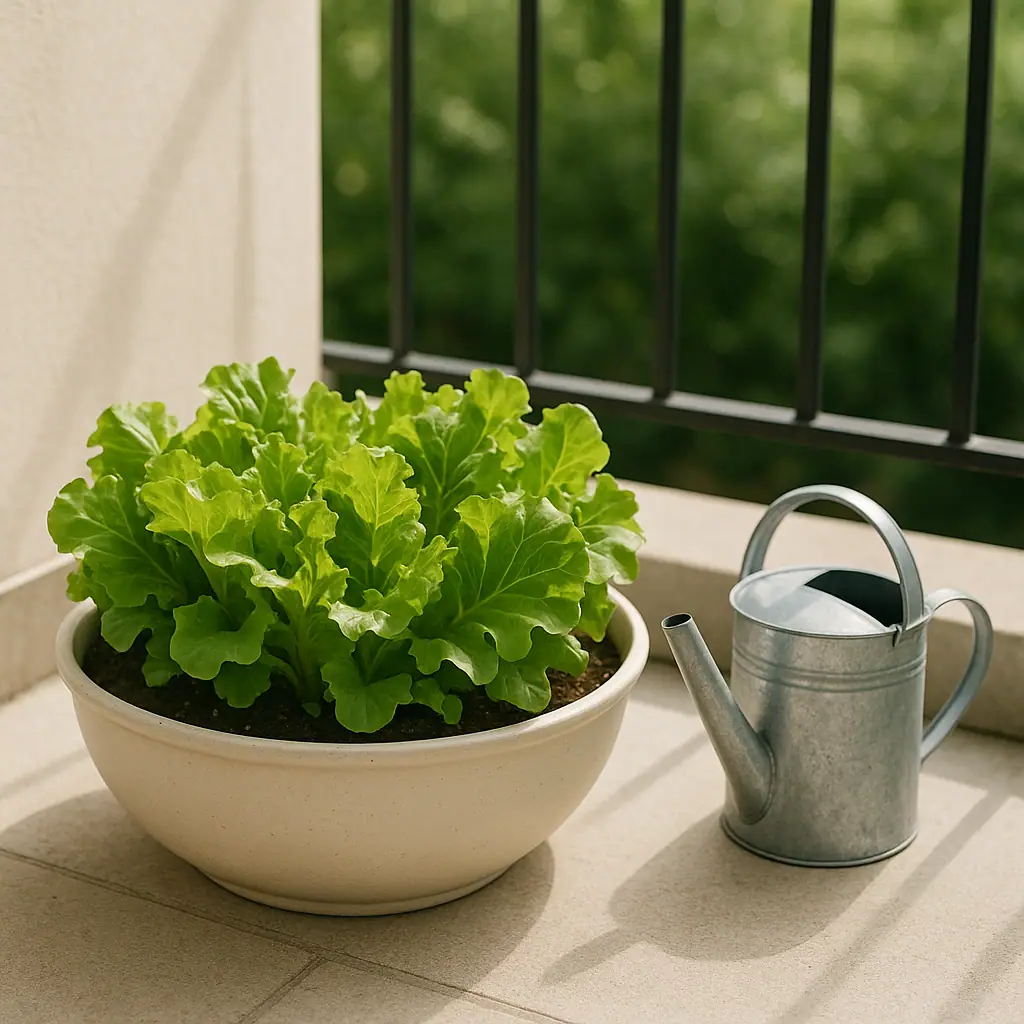
A lettuce bowl is simply a shallow, wide container planted with loose-leaf lettuce or salad greens. It is not meant to grow one giant head. It is meant to give you repeatable small harvests: a handful of outer leaves for a sandwich, a quick salad topping, or a small bowl of greens when the weather is right.
Ohio State University Extension notes that lettuce can be grown in containers and highlights salad greens as cold-tolerant, early-harvest crops for small spaces: growing lettuce in containers. For a patio beginner, that makes lettuce less intimidating than crops that need deep roots, heavy fruit, or strong support.
Choose the Right Bowl Before You Plant
The best lettuce bowl is wider than it is tall, with drainage holes and enough depth to hold moist potting mix without becoming waterlogged. A container around 6 to 8 inches deep is a practical beginner target for loose-leaf lettuce. It should be stable, easy to lift when empty, and easy to reach without leaning over a railing or blocking a walkway.
A previous PatioSprout guide on pot sizes for herbs, flowers, and small vegetables can help you think through container depth before buying another planter. Lettuce is forgiving, but a bowl that is too tiny dries quickly and leaves little room for roots.
Container features that matter
- Real drainage holes: excess water needs a path out of the bowl so roots do not sit in stale water.
- Wide planting surface: lettuce leaves need horizontal room, especially if you want cut-and-come-again harvests.
- Light color if possible: dark pots can heat up quickly on sunny concrete or tile patios.
- Reachable placement: the best edible container is the one you can check daily without moving furniture.
- Safe saucer setup: use a saucer only if you empty standing water and avoid dripping onto lower balconies.
What to avoid
A decorative bowl with no drainage is risky unless it holds a separate nursery pot that can drain freely. Garden soil from a yard is also a poor shortcut because it can compact inside a container. Use a quality potting mix made for containers so water and air can move through the root zone.
How to Grow Lettuce Bowls on a Small Patio Step by Step
- Pick the season first: lettuce prefers cooler conditions. In many regions, spring and fall are easier than midsummer heat.
- Set the bowl in gentle light: morning sun with afternoon relief is often kinder than a hot west-facing patio.
- Fill with fresh potting mix: moisten the mix before sowing so seeds do not wash into one corner.
- Sow lightly: scatter seed thinly or plant short rows, then cover according to the seed packet.
- Thin early: crowded seedlings compete for water and airflow. Snip extras rather than yanking roots through the bowl.
- Water carefully: keep the mix evenly moist, not muddy. Small containers dry faster in wind and heat.
- Harvest outer leaves: cut a few mature outer leaves and leave the center growing if the plants still look healthy.
- Refresh when tired: when plants bolt, turn bitter, or slow down, remove them and start again in a better season.
University of New Hampshire Extension explains that vegetables in containers need sufficient water and direct sun, while leafy vegetables such as lettuce and spinach can tolerate less light than fruiting crops: growing vegetables in containers. That is useful for small patios where tomatoes may struggle but salad greens may still be realistic.
Light, Water, and Heat Checks for Lettuce Bowls
The trickiest part of a lettuce bowl is not planting. It is keeping the bowl from swinging between too dry and too wet. Patio surfaces can reflect heat, wind can pull moisture from the leaves, and small containers can dry out faster than beginners expect.
Use your finger as a simple moisture check. If the top inch of mix feels dry and the bowl feels light, water gently until excess drains out. If the mix feels soggy and the saucer still holds water, wait and improve drainage. Lettuce likes consistency more than dramatic rescue watering.
If your patio gets intense afternoon sun, review the basic drainage and container lessons from drainage holes for first-time container gardeners before adding more bowls. A lettuce bowl that cannot drain will not become safer just because it is small.
Signs the bowl needs adjustment
- Wilting every afternoon: the bowl may be too hot, too dry, or too exposed to wind.
- Yellow lower leaves: check whether the mix is staying soggy or the plants are too crowded.
- Tall stretched seedlings: the bowl may need brighter light or thinner spacing.
- Bitter or flowering plants: heat and age may be pushing the lettuce past its best harvest window.
Pros and Cons of Lettuce Bowls
Beginner-friendly edible crop
Lettuce grows quickly enough to teach spacing, watering, and harvest timing without requiring a full vegetable bed.
Fits shallow, wide containers
A bowl planter can work on a table, plant stand, or small patio corner when it has drainage and enough planting surface.
Easy to harvest in small amounts
Loose-leaf lettuce lets you cut a few outer leaves at a time instead of waiting for one large head to mature.
Heat can end the crop quickly
Hot patios can push lettuce to bolt, taste bitter, or stop producing tender leaves sooner than expected.
Small bowls dry fast
A shallow container needs regular moisture checks, especially during windy weather or bright afternoon sun.
A Simple Lettuce Bowl Checklist
Before you sow, check the whole setup instead of only checking the seed packet. A few minutes of planning can prevent most first-bowl frustrations.
- Does the bowl drain? Use real holes and a saucer plan that does not leave roots sitting in water.
- Is the bowl wide enough? Give lettuce room to spread rather than cramming seeds into a narrow pot.
- Is the light gentle enough? Morning sun is often easier than harsh afternoon heat on a patio.
- Can you water conveniently? Put the bowl where daily checks are simple.
- Will you thin seedlings? Crowding makes lettuce weaker, not more productive.
- Do you have a restart plan? Lettuce is seasonal. When it gets tired, refresh the bowl and try again.
When to Use a Salad Table Instead
If you want more greens than one bowl can provide, a salad table or larger raised container may be a better next step. It gives you more planting surface and can be easier to harvest at a comfortable height, but it also weighs more and takes more planning.
University of Maryland Extension describes growing vegetables in containers and salad tables, including the idea that lettuce and other greens can be harvested more than once in a growth cycle: container vegetables and salad tables. For renters, the decision should still include weight, dripping, building rules, and how much sun the spot gets.
Start with one bowl if you are unsure. If watering, harvest, and placement feel easy for a few weeks, then decide whether a second bowl or larger salad table is worth the space.
Frequently Asked Questions
What kind of lettuce is best for a patio bowl?
Loose-leaf lettuce is usually the easiest first choice because you can harvest outer leaves gradually. Head lettuce needs more patience and spacing.
How often should I water a lettuce bowl?
Check moisture daily in warm or windy weather. Water when the top inch starts to dry, and let excess water drain away.
Can lettuce grow on a partly shaded patio?
Often, yes. Lettuce can tolerate less light than fruiting vegetables, though it still needs bright conditions and may grow slowly in deep shade.
What should I do when the lettuce gets bitter?
Heat, age, or bolting may be the cause. Harvest what still tastes good, then restart the bowl in a cooler season or a gentler location.
Final Thoughts
Learning how to grow lettuce bowls on a small patio is less about perfection and more about setting up one manageable edible container. Choose a wide draining bowl, use fresh potting mix, sow lightly, thin early, and check moisture before the plant has to shout for help.
If your first bowl struggles, treat it as useful information about your patio. Maybe the spot is hotter than expected. Maybe the bowl is too shallow. Maybe fall will be easier than summer. Adjust one thing, try again, and let the next bowl be simpler than the first.