Best pot sizes for herbs, flowers, and small vegetables are easier to choose when you match the container to the plant's roots, mature size, and watering needs. A patio garden does not need huge planters everywhere, but it does need enough room for each plant to stay steady, drain well, and avoid drying out every afternoon.
For beginners, the safest approach is to start with a few dependable container sizes instead of buying a random mix of pretty pots. Small herbs can thrive in modest containers, annual flowers often need room for a fuller root ball, and compact vegetables usually need deeper soil than they look like they will need at the nursery.
This guide gives you practical size ranges, simple checks, and a calm way to shop before you bring home soil, seedlings, or decorative planters.
Why Pot Size Matters in a Patio Garden
A container is not just a decorative shell. It controls how much root space, water reserve, oxygen, and stability a plant has. A pot that is too small can dry out quickly, tip in wind, or restrict growth. A pot that is much too large can stay wet longer than expected, especially in shade or cool weather.
The goal is not to find one perfect pot for every plant. The goal is to choose a size that gives the plant room to grow while still fitting your patio, balcony weight limits, and watering routine.
Start With Containers, Soil, and Drainage
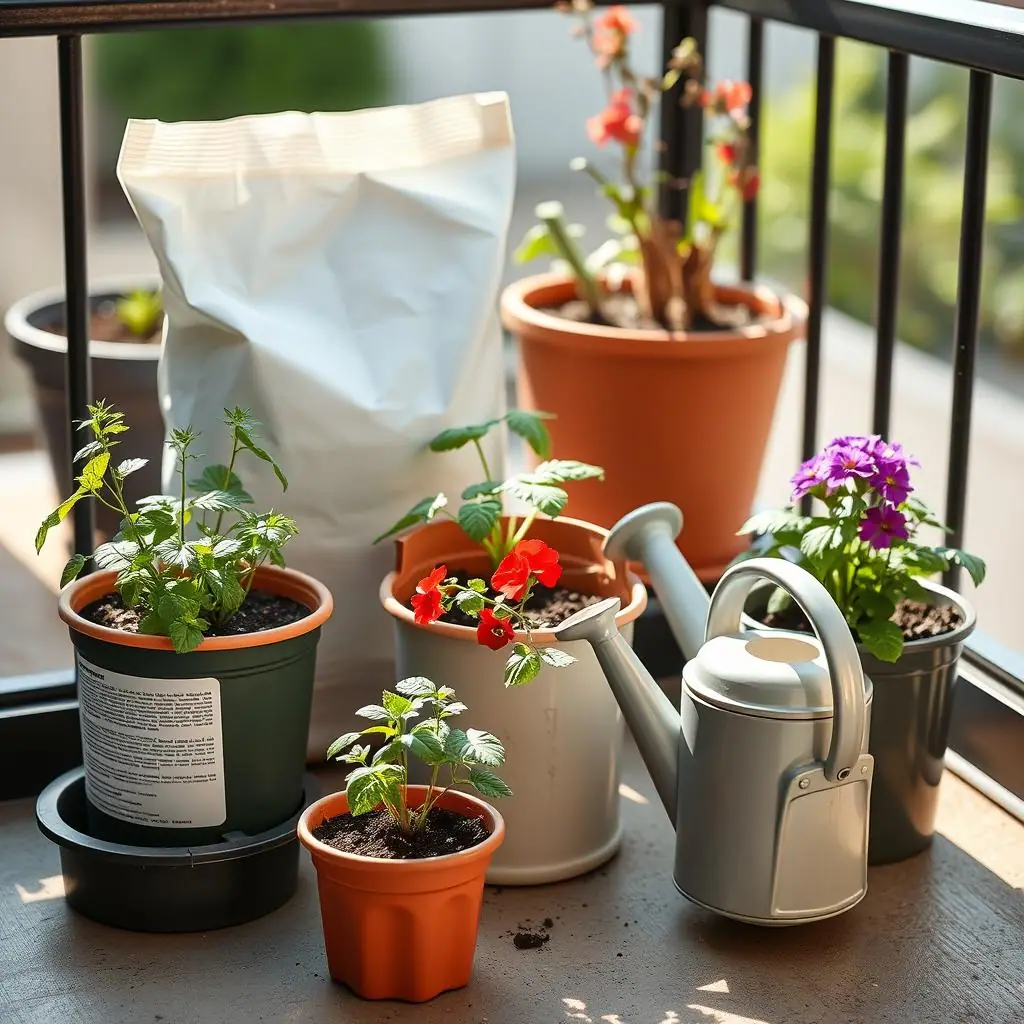
Before comparing inches and gallons, check the three basics: container depth, drainage holes, and potting mix. A slightly larger pot with poor drainage is still a poor home for a plant. A simple plastic or resin container with holes and fresh potting mix is often more useful than a decorative pot with no clear way for water to escape.
Oregon State University Extension notes that container gardening can support vegetables, herbs, and flowers in small spaces, and its container guidance includes practical size and drainage details. You can review the source at OSU Extension's container gardening basics before making plant-specific choices.
Use potting mix, not garden soil
Garden soil can become dense in containers, especially after repeated watering. A bagged potting mix is usually lighter and better suited for patios because it holds moisture while allowing excess water to drain.
Check the drainage before the color
Color, texture, and style matter for a patio, but drainage matters first. If a pot has no holes, use it as a decorative outer cachepot and keep the plant in a separate nursery pot inside it, where extra water can be removed.
Best Pot Sizes for Herbs, Flowers, and Small Vegetables
The ranges below are practical starting points, not strict rules. Plant variety, climate, wind, sun exposure, and how often you can water all affect the best choice. Use the plant tag as the final check whenever it gives a mature height, spacing, or container recommendation.
- Small herbs: parsley, cilantro, thyme, chives, and mint starts often work in 6- to 8-inch pots if you harvest lightly and water consistently. Mint is aggressive, so give it its own pot.
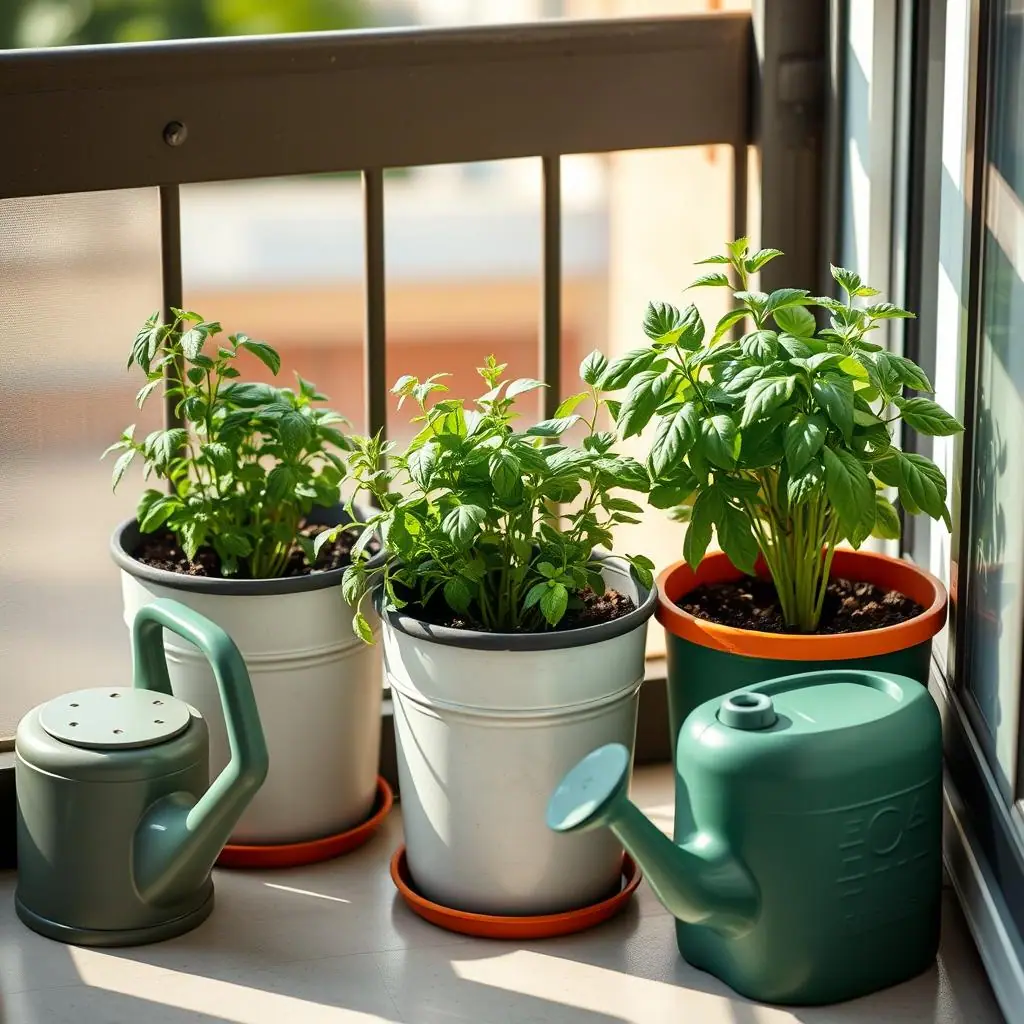
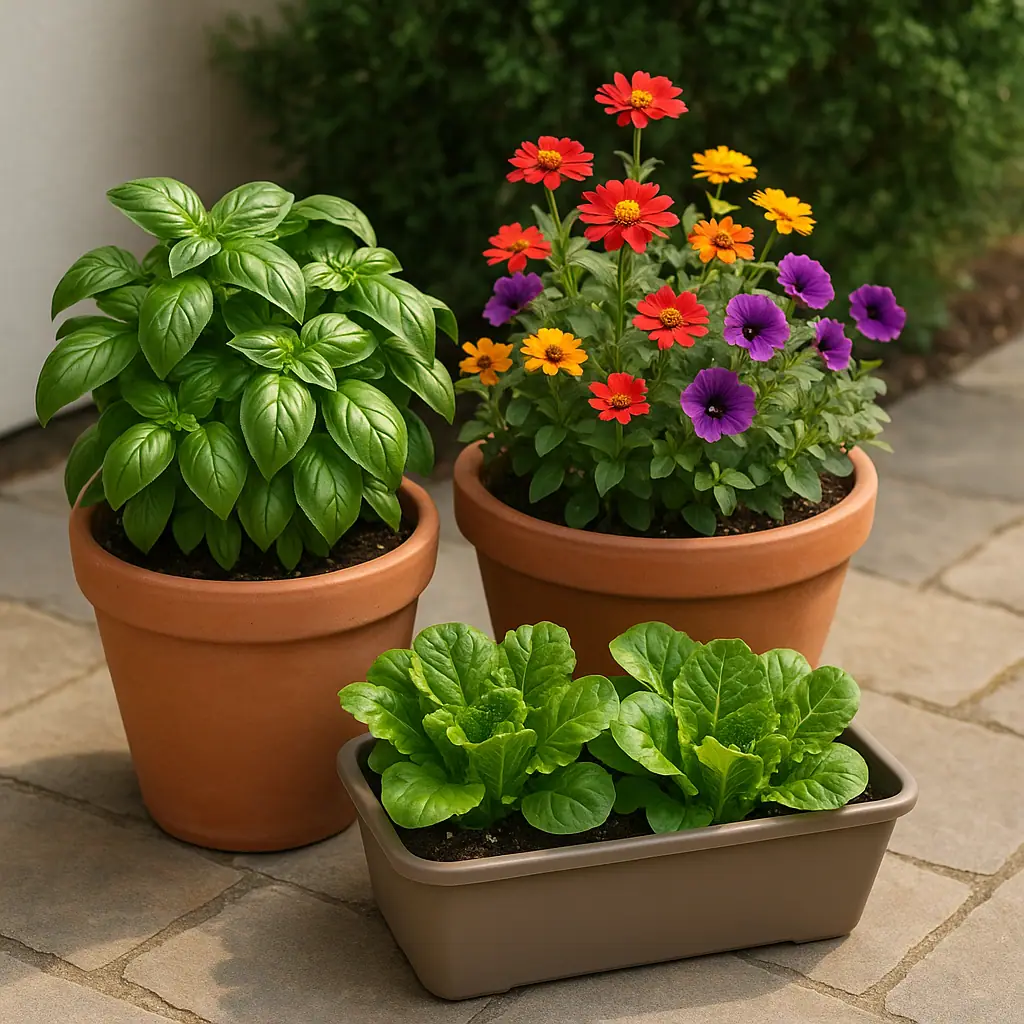
- Larger herbs: basil, rosemary, sage, and oregano usually do better in 8- to 12-inch pots because they become bushier and need steadier moisture.
- Annual flowers: compact petunias, marigolds, pansies, and calibrachoa often suit 8- to 12-inch pots, while mixed flower containers need more width so roots are not crowded.
- Leafy greens: lettuce, arugula, spinach, and baby greens can grow well in shallow bowls or window boxes around 6 to 8 inches deep if they receive steady water.
- Compact vegetables: dwarf peppers, patio tomatoes, bush beans, and compact eggplants usually need deeper containers, often 10 to 14 inches wide or larger depending on the variety.
- Root crops: radishes can handle shallower containers, but carrots and beets need enough depth for the edible root. Choose short or round varieties for small patios.
How to Choose Pot Sizes Step by Step
Use this simple order when shopping. It prevents the common problem of buying a beautiful pot first, then forcing the wrong plant into it later.
- Read the plant tag: check mature height, spread, spacing, sun needs, and any container note.
- Match the roots: shallow greens can use bowls; herbs need moderate depth; fruiting vegetables need more soil volume.
- Think about water: smaller pots dry faster. If your patio gets hot afternoon sun, size up modestly for moisture reserve.
- Check stability: tall herbs, tomatoes, and flowering plants need a pot wide enough that wind will not tip the container easily.
- Plan the weight: wet potting mix is heavier than dry mix. Balcony gardeners should keep large ceramic or stone containers to a minimum unless rules clearly allow them.
- Group similar needs: place thirsty plants together and drought-tolerant herbs together so watering stays simple.
Common Container Size Mistakes to Avoid
The first mistake is choosing a pot only because it looks good. A narrow, tall container may look elegant but tip easily with a bushy basil plant or pepper. A shallow decorative bowl may be fine for lettuce but frustrating for a tomato.
The second mistake is overcrowding mixed containers. Three small flowers may look sparse on planting day, but they can fill in quickly. Crowding too many plants into one pot means you will water more often and trim more aggressively.
- Using tiny pots for thirsty herbs: basil and parsley can wilt fast in very small containers during warm weather.
- Ignoring mature size: a seedling that looks small in spring may need much more root room by midsummer.
- Mixing incompatible plants: rosemary and lettuce do not want the same moisture routine.
- Skipping saucers where needed: patios and balconies may need trays to prevent staining or dripping, but saucers should not hold standing water for long periods.
- Buying oversized planters too early: large containers cost more, use more mix, and can be hard to move in a rented space.
Pros and Cons of Sizing Up
More moisture buffer
A slightly larger pot can dry out more slowly, which helps in hot, sunny, or windy patio conditions.
Better root room
Herbs and compact vegetables have more space to develop before they become stressed or root-bound.
Improved stability
Wider containers can support bushier plants and reduce tipping when the weather changes.
More weight
Larger pots filled with wet mix can become difficult to move and may not suit every balcony.
More soil cost
Big containers need more potting mix, which adds cost before you even buy the plants.
A Simple Pot Size Checklist
Run through this checklist before you buy a container. If one answer is unclear, pause and check the plant tag, building rules, or a trusted local gardening source.
- Drainage: does the pot have holes, or can the plant sit in a removable inner pot?
- Depth: does the container provide enough root room for the plant type?
- Width: will the mature plant have space without crowding nearby containers?
- Watering: can you water often enough for this pot size in your sun and wind?
- Weight: can you safely lift, rotate, or move the pot after it is filled and watered?
- Placement: will the container fit without blocking doors, walkways, or balcony drainage paths?
When to Get Extra Help
Get extra help when you are growing edibles for the first time, choosing containers for a high balcony, or trying a plant with specific depth needs. Local extension offices, plant nurseries, and plant tags can help you confirm whether a variety is truly compact enough for your container.
Do not guess about balcony weight limits, pet-safe plants, or drainage rules. Those details depend on your building, climate, and household.
Frequently Asked Questions
What pot size should beginners buy first?
Start with a few 8- to 12-inch containers for herbs and flowers, then add deeper pots only for compact vegetables that need more root space.
Can herbs share one container?
Yes, if they like similar moisture and light. Keep mint separate because it spreads aggressively and can crowd gentler herbs.
Is a bigger pot always better?
No. A modest size increase can help with moisture and roots, but very large pots cost more, weigh more, and may stay too wet in shade.
What should I do if I am not sure?
Check the plant tag, ask a local nursery, or use a university extension resource before buying several matching pots.
Final Thoughts
Best pot sizes for herbs, flowers, and small vegetables come down to root room, drainage, stability, and your watering routine. You do not need a complicated patio setup to grow well. You need containers that match the plants you actually want to keep.
Start with a few reliable sizes, choose potting mix made for containers, and leave room to adjust after you learn how your patio handles sun, heat, and wind. A small, well-sized container garden is easier to care for than a crowded collection of beautiful but impractical pots.