The first five things every patio garden needs are not fancy accessories. They are the practical pieces that help a beginner keep plants alive, keep the patio usable, and avoid buying supplies that do not fit the space.
A good starter setup begins with light, containers, drainage, potting mix, and a simple watering routine. Once those five basics are in place, plant choices become much easier because the garden has a stable foundation.
Think of this as a calm checklist before the garden center trip. You do not need a full outdoor makeover. You need a few reliable decisions that match your patio, balcony, climate, and daily schedule.
Why the First Five Things Every Patio Garden Needs Matter
Small-space gardens are less forgiving than they look. A pot can dry quickly in afternoon sun, stay too wet in shade, or tip in wind if the container is too light. A plant that thrives in a yard may struggle on a hot paved surface or a breezy balcony.
That is why the first five things every patio garden needs should be chosen before decorative extras. Start with what keeps roots healthy and maintenance realistic. Then add color, stands, trellises, and styling once the basic system works.
1. A Clear Light Map
Before buying plants, watch the patio for one ordinary day. Note where the sun lands in the morning, at midday, and in late afternoon. Walls, railings, nearby trees, and neighboring buildings can change the light more than a beginner expects.
How to read your patio light
Use simple labels: full sun, part sun, bright shade, or deep shade. You do not need lab-level precision, but you do need enough information to avoid putting sun-loving herbs in a dim corner or shade plants against a hot reflective wall.
- Morning sun: usually gentler and useful for herbs, flowers, and many starter containers.
- Afternoon sun: stronger and hotter, especially near concrete, brick, glass, or pale walls.
- Mostly shade: better for shade-tolerant foliage and some flowers than for most fruiting vegetables.
- Wind exposure: not a light issue, but it dries pots faster and can damage tender stems.
2. Containers With Real Drainage
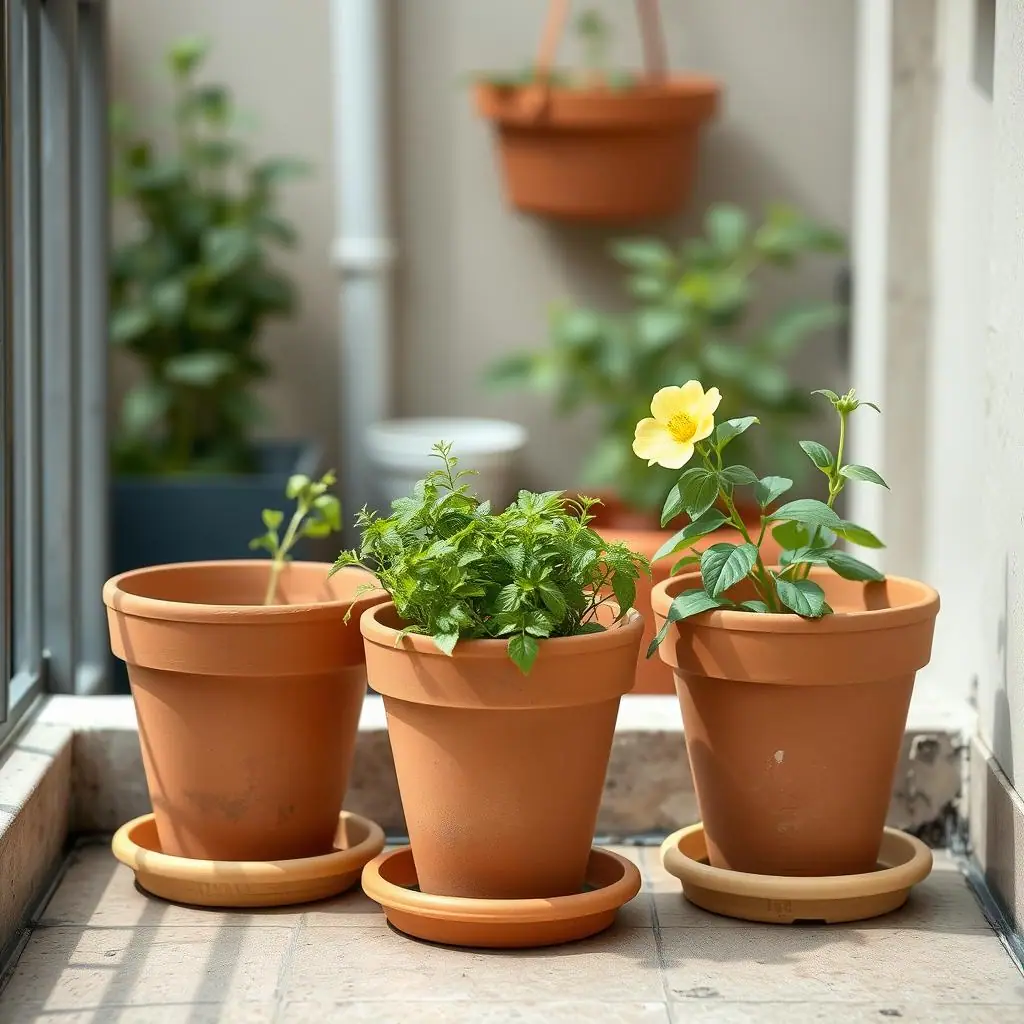
Every beginner patio garden needs containers that let extra water leave the pot. Decorative planters without drainage may look tidy at first, but water can collect around roots and make it harder to correct watering mistakes.
Oregon State University Extension's container gardening basics emphasizes using containers with good drainage and choosing container setups that fit the plants and space. That guidance is especially useful for patios, where runoff and saucers need to be managed thoughtfully.
What to choose first
For a first season, pick sturdy containers you can move when needed. Avoid very tiny pots for thirsty herbs or vegetables. A larger pot holds moisture more steadily, but it also weighs more, so balcony gardeners should check building rules and use common sense with heavy planters.
3. Potting Mix Made for Containers
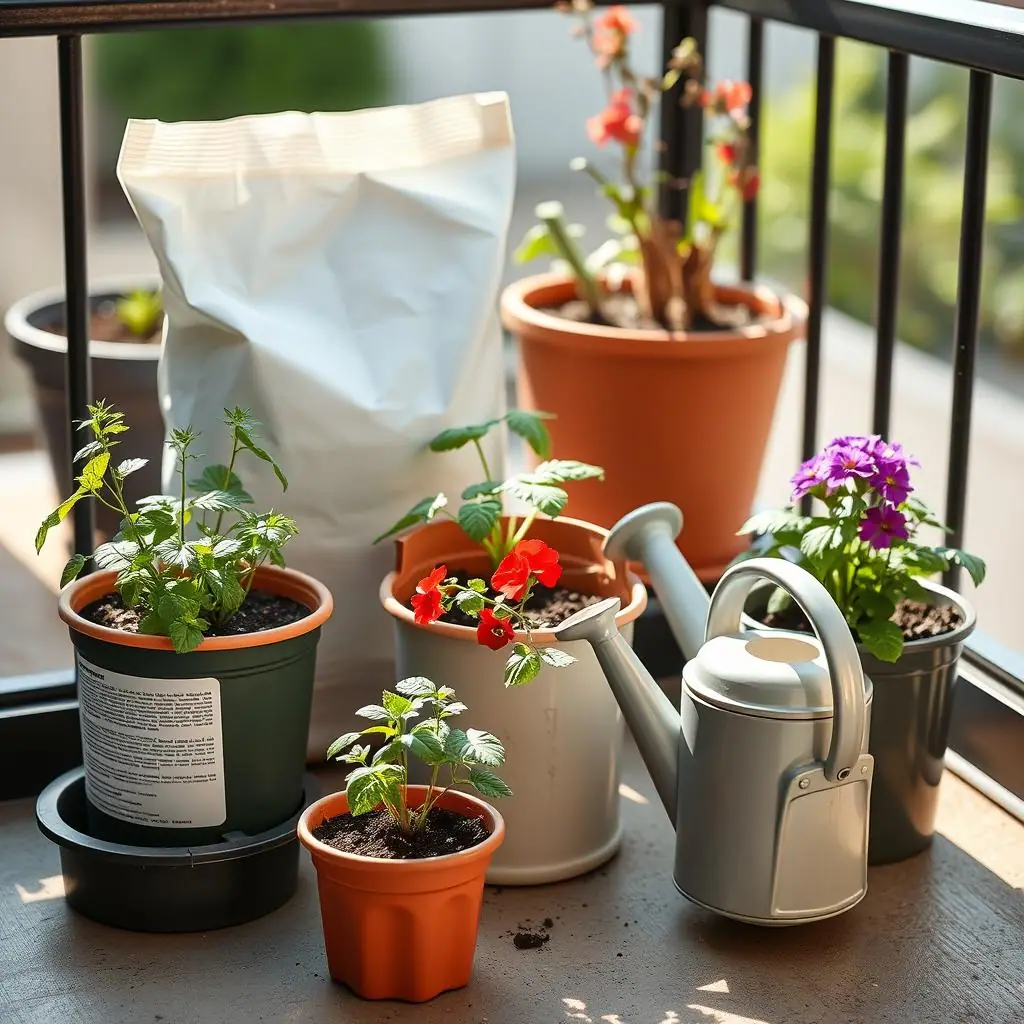
Container gardens need a potting mix designed to hold moisture while still letting excess water drain. Ground soil can compact in pots, making it harder for air and water to move around roots. For beginners, a bagged outdoor potting mix is usually the simpler starting point.
Match the mix to what you plan to grow. Herbs and flowers generally do well in standard container mix, while edibles may benefit from a mix labeled for vegetables or raised beds, depending on the product instructions. Always read the bag for use directions and whether fertilizer is already included.
4. A Watering Routine You Can Repeat
A patio garden does not need a complicated watering system on day one. It needs a routine that helps you notice dry pots before plants wilt and avoid watering so often that roots stay soggy.
- Check the top inch: feel the mix before watering instead of following a fixed calendar.
- Water slowly: give the mix time to absorb moisture instead of letting water rush down the sides.
- Watch the saucer: empty standing water when needed so roots are not sitting in it.
- Adjust for weather: hot, windy, and sunny days usually dry containers faster.
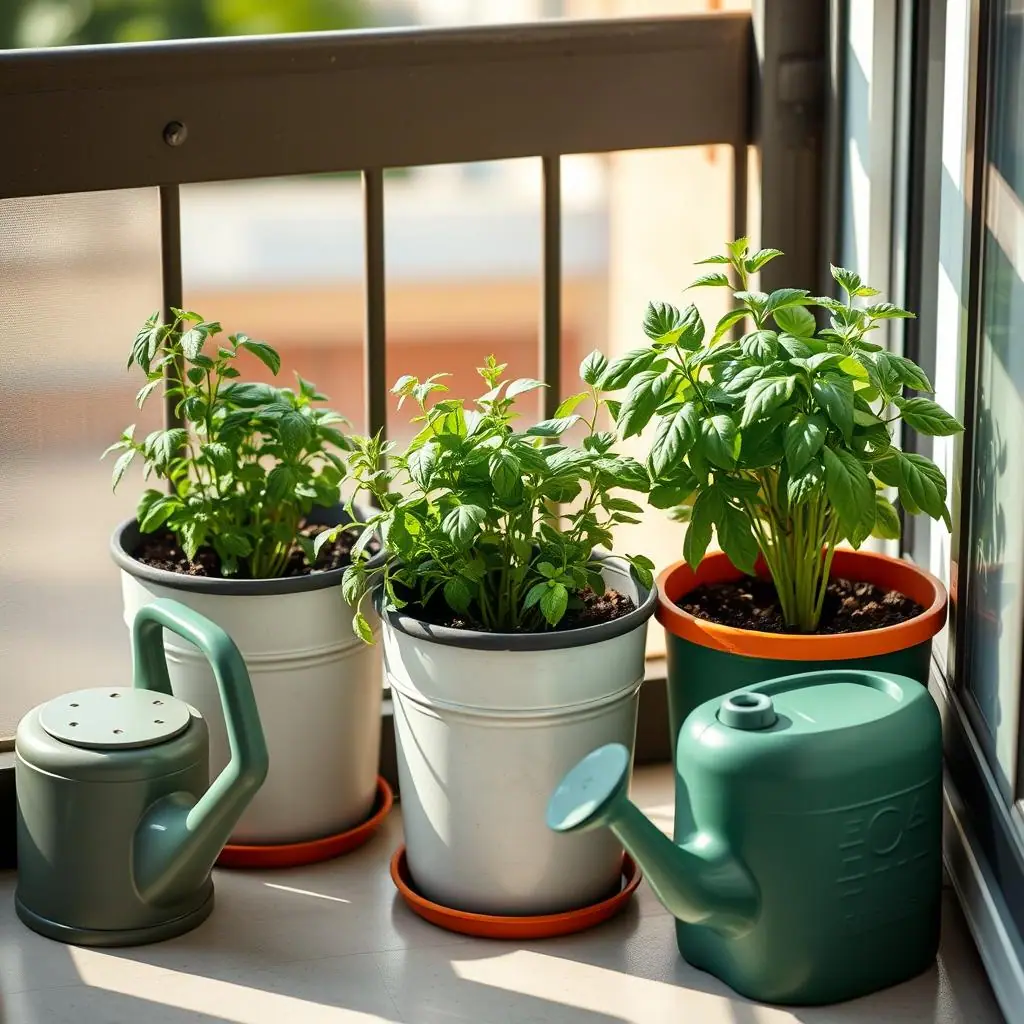
- Keep tools nearby: a small watering can close to the door makes the habit easier to repeat.
The best watering routine is the one you can actually maintain. If daily watering is unrealistic, choose larger containers, tougher plants, or self-watering options after reading product instructions carefully.
5. A Starter Plant List That Matches the Space
Once you know the light, containers, drainage, and watering routine, plant selection becomes less random. Start with a short list rather than a crowded cart. A beginner patio garden is easier to learn from when each pot has a clear purpose.
For sun, consider common starter herbs, compact flowers, or small edible containers that suit your region. For part shade, lean toward plants that tolerate lower light and do not demand constant pruning. For windy balconies, choose sturdier stems and heavier containers.
- One herb pot: useful, compact, and easy to check daily.
- One color pot: a flower or foliage container that makes the patio feel finished.
- One learning pot: a small edible, pollinator plant, or seasonal experiment you can observe closely.
Common Starter Mistakes to Avoid
The biggest mistake is buying plants before understanding the patio. A beautiful plant will not fix poor drainage, unsuitable light, or a watering routine that does not fit your week.
Another common mistake is starting with too many containers. More pots mean more watering, more saucers, more runoff, more weight, and more cleanup. A smaller setup gives you better feedback and fewer problems to diagnose at once.
Pause before expanding
Wait until your first plants have handled at least one normal week of weather. If pots are drying too fast, leaves are scorching, or water is pooling, improve the setup before adding more plants.
Pros and Cons
Easy to prioritize
The checklist keeps beginners focused on light, containers, drainage, soil, and water before styling.
Lower risk
Fewer early purchases mean fewer mistakes if the patio is sunnier, shadier, or windier than expected.
Simple to repeat
The same five checks can guide future herbs, flowers, vegetables, and seasonal swaps.
Less exciting at first
Planning drainage and light is not as fun as plant shopping, but it prevents avoidable frustration.
Space rules still matter
Balcony weight, building policies, and drainage restrictions can limit container choices.
Frequently Asked Questions
What should I buy first for a patio garden?
Start with containers that drain, a container potting mix, a small watering can, and plants matched to your actual light.
How many pots should a beginner start with?
Two or three pots are enough for most beginners. That gives you room to learn watering, light, and plant care without crowding the patio.
Can I use garden soil in patio containers?
A container potting mix is usually better because it is designed for pot drainage and root airflow. Ground soil can compact in containers.
Do I need plant stands right away?
No. Get the light, drainage, and watering routine working first. Add stands later if they improve access, airflow, or patio layout.
Final Thoughts
The first five things every patio garden needs are simple, but they change the whole experience. Map the light, choose containers with drainage, use container potting mix, create a repeatable watering routine, and pick plants that match the space.
Once those pieces are working, the garden can grow slowly and confidently. Start with a few containers, learn from one normal week of care, and let the next purchase solve a real need instead of a guess.