The best herbs for a sunny balcony garden are the ones that enjoy strong light, fit comfortably in containers, and match the way you actually cook or care for plants. A sunny balcony can grow a useful little herb collection, but it can also dry pots faster than a garden bed and expose tender leaves to wind and reflected heat.
Start small. Three to five herbs in separate pots are easier to learn from than one crowded planter full of plants with different watering habits. This guide focuses on beginner-friendly choices for compact herbs and edible containers, with simple checks for sun, drainage, and daily care.
Why This Matters
Herbs look low-maintenance, but balcony conditions can be intense. Containers warm up quickly, dry out quickly, and may receive sun from above plus heat reflected from walls, railings, or paving. A plant labeled as sun-loving still needs a pot that holds enough moisture and drains well.
University extension guidance is a good baseline for beginner herb care. The University of New Hampshire Extension notes that container herbs can do well in sunny small spaces when they have suitable containers, enough direct sun, and drainage: growing herbs in containers. Use that as the calm starting point: light matters, but the container setup matters too.
Start With Compact Herbs and Edible Containers
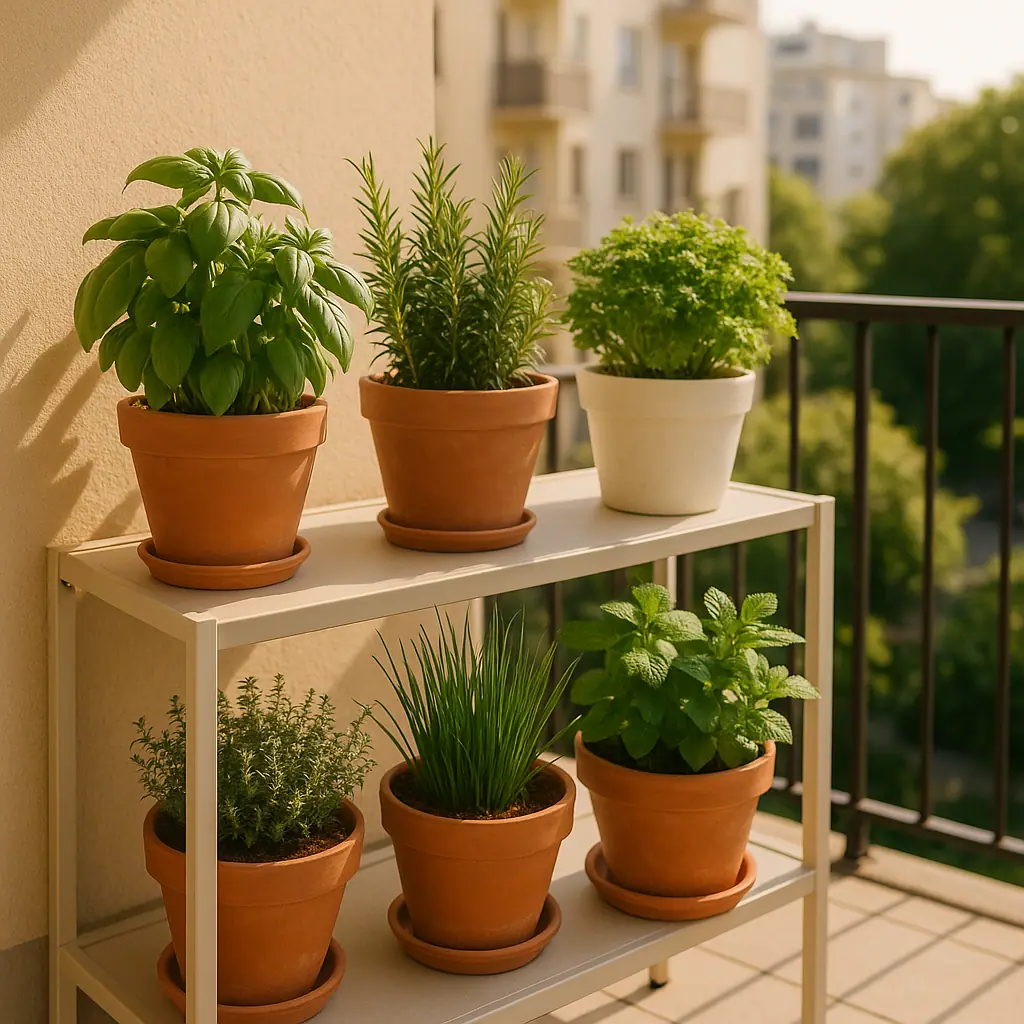
For a first sunny balcony herb garden, choose herbs that stay useful in pots and tolerate regular harvesting. Basil, thyme, oregano, rosemary, sage, parsley, chives, and mint are common container choices, but they do not all want the same care.
A simple beginner setup is one leafy herb, one woody Mediterranean herb, and one flexible everyday herb. For example, basil for fresh summer leaves, thyme or oregano for a drier pot, and parsley or chives for frequent snipping. If you want mint, keep it in its own container because it spreads aggressively and can overwhelm neighbors.
Best herbs to try first
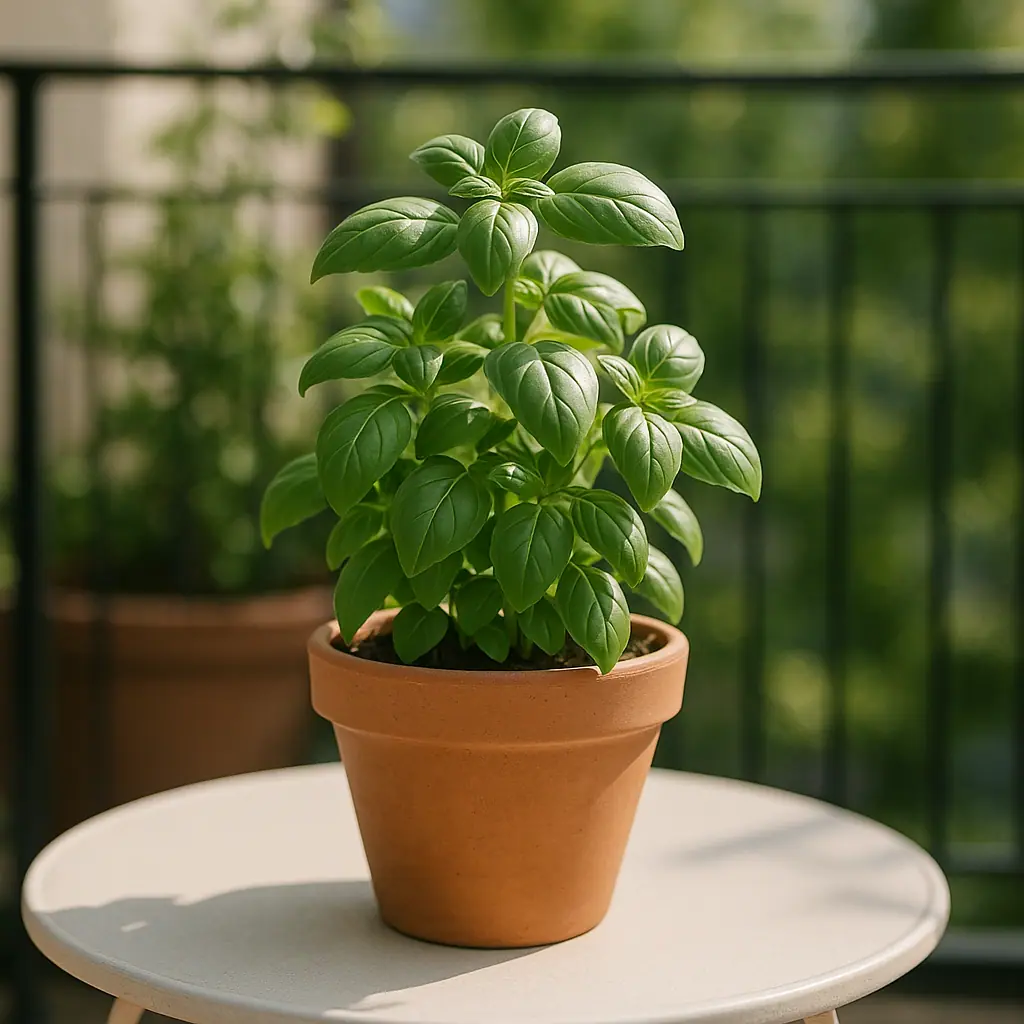
- Basil: a good warm-season choice for a sunny balcony, especially if you can water consistently and harvest often.
- Thyme: compact, fragrant, and well suited to a pot that dries slightly between waterings.
- Oregano: useful for cooking and comfortable in bright, well-drained conditions.
- Rosemary: a sturdy choice for a larger pot, but it needs excellent drainage and should not sit wet.
- Chives: forgiving, compact, and easy to snip for quick meals.
- Parsley: useful and beginner-friendly, though it prefers steadier moisture than rosemary or thyme.
Herbs to keep separate
Mint is the classic separate-pot herb. It can grow vigorously and crowd other plants. Basil is also often easier alone because it likes more consistent moisture than thyme, oregano, rosemary, or sage. Separate pots let you move each plant when heat, wind, or watering needs change.
What to Check First for the Best Herbs for a Sunny Balcony Garden
Before buying plants, stand on the balcony at different times of day and watch where light lands. Morning sun is usually gentler. Afternoon sun can be hotter, especially near brick, concrete, metal railings, or glass doors.
Then check the practical side. Can water drain without dripping onto a neighbor below? Is the railing windy? Is there a hose, watering can, or sink nearby? Can you move pots if a heat wave arrives? These checks are less exciting than choosing plants, but they prevent most beginner frustration.
How to Choose and Set Up Sunny Balcony Herbs Step by Step
- Pick three starter herbs: choose herbs you will use often instead of buying every plant that looks healthy at the nursery.
- Use containers with drainage holes: each pot needs a clear way for extra water to leave. Add a saucer only if you can empty it.
- Group by watering style: keep rosemary, thyme, oregano, sage, and lavender on the drier side. Keep basil, parsley, cilantro, and mint where you can check moisture more often.
- Start with a quality potting mix: use container mix rather than dense garden soil, which can compact in pots.
- Harvest lightly at first: wait until plants are settled, then snip small amounts regularly to encourage fuller growth.
- Review after one hot week: if leaves wilt daily, move the pot to gentler sun, use a slightly larger container, or adjust watering.
Common Compact Herb Mistakes to Avoid
The biggest mistake is planting herbs with opposite moisture needs in one pretty container. Basil and rosemary can both like sun, but basil usually wants steadier moisture while rosemary dislikes staying wet. A mixed planter can work later, but separate pots are easier for a first balcony garden.
Another mistake is treating full sun as one fixed condition. A balcony with six hours of gentle morning light is different from a balcony with five hours of late afternoon heat against a brick wall. Watch the plant, not just the label.
- Do not overcrowd the pot: tight spacing makes watering harder and reduces airflow.
- Do not skip drainage: herbs may decline quickly in containers that hold water at the bottom.
- Do not fertilize heavily by default: many herbs grow best with moderate feeding, not constant rich fertilizer.
- Do not ignore wind: wind dries leaves and potting mix faster than many beginners expect.
Pros and Cons
Fresh flavor in a small footprint
A few pots can supply regular snips of basil, thyme, chives, parsley, or oregano without needing a full garden bed.
Easy to rearrange
Separate containers let you move sensitive herbs into gentler light or shelter when the balcony gets too hot or windy.
Good beginner feedback
Herbs show clear signals through wilting, yellowing, flowering, and new growth, so you can learn quickly.
Pots dry fast
Small containers in sun and wind may need more frequent checking than the same herb in the ground.
Not all herbs share one routine
Leafy herbs, woody herbs, and spreading herbs often need different water, spacing, and pruning habits.
A Simple Sunny Balcony Herb Checklist
- Sun checked: at least several hours of direct light, with notes on morning or afternoon exposure.
- Drainage confirmed: every container has holes and a safe runoff plan.
- Starter herbs chosen: three to five herbs you will actually use.
- Separate pots ready: especially for mint, basil, rosemary, and any herb you are still learning.
- Watering routine set: check soil with a finger before watering instead of watering only by the calendar.
When to Get Extra Help
Check a local extension office, nursery, or experienced local gardener when your climate is very hot, windy, humid, or frost-prone. Herb advice changes by region. Rosemary may overwinter outdoors in one area and need protection in another. Cilantro may perform well in cool shoulder seasons but bolt quickly in summer heat.
Also ask your building manager or lease contact if balcony runoff, railing planters, hanging pots, or heavy containers are restricted. The best herb garden is one that grows well and fits the rules of the space.
Frequently Asked Questions
What should I check first before choosing balcony herbs?
Check how many hours of direct sun the balcony gets, when that sun happens, and whether pots can drain safely without causing problems below.
How often should I review the setup?
Review it after the first hot week, after a windy day, and whenever the season changes. Balcony herbs often need small adjustments over time.
What should I do if I am not sure which herbs can share a pot?
Use separate pots first. Once you understand each herb's watering and growth habit, you can try combinations with similar needs.
Can I change the herb garden later?
Yes. Container gardens are flexible. You can move pots, replace tired annual herbs, divide aggressive growers, or shift plants into gentler light.
Final Thoughts
The best herbs for a sunny balcony garden are not always the most unusual herbs. They are the herbs that fit your sunlight, pot size, watering routine, and cooking habits. Basil, thyme, oregano, rosemary, parsley, chives, and mint can all be useful choices when they are matched to the right container and care pattern.
Begin with a few separate pots, watch them for a week, and adjust before adding more. That small start builds confidence and gives you a balcony herb garden that feels useful instead of overwhelming.