Learning how to grow basil in a patio pot is one of the friendliest first steps into edible container gardening. Basil grows quickly in warm weather, gives clear feedback when it needs water, and rewards small harvests with leaves you can use right away.
The main trick is not buying the prettiest plant and hoping for the best. A patio pot changes the way basil experiences sun, wind, heat, and moisture. If you choose the right container, use a loose potting mix, and harvest before the plant gets stressed or woody, one basil plant can teach you a lot about compact herbs and edible containers.
Why This Matters
Basil is forgiving, but it is not automatic. A plant in the ground has more soil around its roots. A plant in a patio pot has a smaller root zone that can warm up, dry out, or stay soggy depending on the container and the weather. That is why container setup matters as much as the plant itself.
University extension guidance gives beginners a reliable baseline. The University of Minnesota Extension notes that basil prefers a sunny location, well-drained conditions, and containers with holes in the bottom for proper drainage: growing basil in home gardens. For a small patio, translate that into three checks: enough sun, a real drainage hole, and a watering routine you can actually keep.
Start With Compact Herbs and Edible Containers
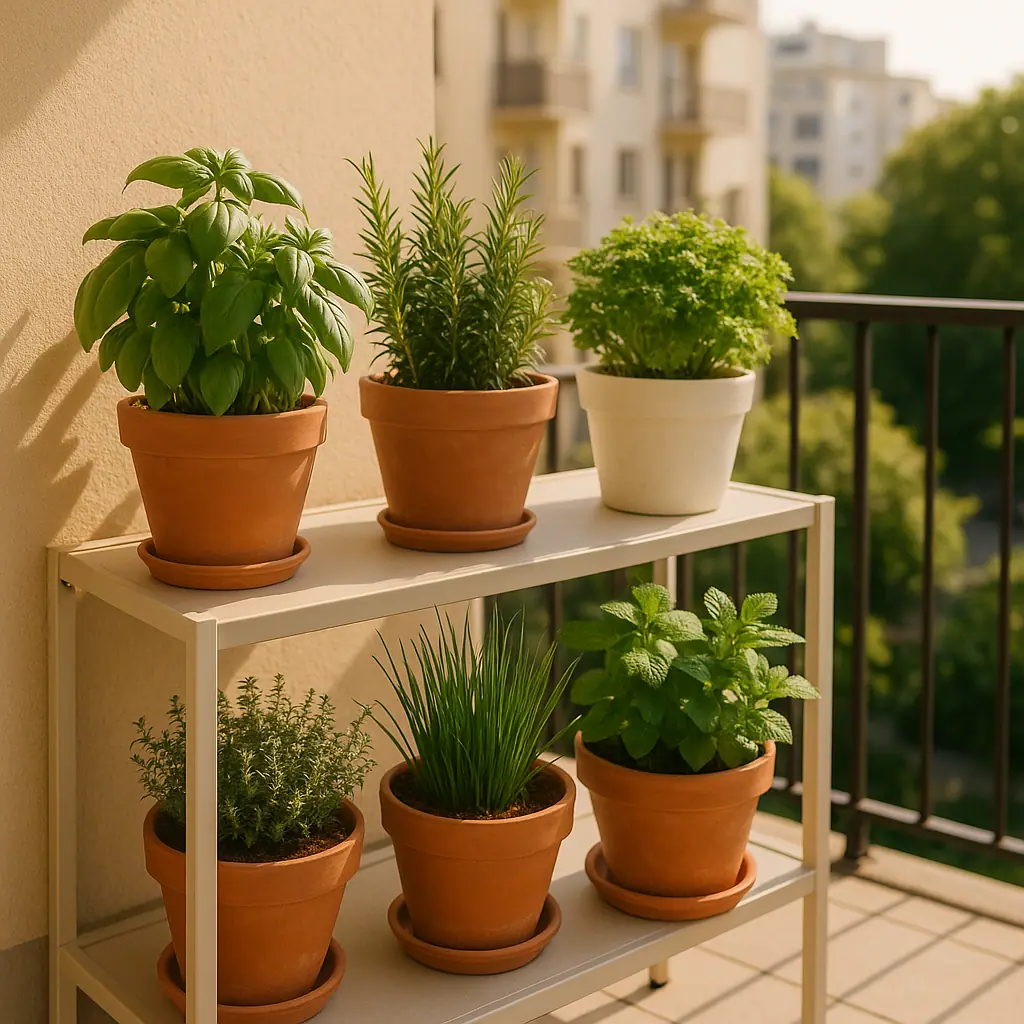
A single basil pot is better than a crowded first herb planter. Basil usually wants more consistent moisture than rosemary, thyme, oregano, or sage. Keeping it alone lets you water, turn, prune, and move the plant without trying to satisfy several herbs at once.
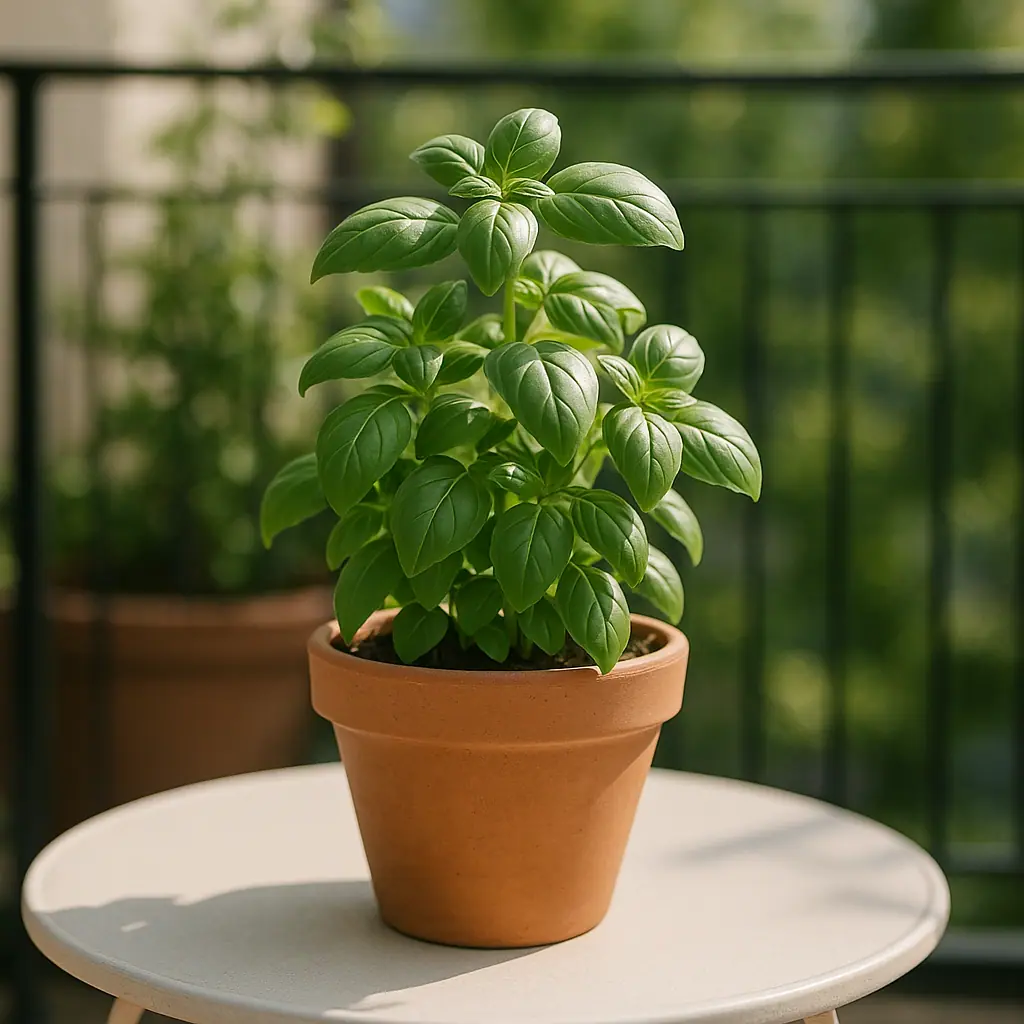
For most beginners, a patio pot around 8 to 12 inches wide is a practical starting range for one basil plant. The exact size can vary by variety, climate, and container material, but avoid tiny decorative pots that dry out too quickly and leave little room for roots. Choose a pot that feels stable, has at least one drainage hole, and fits where you can reach it with a watering can.
What to buy first
- One healthy basil plant: choose compact, green growth rather than a tall plant already flowering.
- A container with drainage: check the bottom before buying. A pretty cachepot without a hole is not enough by itself.
- Fresh potting mix: use mix meant for containers instead of dense garden soil, which can compact in a pot.
- A saucer you can empty: use one only if runoff needs to be controlled, then empty standing water after drainage finishes.
Where to place the pot
Put the basil where it gets strong light but can be watched during hot afternoons. A sunny table, plant stand, or patio corner can work if the plant is not baking against a wall all day. If leaves wilt every afternoon even when soil is moist, the plant may need gentler afternoon exposure or a slightly larger container.
What to Check First for Basil in a Patio Pot
Before planting, stand where the pot will sit and look at the real conditions. Count sun hours, notice wind, and check whether reflected heat comes from brick, concrete, glass doors, or metal railings. Basil likes warmth, but a small pot on a hot surface can dry faster than expected.
Also check your building rules if you garden on a balcony. Some spaces limit railing planters, heavy containers, or drainage that drips below. A simple floor pot with a controlled saucer is often easier to manage than a hanging setup when you are still learning.
How to Grow Basil in a Patio Pot Step by Step
- Choose the pot: use a stable container with drainage holes and enough room for one basil plant to grow bushy instead of cramped.
- Add potting mix: fill with fresh container mix, leaving enough space at the top so water does not spill over immediately.
- Plant at the same depth: set the basil so the top of its nursery soil sits level with the new mix. Do not bury the stem deeply.
- Water thoroughly once: water until excess begins to drain, then let the pot finish draining before returning it to a saucer.
- Place in bright sun: start with a sunny spot and watch the plant for heat stress during the first week.
- Check moisture by touch: water when the upper part of the mix begins to feel dry, not just because the calendar says so.
- Pinch and harvest early: once the plant is settled and growing, snip small stem tips above a pair of leaves to encourage branching.
Common Compact Herb Mistakes to Avoid
The most common mistake is using a container that looks good indoors but has no drainage. Basil roots need oxygen as well as moisture. If water cannot leave the pot, the plant may decline even when the leaves look thirsty.
Another mistake is letting flowers take over too early. Basil naturally wants to flower as it matures, especially when stressed by heat, drought, or neglect. Snip flower buds when you see them if your goal is tender leaves for cooking.
- Do not use a tiny pot: very small pots dry quickly and leave little buffer during hot weather.
- Do not crowd basil with dry-loving herbs: basil and rosemary can both enjoy sun, but they do not always want the same watering pattern.
- Do not water only on autopilot: wind, sun, pot size, and container material change how fast the mix dries.
- Do not ignore cold nights: basil is a tender warm-season herb, so protect it from chilly conditions in your region.
Pros and Cons
Fast beginner feedback
Basil responds quickly to better watering, brighter light, and regular pinching, so new gardeners can learn from the plant week by week.
Useful in a small footprint
One patio pot can provide fresh leaves for simple meals without taking over a balcony or requiring a full raised bed.
Easy to move when conditions change
A single container can shift away from harsh afternoon heat, strong wind, or a cold edge of the patio.
Small pots dry quickly
Basil in a container may need closer moisture checks than basil planted in the ground, especially during hot or windy weather.
Flowering changes the plant
If basil is allowed to flower heavily, leaf production and flavor can decline, so regular pinching is part of the routine.
A Simple Basil Pot Checklist
- Pot has drainage: water can leave the container, and any saucer can be emptied.
- Light is bright: the plant receives strong sun without sitting in punishing reflected heat all day.
- Mix is loose: the container is filled with fresh potting mix rather than compacted garden soil.
- Watering is checked by touch: you inspect the soil before watering instead of guessing from a fixed schedule.
- Harvesting starts small: you pinch tips once the plant is settled, then keep harvesting lightly and often.
When to Get Extra Help
Ask a local extension office, nursery, or experienced gardener when your patio is unusually hot, windy, shaded, humid, or exposed to cold nights. Basil care changes with region and season. What works on a mild morning-sun balcony may fail on a west-facing concrete patio in midsummer.
Get extra guidance if leaves turn black after cold weather, stems collapse near the soil line, or the plant wilts even when the mix is damp. Those signs can point to stress beyond normal watering mistakes, and local advice is more useful than guessing.
Frequently Asked Questions
What should I check first before growing basil in a patio pot?
Check the pot for drainage, the patio for enough sun, and your watering access. Those three details shape most beginner basil success.
How often should I water basil in a pot?
Check the soil instead of following one fixed schedule. Water when the upper part of the potting mix begins to feel dry, and adjust during heat, wind, or rain.
What should I do if my basil starts flowering?
Pinch off flower buds if you want more tender leaves. Flowering is normal, but regular harvesting helps keep the plant bushier for longer.
Can I grow basil with other herbs in the same container?
You can, but beginners usually do better with basil in its own pot. It often wants steadier moisture than woody herbs such as rosemary, thyme, or oregano.
Final Thoughts
How to grow basil in a patio pot comes down to a simple pattern: give the plant warmth, bright light, drainage, steady moisture checks, and regular small harvests. You do not need a big outdoor space or a complicated edible garden plan to start.
Begin with one basil plant in one good pot. Watch it for a week, adjust the sun or watering if needed, and harvest lightly once new growth begins. That small routine can build the confidence you need for the rest of your patio herb garden.