No-drill trellis ideas for patio containers can help renters grow climbing plants without putting holes in walls, railings, siding, or masonry. The useful goal is not to build the tallest support possible. It is to give a plant something steady to climb while keeping the container stable, removable, and easy to care for.
This matters most in small outdoor spaces because every choice affects something else. A trellis changes the weight of the pot, the way wind catches the plant, how often the soil dries out, and whether you can still move around the patio safely. Start small, test the setup, and let the plant tell you whether the support is working.
Why No-Drill Trellis Ideas for Patio Containers Matter
Many climbing vegetables and vines need support to grow cleanly and stay manageable. University of Minnesota Extension explains that trellises and cages are common supports for vegetables, and that crops such as peas, beans, squash, melons, and cucumbers can benefit from vertical support when the structure is appropriate: trellises and cages to support garden vegetables.
On a patio or balcony, the support has to do two jobs at once. It has to guide the plant upward, and it has to avoid transferring stress to a building surface you do not own. That is why container-based trellises, freestanding frames, and removable stakes are usually better first choices than wall-mounted grids.
Start With Renter-Friendly Outdoor Upgrades
A renter-friendly outdoor upgrade should be removable, modest, and easy to inspect. A trellis can look harmless when the plant is young, but the setup changes once vines grow, leaves catch wind, and the soil becomes heavy after watering.
If you are still planning the whole patio garden, map the containers before choosing a trellis. PatioSprout's guide to planning a container garden before buying plants can help you decide where the pot should live before you add height. A trellis should support the layout, not force the walkway, chair, or watering routine into an awkward corner.
What counts as no-drill?
No-drill means the setup does not use screws, anchors, bolts, drilled brackets, or permanent wall hardware. For patio containers, that usually means stakes pushed into the potting mix, a cage inside the container, a freestanding panel behind the pot, or a lightweight obelisk that sits in the container itself.
What still needs caution?
Adhesive hooks, railing clamps, tension rods, and hook-over products may be sold as no-drill, but they still depend on a surface or shared building part. Use them only when the product instructions, surface type, weight rating, and building rules all agree.
What to Check First for No-Drill Trellis Ideas for Patio Containers
Before buying anything, check the container, the plant, and the location together. A trellis that works in a garden bed may fail in a light plastic pot on a windy balcony. A narrow container may also tip if the plant grows upward faster than the root area can anchor it.
- Container size: use a pot wide and heavy enough to balance the mature plant, not just the seedling.
- Drainage: keep drainage holes open and use a saucer or tray only if you can empty overflow promptly.
- Wind exposure: choose lower, wider supports on upper balconies, exposed corners, or patios that get gusts.
- Plant habit: match the trellis to how the plant climbs, sprawls, or needs tying.
- Material: choose weather-ready bamboo, coated metal, cedar, fiberglass, or sturdy plastic made for outdoor use.
- Access: leave room to water, prune, harvest, rotate the pot, and remove the trellis at season's end.
Penn State Extension notes that even compact container vegetables may still need a trellis or other support, including examples such as tomatoes, pole beans, and cucumbers. Their container-gardening guidance is a useful reminder that support decisions belong with pot size, watering, and plant choice, not as an afterthought: container vegetable gardening keys to success.
Five No-Drill Trellis Ideas That Work in Containers
The safest beginner options keep the support tied to the container or standing independently behind it. Avoid anything that needs the wall to carry the plant's weight unless your building explicitly allows it.
1. Three-stake teepee trellis
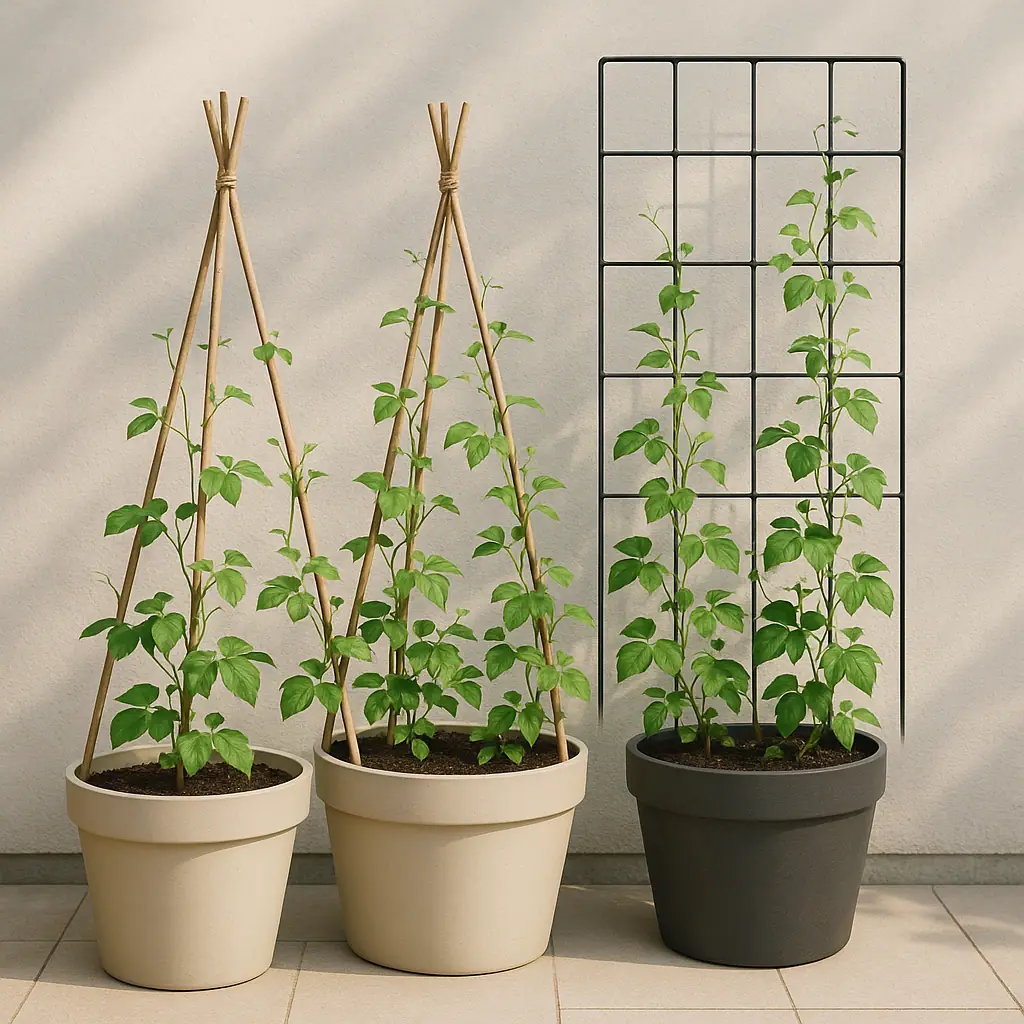
A teepee trellis uses three or four stakes gathered near the top and spread around the edge of the pot. It works well for peas, pole beans, and lightweight flowering vines. Push the stakes deep into the potting mix, tie them firmly at the top, and keep the pot wide enough that the frame does not lean.
2. Tomato cage inside a large pot
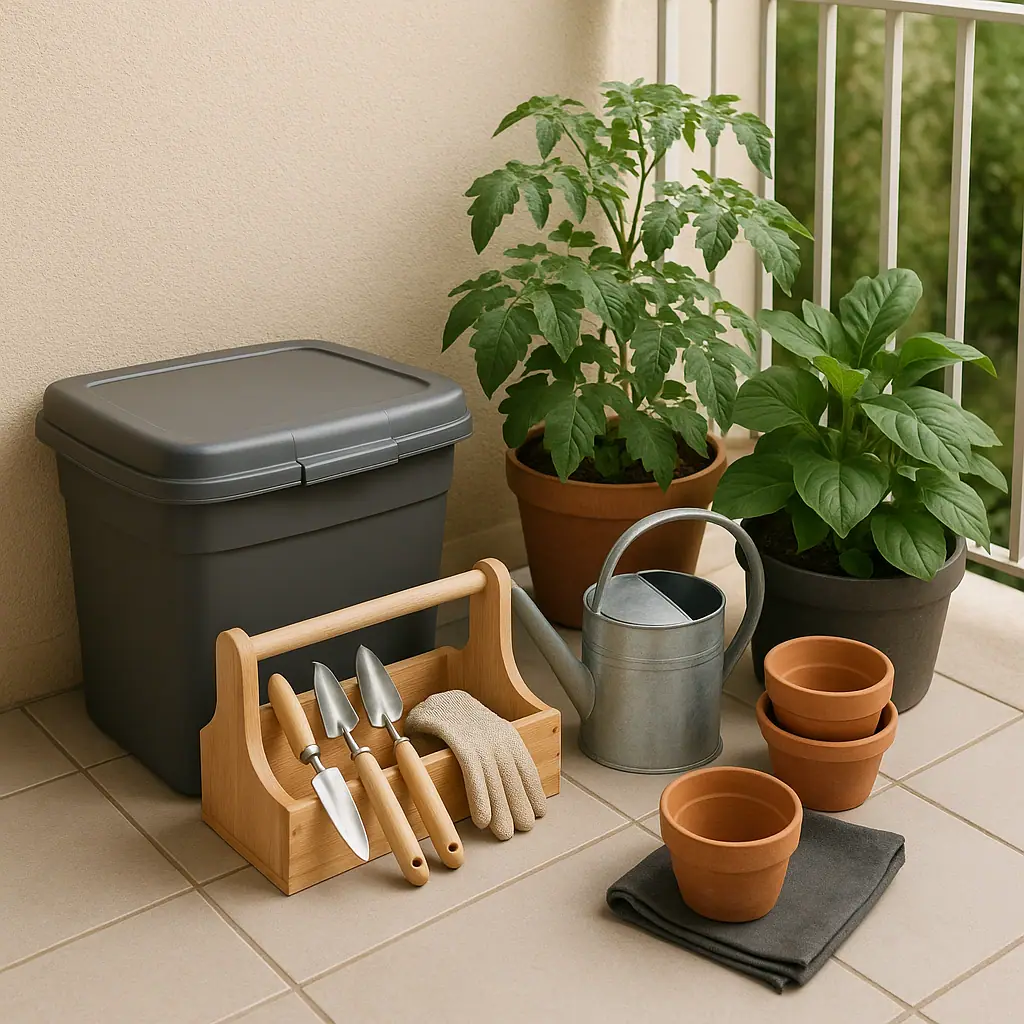
A tomato cage is one of the simplest no-drill supports because it sits inside the container. Use it for determinate tomatoes, compact cucumbers, or small vines that need gentle guidance. Put the cage in at planting time so you do not damage roots later.
3. Freestanding panel behind the container
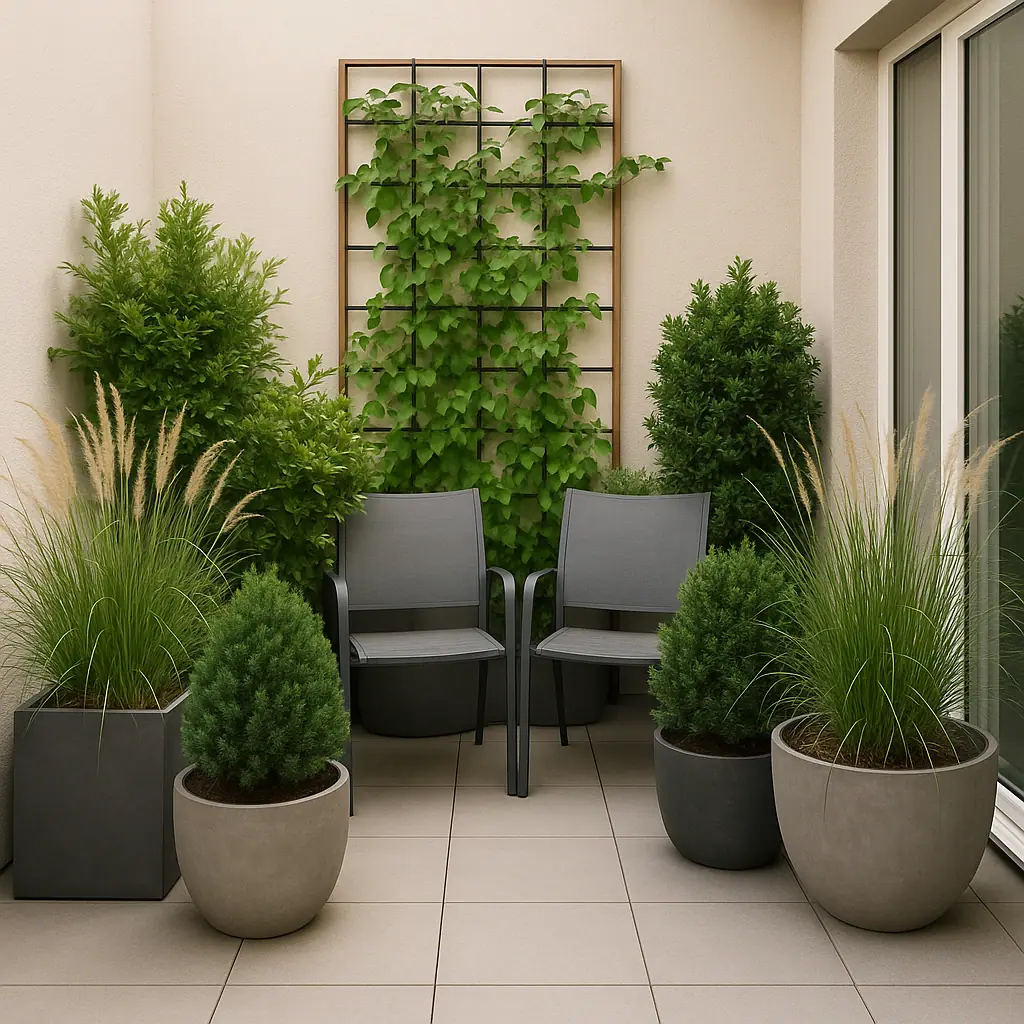
A short metal grid, cedar lattice panel, or folding garden screen can stand behind a row of containers without attaching to a wall. This is useful when the pots are too shallow for tall stakes. Keep the panel low enough for wind conditions and make sure the base cannot slide.
4. Pot-mounted obelisk
A small obelisk gives a patio pot a tidy vertical shape. It is best for ornamental vines, sweet peas, or lighter edible climbers. Choose one that fits inside the pot without crowding the plant's crown or blocking the watering area.
5. Clip-on container frame used conservatively
Some planter systems include support frames designed for that exact container. These can be useful because the frame and pot are meant to work together. Stay within the product's plant and weight guidance, and avoid adding extra extensions that make the setup top-heavy.
How to Set Up a No-Drill Trellis Step by Step
Treat the first trellis as a trial. You are checking stability, watering access, and how the plant behaves in your real patio conditions.
- Choose the plant first: decide whether you are supporting peas, beans, cucumbers, compact tomatoes, or an ornamental vine.
- Pick the container next: choose a pot with enough width, depth, and weight for both the plant and the support.
- Install support early: place stakes, cages, or frames when planting so roots are not disturbed later.
- Keep the structure modest: beginners should favor shorter supports that are easy to inspect and move.
- Tie gently: use soft garden ties, twine, or clips that do not cut into stems as the plant grows.
- Water and test: after a full watering, check whether the pot wobbles, leans, or drains poorly.
- Watch wind days: simplify the setup if the trellis sways, the pot shifts, or leaves whip hard.
- Review weekly: retie loose stems, prune crowded growth, and remove dead leaves before they tangle in the support.
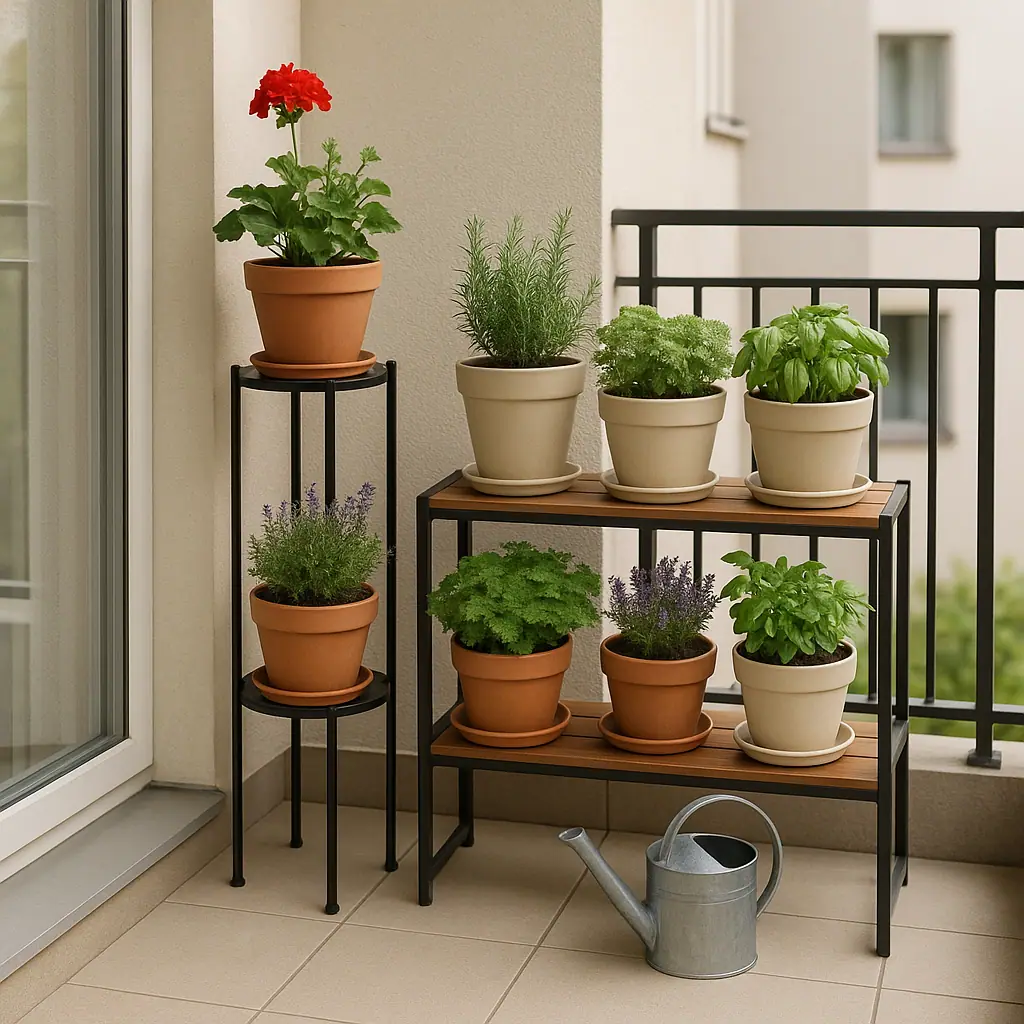
For a nearby setup decision, PatioSprout's guide to renter-friendly balcony plant stands that do not need drilling can help you decide whether a stand should lift the pot or whether the trellis pot should stay low for stability.
Pros and Cons of No-Drill Trellises
Good for renters
Container-based supports avoid permanent holes and can usually be removed at the end of the season.
Uses vertical space
A trellis can guide climbing plants upward so a small patio can grow more without adding many extra pots.
Easier plant care
Supported vines can be easier to inspect, prune, water, and harvest than tangled growth on the patio floor.
Can become top-heavy
A tall trellis, wet soil, and a leafy plant can make a narrow pot unstable in wind.
Not every plant is lightweight
Heavy crops, long vines, and large tomatoes may need stronger support than a small container can safely provide.
Common Renter-Friendly Outdoor Upgrade Mistakes to Avoid
The most common mistake is treating no-drill as automatically safe. No-drill only means no holes. It does not guarantee that the support is strong enough, allowed by the building, or stable in your specific container.
- Adding height too fast: a tall trellis looks useful but catches more wind.
- Using a tiny pot: small pots dry out quickly and may not balance a climbing plant well.
- Waiting too long: adding a cage after roots fill the pot can damage the plant.
- Tying stems tightly: stems thicken as they grow, so ties need room and regular checking.
- Ignoring harvest weight: cucumbers, tomatoes, and melons can add more weight than the trellis had at planting time.
- Leaning on the building: a panel that rests against siding or railings may still mark, scrape, or transfer force.
A Simple Checklist Before You Buy
Use this checklist before ordering a trellis or bringing one home from a garden center.
- Rules: does your lease or building allow this kind of patio support?
- Pot fit: is the container wide and deep enough for the plant and the support?
- Plant match: does the plant climb naturally, or will it need frequent tying?
- Wind: is the support short and stable enough for your balcony or patio exposure?
- Watering: can you reach the soil without knocking the trellis or wetting shared surfaces?
- Removal: can you take the support out at season's end without damaging the pot or patio?
- Growth room: will the plant have airflow instead of becoming a dense wall of leaves?
When to Get Extra Help
Ask your property manager or building office before using anything that touches railings, exterior walls, shared privacy screens, or balcony edges. Also ask before growing large vines or heavy fruiting plants if balcony weight or drainage rules are unclear.
Get gardening help if a plant repeatedly pulls the trellis sideways, wilts even with careful watering, or outgrows the support early in the season. Sometimes the safer fix is a larger container, a shorter support, or a different plant for the space.
Frequently Asked Questions
What should I check first before using a no-drill trellis?
Check your lease or building rules first, then choose a container wide enough to balance the trellis and mature plant.
How often should I review the trellis setup?
Review it weekly during active growth, and check again after heavy watering, strong wind, or a big growth spurt.
What should I do if I am not sure the support is strong enough?
Use a shorter support, move heavy plants lower, or ask a local extension office, garden center, or property manager before taking a risk.
Can I undo a no-drill trellis later?
Usually, yes. Container-based stakes, cages, and obelisks can be removed at season's end, though roots may hold them firmly if you wait too long.
Final Thoughts
No-drill trellis ideas for patio containers work best when they are modest, stable, and matched to the plant. Start with one container, one support, and one climbing plant before building a larger vertical garden.
If the pot stays steady after watering and wind, the plant climbs without strain, and the setup remains easy to move or remove, you are on the right path. A practical trellis should make container gardening calmer, not more complicated.