Container strawberries for beginners can be a satisfying first edible patio project, but they work best when you start with the real constraints: pot size, drainage, soil, sun, and daily watering access. Strawberries are not difficult plants, yet a small container on hot concrete can make them dry out faster than a beginner expects.
The goal is not to build a perfect berry farm on a balcony. The goal is to set up one manageable strawberry container that teaches you how your patio behaves. If you choose a draining pot, fresh potting mix, and a sunny but reachable location, you give the plants a much better chance before the first flower appears.
Why Container Strawberries for Beginners Need a Real Plan
Strawberries can grow in containers, walkways, and perennial beds, but they still need enough sunlight, good drainage, and steady care. University of Minnesota Extension notes that strawberries need full sun for maximum fruit production and can be planted in containers: growing strawberries in the home garden. For a patio gardener, that means the container can be small-space friendly, but the light still matters.
A strawberry pot also asks for more planning than a decorative annual planter. You are growing a food crop, so the plant needs a clean setup, room for roots, water that drains instead of pooling, and a place where you will remember to check it during warm weather.
Choose the Right Pot for Container Strawberries
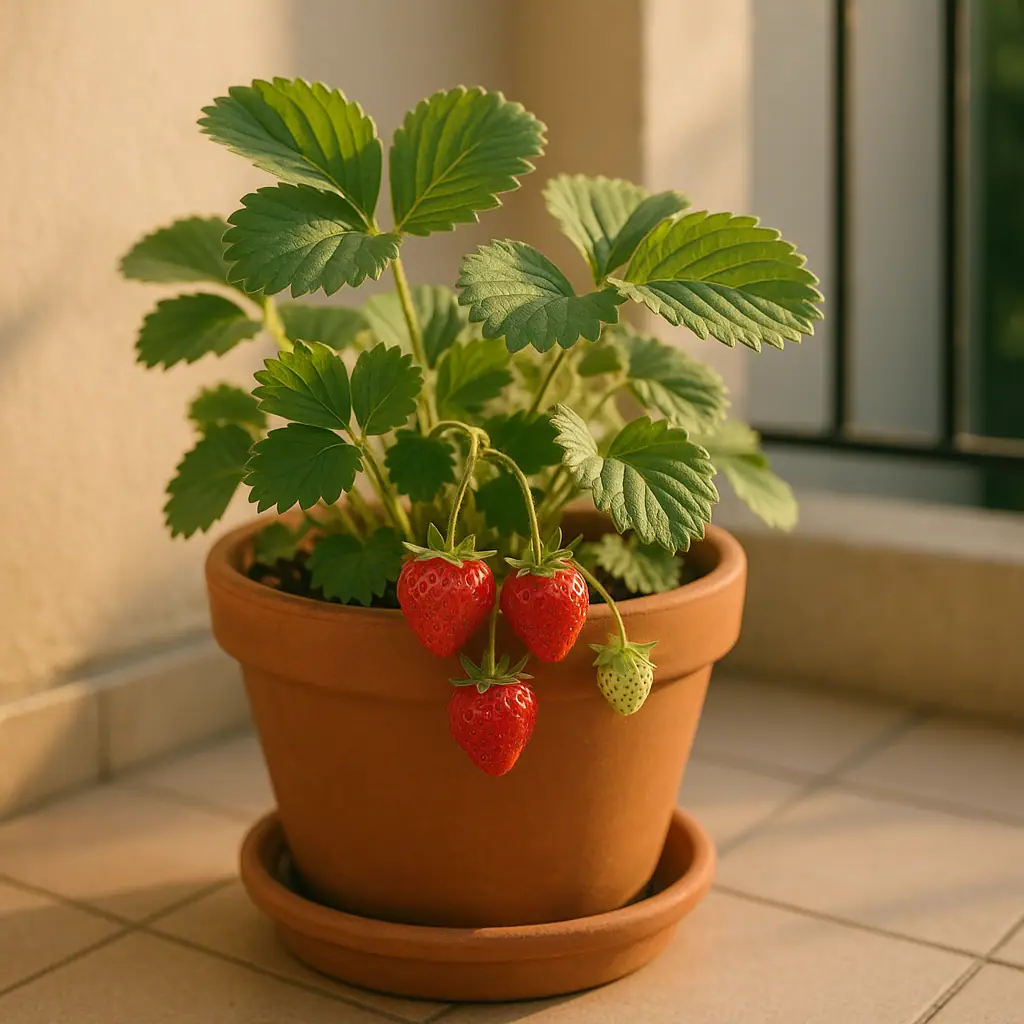
The best first pot for container strawberries is sturdy, easy to reach, and wide enough for the number of plants you want to grow. A single strawberry plant can live in a smaller pot, but beginners usually do better with a wider container that gives roots more room and dries out less dramatically.
If you are still comparing general container sizes, PatioSprout's guide to pot sizes for herbs, flowers, and small vegetables can help you think about depth, width, and plant habits before you buy another planter.
Pot features that matter
- Drainage holes: excess water must be able to leave the container instead of sitting around the crown and roots.
- Stable shape: a low, wide container is usually easier to manage than a narrow pot that tips in wind.
- Enough planting surface: strawberries need room for leaves, flowers, airflow, and easy harvest.
- Reachable placement: put the pot where you can water and inspect it without moving furniture every time.
- Safe saucer use: a saucer can protect surfaces, but empty standing water so the pot does not stay soggy.
What to avoid
A sealed decorative container with no drainage is a risky first choice. If you love the look, use it as a cachepot around a nursery pot that drains freely, then remove the inner pot for watering. Also avoid using heavy garden soil from the ground. It can compact in containers and make watering harder to control.
Soil and Sun for Container Strawberries
Use a fresh, lightweight potting mix made for containers rather than backyard soil. Container mix should hold moisture while still letting excess water and air move through the root zone. This balance matters because strawberries dislike both drought stress and soggy roots.
University of New Hampshire Extension's container gardening guidance explains that garden soil is too heavy for containers and that container plants need adequate drainage and enough direct sunlight: growing vegetables in containers. Even though strawberries are fruit rather than vegetables, the container principles still help beginners avoid heavy soil and poor drainage.
For sun, watch the actual patio rather than guessing from a listing or compass app. A balcony may look bright but only receive a short slice of direct sun. A concrete patio may receive enough sun but become much hotter than nearby garden beds. If you need a simple measuring routine, the PatioSprout article on planning a container garden before buying plants can help you map light before you add more containers.
How to Plant Container Strawberries Step by Step
- Pick a strawberry type: day-neutral or everbearing types can suit small containers because they may fruit over a longer window, while June-bearing types produce more heavily in one season.
- Prepare the pot: confirm drainage holes, add potting mix, and moisten the mix before planting.
- Set the crown correctly: keep the crown at soil level. Do not bury it deep, and do not leave roots exposed.
- Space plants honestly: avoid cramming too many starts into a small pot. Crowding makes watering, airflow, and harvest harder.
- Water after planting: water gently until the mix settles and drains. Add more mix if roots become exposed.
- Place in strong light: choose the sunniest practical spot that is still easy to water and inspect.
- Check moisture often: container strawberries may need frequent checks during hot or windy weather.
- Remove problem fruit: discard moldy or damaged berries and keep the plant area tidy.
New Hampshire Extension's strawberry fact sheet recommends well-drained soil and full sunlight for strawberry plantings: growing fruit strawberries. In a container, those same basics become daily checks: is the pot draining, is the mix drying evenly, and is the plant getting enough bright sun?
Common Strawberry Container Mistakes to Avoid
Most first strawberry-container problems come from treating the pot like decoration instead of a working food container. A pretty planter can still fail if it has no drainage, sits in harsh reflected heat, or is placed somewhere too awkward to water consistently.
Watch for these early signals
- Wilting by afternoon: the pot may be drying too fast, overheating, or sitting in too much wind.
- Yellow leaves: check for overwatering, poor drainage, old potting mix, or crowding.
- Few flowers: the plant may not be getting enough direct sun, or it may need more time to establish.
- Moldy fruit: improve airflow, harvest promptly, and keep fruit from resting on wet soil.
Do not solve every symptom by adding more water. First check the pot weight, soil feel, drainage, and recent weather. A container can look thirsty when roots are actually stressed from staying wet too long.
Pros and Cons of Container Strawberries
Good fit for small spaces
A strawberry container can work on a patio, balcony, doorstep, or small deck without needing a permanent garden bed.
Easy to inspect closely
Keeping strawberries in a pot makes it easier to notice dry soil, pests, flowers, runners, and ripe fruit.
Movable when conditions change
A container can be shifted away from harsh heat, heavy rain, or awkward furniture layouts when needed.
Needs steady watering checks
Containers dry faster than in-ground beds, especially on warm patios and windy balconies.
Fruit may be limited
One pot can be fun and useful, but it will not produce like a full garden row of healthy strawberry plants.
A Simple Care Checklist
Use this quick checklist once the strawberry pot is planted. It keeps the routine practical and helps you catch small problems before they become discouraging.
- Morning light: confirm the plant receives strong direct sun for part of the day.
- Moisture check: feel the mix before watering instead of watering on autopilot.
- Drainage check: make sure water exits the pot and does not sit in the saucer for long.
- Fruit check: harvest ripe berries promptly and remove damaged fruit.
- Leaf check: look under leaves for pests, spotting, or early stress.
- Heat check: move the pot or add afternoon relief if the patio becomes harsh in summer.
Frequently Asked Questions
What pot size is best for container strawberries?
Choose a pot that is wide, stable, and draining. A larger container is usually easier for beginners because it dries out less suddenly than a very small pot.
Can strawberries grow on a balcony?
Often, yes, if the balcony has enough direct sun, safe drainage, manageable wind, and building rules that allow containers.
Should I use garden soil in a strawberry pot?
No. Use fresh potting mix made for containers. Garden soil can become too heavy and compacted in a pot.
How often should I water container strawberries?
Check the mix often, especially in warm or windy weather. Water when the upper mix begins to dry, then let excess water drain away.
Final Thoughts
Container strawberries for beginners are easiest when the first setup stays small, visible, and easy to maintain. Choose a draining pot, use container potting mix, place it in the brightest practical spot, and check moisture before the plant is under stress.
If the first container produces only a modest harvest, that is still useful. You learned how your patio handles sun, heat, water, and edible plants. Adjust the next pot from that evidence, and the second strawberry container will be much easier to manage.