A beginner guide to aphids on patio plants should start with reassurance: aphids are common, and a small cluster does not mean your container garden is ruined. These soft-bodied insects often gather on tender stems, new leaves, buds, and the undersides of foliage. On a balcony or patio, you may notice them first because one small pot can change quickly from clean-looking to crowded.
The best first move is a close inspection, not panic spraying. Aphids are easiest to manage when you catch them early, keep the plant healthy, and remove small colonies before they build up. This guide gives you a simple check-and-act routine for container plants in compact outdoor spaces.
Why Aphids on Patio Plants Matter
Aphids feed by sucking plant sap. On sturdy, established plants, small numbers may cause little visible damage. But patio containers have limited soil, limited root space, and more exposure to heat, wind, and watering swings, so a stressed plant may react faster than one in a garden bed.
University of Minnesota Extension explains that aphids can be knocked off plants with a strong spray of water and that this also helps wash away honeydew and sooty mold: aphids in home yards and gardens.
Start With Plant Health and Pest Basics
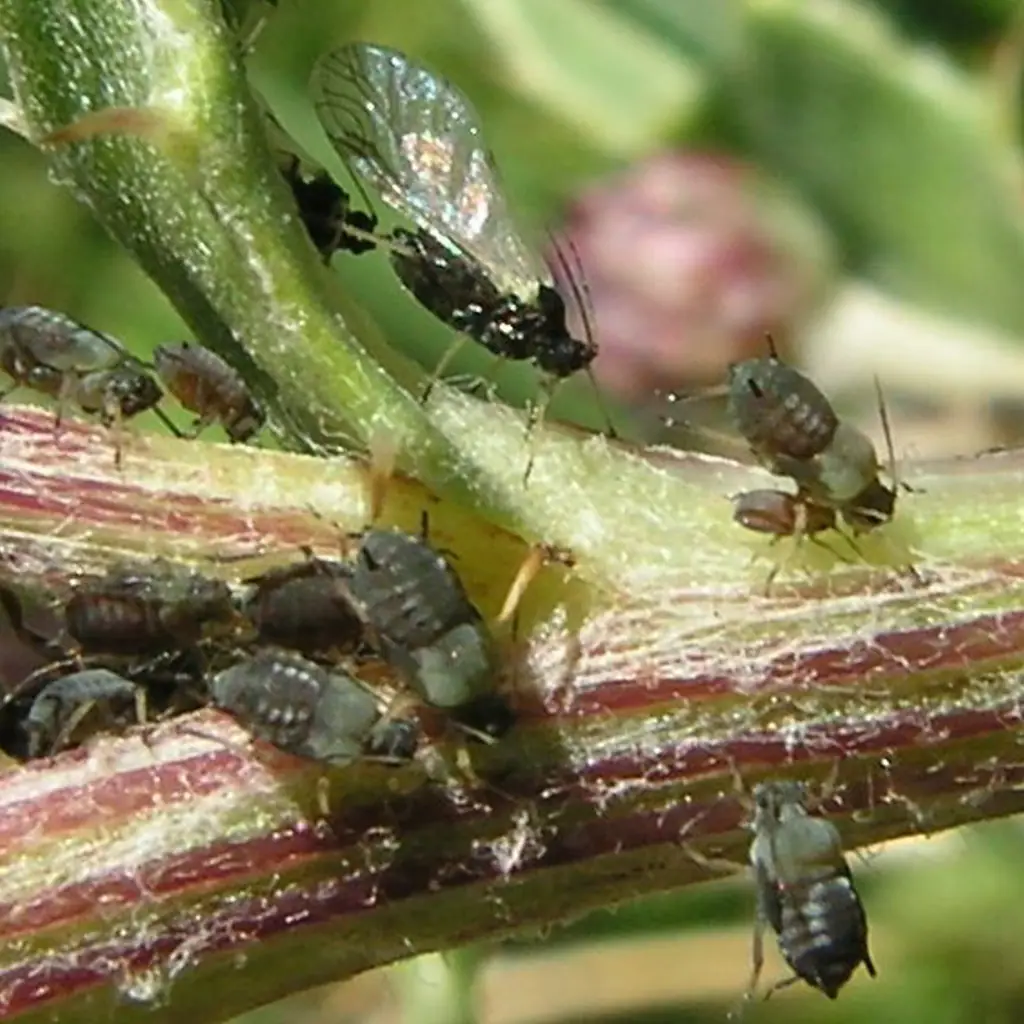
Aphids often show up on fresh, soft growth. Look at new shoots, flower buds, the backs of leaves, and stems near the growing tips. You may see green, yellow, gray, brown, or black insects clustered together. You may also see curled leaves, sticky residue, ants moving up and down stems, or black sooty mold growing on honeydew.
UC IPM notes that aphids can curl leaves, produce sticky honeydew, and attract ants and sooty mold. It also emphasizes natural enemies and water sprays before pesticide escalation: UC IPM aphids guidance.
What aphids look like up close
Most aphids are tiny and pear-shaped. Many cluster in groups rather than spreading evenly over the whole plant. Some may have wings, especially when a colony is crowded or moving to another plant. A phone camera zoom can help you inspect without touching every leaf.
Why patio containers need a gentle approach
Small containers can dry out fast, heat up against paving, and lose nutrients through frequent watering. A stressed plant is less able to rebound from pests. Before treating aphids, make sure the plant is not also thirsty, waterlogged, scorched, or crowded in a pot that is too small.
What to Check First for Aphids on Patio Plants
Use the same order each time you inspect. It keeps you from overreacting and helps you notice whether the problem is improving.
- New growth: check tender tips, buds, and young leaves first because aphids often prefer soft tissue.
- Leaf undersides: turn a few leaves gently and look for clusters near veins.
- Sticky residue: honeydew can make leaves, railings, or patio surfaces feel tacky.
- Ant activity: ants may appear where honeydew is present, even if you missed the aphids at first.
- Plant stress: note heat, dry soil, soggy soil, recent transplanting, or cramped roots.
- Beneficial insects: lady beetles, lacewing larvae, hoverfly larvae, and tiny parasitoid wasps may already be helping.
If your plant also has yellowing leaves, compare the pest signs with PatioSprout's guide to yellow leaves on container herbs. Yellowing can come from water, nutrients, light, or pests, so the pattern matters.
How to Handle Aphids on Patio Plants Step by Step
The safest beginner routine is to remove what you can see, support the plant, and then watch for new colonies. Do one step at a time so you can tell what actually helped.
- Isolate the pot if practical: move a small affected container a few feet away from crowded plants while you inspect and clean it.
- Rinse the colony: use a firm but controlled stream of water to knock aphids off sturdy leaves and stems. Support delicate stems with your hand if needed.
- Prune the worst tips: if one tender shoot is heavily curled and crowded, remove that small section and discard it in the trash.
- Wipe delicate leaves: for fragile plants, use a damp cloth or gloved fingers instead of a strong spray.
- Check the next day: look for surviving clusters, especially on new growth and leaf undersides.
- Repeat before escalating: light colonies often need more than one rinse, especially during warm active growth.
- Use sprays only with care: if aphids keep returning in high numbers, choose a product labeled for the plant and location, follow the label exactly, and avoid spraying stressed plants in hot sun.
Pros and Cons of Treating Aphids Early
Small colonies are easier to remove
A few clusters on new growth can often be rinsed, wiped, or pruned before they spread through nearby containers.
You protect tender growth
Fresh shoots, buds, and young leaves are usually where aphid feeding looks most noticeable, so early checks protect the plant's next flush.
You avoid unnecessary products
Starting with inspection and water removal helps beginners avoid spraying when a simple mechanical fix may be enough.
Follow-up is required
One rinse may not remove every aphid. You need to check again over the next few days to catch survivors or new arrivals.
Very delicate plants need care
A strong spray can damage soft stems or flowers, so small seedlings and tender herbs may need wiping or gentle pruning instead.
Common Plant Health and Pest Mistakes to Avoid
Aphid problems often get worse when beginners treat the insect but ignore the plant's growing conditions. A plant in the wrong light, a tiny pot, or soggy soil will stay vulnerable even after the visible pests are reduced.
- Spraying first without identifying the pest: confirm aphids before choosing any treatment.
- Using harsh products in hot sun: stressed leaves can be damaged by poorly timed sprays.
- Ignoring ants: ants can signal honeydew and may protect aphids from predators.
- Overfertilizing tender growth: lush soft growth can be attractive to aphids, so feed gently and according to the product label.
- Forgetting nearby pots: inspect neighboring containers after you find aphids on one plant.
- Removing every beneficial insect: some insects on aphid-covered plants are predators or parasites helping with control.
A Simple Aphid Checklist
Keep this checklist with your watering routine during active growth. It works for flowers, herbs, small vegetables, and mixed patio planters.
- Look: check new growth, buds, and leaf undersides once or twice a week.
- Feel: notice sticky leaves, sticky railing spots, or tacky patio surfaces near the pot.
- Rinse: knock small colonies off sturdy plants with water.
- Prune: remove badly curled tips instead of trying to save every damaged leaf.
- Support: correct watering, drainage, and light so the plant can recover.
- Monitor: recheck the next day, then every few days until new growth looks clean.
When to Get Extra Help
Get extra help when the plant is valuable, the pest keeps returning, or you are unsure whether the insects are aphids. A local extension office, nursery professional, or master gardener program can often help identify the pest from clear photos and plant details.
Also pause before treating plants that are edible, newly transplanted, drought-stressed, heat-stressed, or blooming heavily. The product label matters, and local conditions matter too. For a broader container-care foundation, PatioSprout's guide to container gardening soil mix for beginners explains why drainage and moisture balance shape plant health before pests appear.
Frequently Asked Questions
What should I check first when I see aphids on patio plants?
Check new growth, leaf undersides, sticky residue, ants, and the plant's moisture level. Then rinse or wipe small colonies before considering a spray.
How often should I review a plant after finding aphids?
Check the plant the next day after rinsing, then every few days for one to two weeks. New clusters are easier to remove when they are still small.
What should I do if I am not sure the insects are aphids?
Take clear photos of the insects, the whole plant, and the damaged leaves. Compare with extension resources or ask a local garden center before treating.
Can I undo aphid damage later?
You cannot usually repair curled or distorted leaves, but you can protect new growth. Judge recovery by cleaner new leaves and steadier growth after the colony is reduced.
Final Thoughts
Aphids are frustrating, but they are also manageable when you slow down. Inspect the soft new growth, remove small colonies with water or gentle pruning, support the plant's basic care, and watch for a few days before escalating.
Start with one affected pot today. Turn over the leaves, rinse what you find, and make a note to check again tomorrow. That small habit is often the difference between a brief aphid visit and a patio-wide problem.