Container gardening soil mix for beginners is one of the quiet details that decides whether a patio garden feels easy or frustrating. The right mix gives roots air, holds enough moisture between waterings, and lets extra water drain before plants sit in a soggy pot.
If you are starting with a balcony, porch, or small patio, you do not need a custom recipe for every plant. You need a reliable potting mix, containers with drainage, and a simple way to adjust for herbs, flowers, or compact vegetables.
This guide explains what to buy, what to avoid, and how to fill your containers without turning soil shopping into a science project.
Why Container Gardening Soil Mix Matters
In the ground, plant roots can spread into a larger soil area. In a pot, roots depend on a small volume of mix for air, moisture, nutrients, and support. That small volume changes quickly: it dries faster in sun, heats up on hard surfaces, and can become waterlogged if drainage is poor.
The main job of container gardening soil mix is balance. It should stay loose enough for oxygen to reach roots, hold moisture long enough for the plant to use it, and drain steadily after watering.
Start With Containers, Soil, and Drainage
Before choosing a brand or ingredient list, check the container itself. A good mix cannot fix a pot with no drainage path. Most beginner patio plants do better in containers with holes at the bottom, plus a saucer or tray that can be emptied after water drains through.
The University of Illinois Extension explains that soils for containers need to be well aerated and well drained while still holding enough moisture for plant growth. It also warns against using garden soil by itself in containers. You can review its guidance on soil for container gardens when comparing potting mix options.
Potting mix is not the same as garden soil
Garden soil can compact in a pot. Once it compacts, water may run unevenly, roots may receive less air, and the container can become heavier than expected. Bagged potting mix is usually lighter and designed for container use.
Drainage holes come before decorative style
A pretty pot without holes can still be useful, but treat it as a decorative outer container. Keep the plant in a nursery pot or liner inside it, then remove standing water so roots are not sitting in a wet bottom layer.
What to Check First for Container Gardening Soil Mix for Beginners
When you stand in front of a stack of soil bags, ignore the most dramatic label first. Read for practical clues. A beginner-friendly container mix should mention containers, pots, planters, or potting mix. It should feel light compared with dense topsoil or garden soil bags.
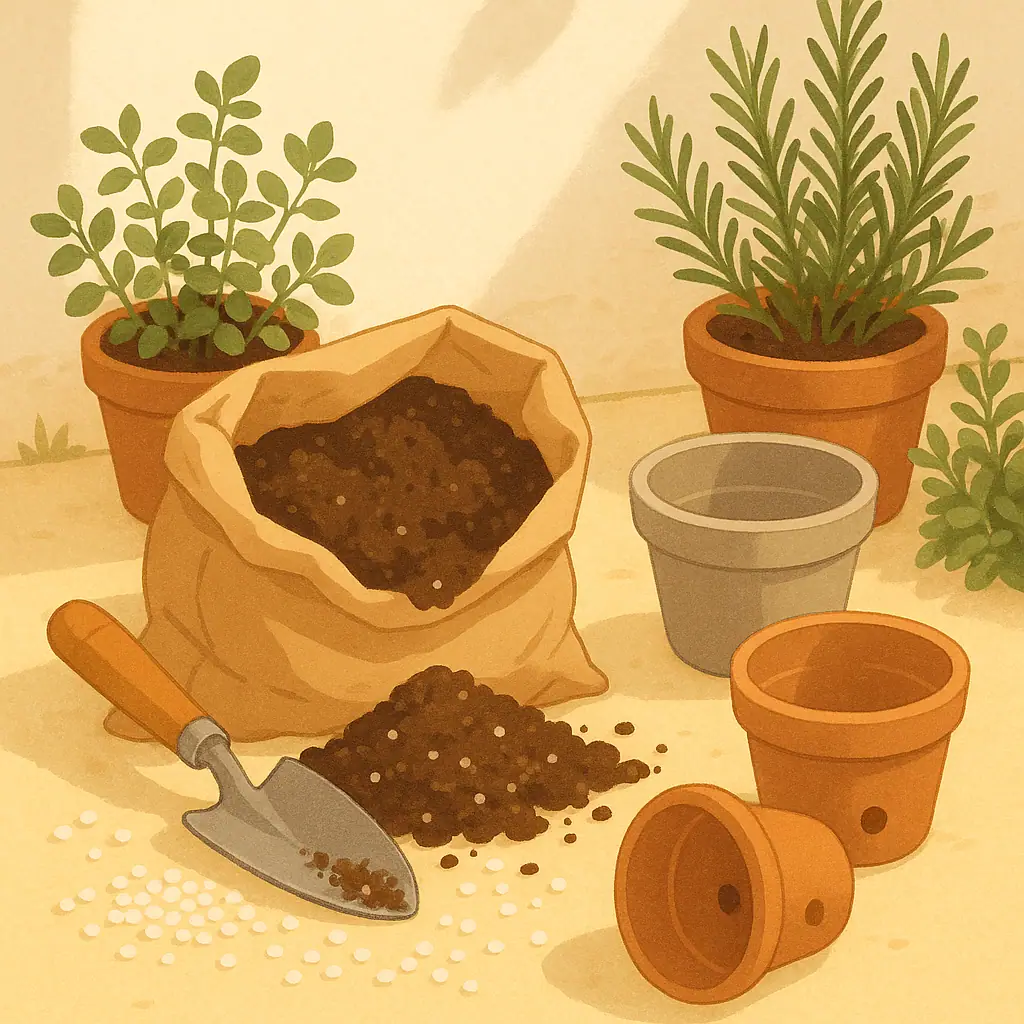
Many potting mixes contain ingredients such as peat moss, coconut coir, bark, compost, perlite, or vermiculite. You do not need to memorize every ingredient, but it helps to understand the roles.
- Moisture holders: peat, coir, and compost help the mix stay damp long enough for roots to use water.
- Air and drainage helpers: perlite, bark, and similar coarse ingredients keep the mix from packing down too tightly.
- Nutrient support: compost or slow-release fertilizer may be included, but repeated watering can still wash nutrients out over time.
- Plant-specific blends: cactus, succulent, orchid, and seed-starting mixes are made for narrower uses and may not suit a mixed patio container.
For a first patio garden, a general outdoor potting mix is usually the easiest starting point. Save custom amendments for later, after you know how quickly your containers dry in your actual sun and wind.
How to Build a Simple Soil Setup Step by Step
Use this order when filling new patio pots. It keeps the process clean and makes it easier to spot drainage or watering problems early.
- Choose the pot first: confirm the container has drainage holes and is large enough for the plant's mature size.
- Cover large holes only if needed: use a small piece of mesh, paper coffee filter, or broken pot shard if mix falls out freely. Do not block water flow.
- Skip the gravel layer: a layer of rocks at the bottom does not replace proper drainage holes and can reduce useful root space.
- Add fresh potting mix: fill partway, set the plant at the right height, then backfill gently around the root ball.
- Leave watering room: stop below the rim so water can sit briefly on the surface instead of spilling off the sides.
- Water thoroughly once: water until moisture reaches the root ball and drains from the bottom, then empty the saucer after it finishes draining.
- Check again the next day: feel the top inch of mix. If it is still soaked, slow down. If it is dry and the plant is wilting, adjust watering or shade.
Common Soil Mix Mistakes to Avoid
The most common mistake is filling patio containers with soil dug from a yard or garden bed. It may look rich, but in a container it can become heavy, dense, and slow to drain. That makes watering harder, not easier.
The second mistake is overcorrecting with too many amendments. Adding sand, compost, fertilizer, moisture crystals, and gravel all at once can create a mix you do not understand. If a plant struggles later, you will not know which part caused the problem.
- Using garden soil alone: it can compact and limit air around roots.
- Buying the cheapest heavy bag: low-cost soil is not always wrong, but dense garden soil is different from container potting mix.
- Leaving pots in standing water: saucers protect patios, but they should not become permanent water bowls.
- Filling to the very top: water needs a little space to soak in before it drains.
- Reusing tired mix blindly: old mix may be compacted, depleted, or carrying pests from a previous plant.
Pros and Cons of Bagged Potting Mix
Easy starting point
A general potting mix lets beginners plant herbs, flowers, and many compact vegetables without building a recipe from scratch.
Better container texture
It is usually lighter and looser than garden soil, which helps with drainage and root oxygen in pots.
Cleaner for patios
Fresh bagged mix is easier to handle on balconies and small patios than soil moved from a yard.
It can dry quickly
Light mixes in small pots may need frequent watering during hot, sunny, or windy weather.
Nutrients may run low
Container plants are watered often, so fertilizer needs may change through the season.
A Simple Soil Mix Checklist
Before planting, run through this quick checklist. It is easier to fix a setup before the plant is already stressed.
- Label: does the bag say potting mix, container mix, or something clearly intended for pots?
- Drainage: does the container have holes that let water leave the pot?
- Texture: does the mix feel lighter and looser than dense garden soil?
- Plant match: does the plant tag ask for a specialty mix, such as cactus or succulent mix?
- Watering space: is there room below the rim so water does not immediately spill out?
- Saucer plan: can you catch drips without leaving roots in standing water?
When to Get Extra Help
Get extra help when you are growing edible plants, using very large containers on a balcony, or trying a plant with specific soil needs. Local extension offices and nurseries can help you match your plant choices to regional heat, rainfall, and pest pressure.
Do not guess about balcony weight limits, pet-safe plants, or local invasive plant guidance. Patio gardening is small, but the right local detail still matters.
Frequently Asked Questions
What soil should beginners use for container gardening?
Most beginners should start with a fresh bagged potting mix labeled for containers or pots. Avoid using garden soil by itself in patio containers.
Should I put rocks at the bottom of my pots?
No. Drainage holes matter more than a gravel layer. Rocks can take up root space and do not replace a container that drains properly.
Can I reuse old potting mix?
Sometimes, but inspect it first. If it is compacted, sour-smelling, pest-filled, or from a diseased plant, start fresh or refresh only after checking reliable local guidance.
How often should I replace container soil mix?
Review it at least each season. Small pots, edibles, and heavily watered containers often need fresh mix or careful refreshing sooner than large decorative planters.
Final Thoughts
Container gardening soil mix for beginners comes down to three practical choices: use a mix made for pots, make sure water can drain, and keep the setup simple enough to understand. You can always adjust later as you learn how your patio handles sun, wind, and heat.
Start with one good potting mix, a few containers with drainage holes, and a habit of checking moisture before watering. That foundation gives your first patio plants a much better chance to grow steadily without making the process feel complicated.