Patio heat container plants can behave very differently from plants in a garden bed. A small pot may sit on concrete, near a brick wall, beside a metal railing, or under afternoon sun that bounces off pale paving. The air temperature might sound manageable, but the plant is living inside a much hotter little pocket.
This matters most for beginners because heat reflection is easy to miss. A plant can receive the right number of sunlight hours and still wilt, scorch, or dry out too fast if the surrounding surfaces are storing and reflecting heat. Before you blame yourself for watering wrong, look at the patio itself.
Why Patio Heat Container Plants Need Extra Attention
Containers have less soil volume than garden beds, so roots have a smaller buffer against heat and moisture swings. When a pot sits on a hard surface, heat can come from above, below, and beside the plant. That is why patio heat container plants often need closer observation than the same plant growing in the ground.
The University of Maryland Extension warns container gardeners to consider the microclimate around the growing area and watch for heat sinks created by brick, concrete, and reflective surfaces: growing vegetables in containers. That advice applies beyond vegetables, too. Herbs, flowers, foliage plants, and patio shrubs can all feel the effect of nearby hardscape.
Start With the Patio Microclimate
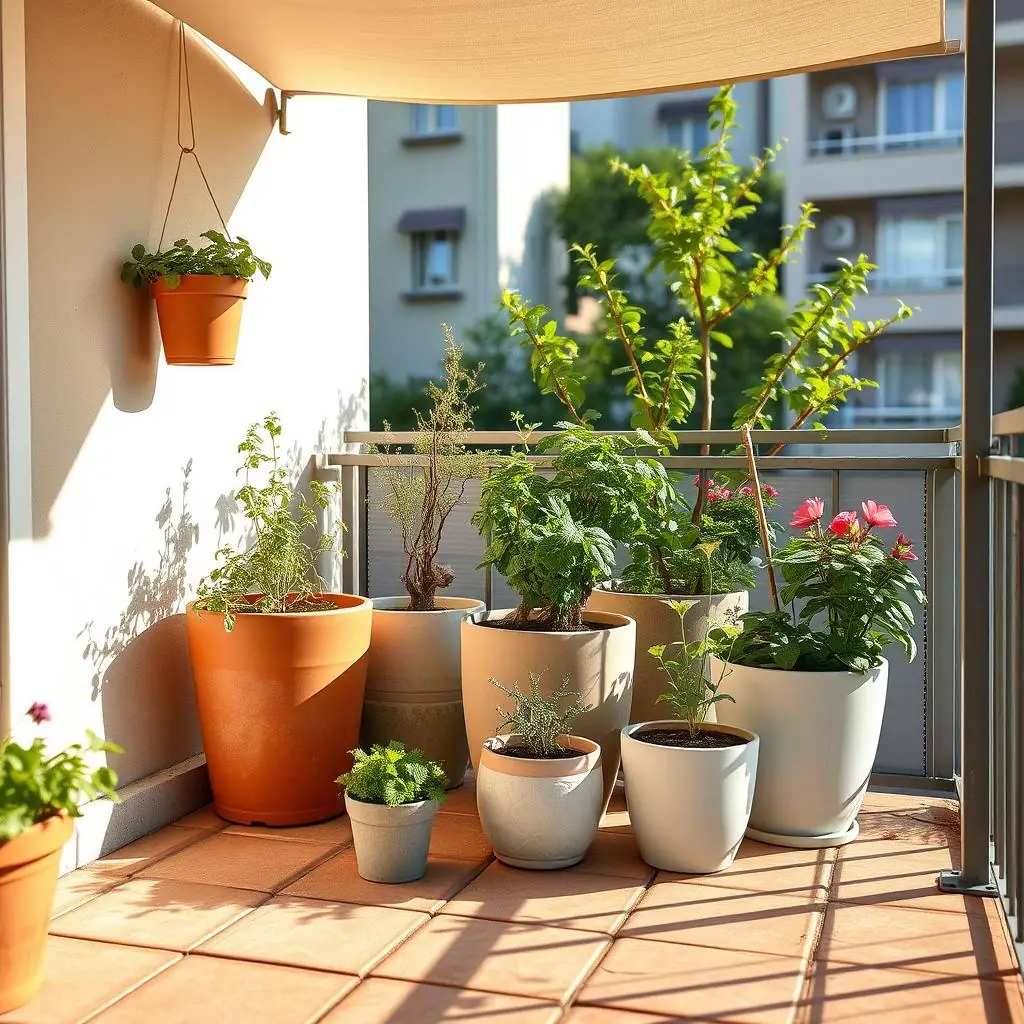
A microclimate is the small climate around one exact spot. On a patio, that spot can change within a few feet. A pot against a white wall may receive reflected light. A pot on dark pavers may warm faster. A pot on a raised plant stand may have more airflow than one tucked into a corner.
If you have not mapped light yet, first read PatioSprout's guide to how to read sunlight on a small patio before planting. Light notes are the base layer. Heat notes are the second layer that explain why one sunny spot grows well while another feels harsh.
Look at surfaces, not just sunshine
Heat reflection is strongest around hard, exposed materials. Concrete, stone, brick, tile, blacktop, metal, glass doors, and light-colored walls can all change how the plant experiences the day. Some surfaces reflect brightness. Others absorb heat and release it slowly after the sun moves away.
Notice the time of day
Morning sun is usually easier on container plants than late-afternoon heat against a wall or floor. A plant that tolerates six hours of gentle light may struggle with three hours of intense reflected heat. Your goal is not to avoid all warmth. It is to identify the spots where warmth turns into stress.
How Reflected Heat Shows Up in Containers
Reflected patio heat can create symptoms that look like underwatering, sunburn, or general plant weakness. Use the pattern of symptoms to decide what to check next.
- Fast wilting: leaves droop in the hottest part of the day even when the plant looked fine in the morning.
- Dry soil edges: the top and sides of the potting mix dry quickly, especially in small or dark containers.
- Scorched leaves: leaf edges turn brown or papery on the side facing the wall, railing, or afternoon sun.
- Uneven growth: the side of the plant nearest the hot surface looks weaker than the more protected side.
- Frequent watering surprises: one container dries much faster than another pot with similar plants and soil.
Patio heat container plants are also affected by pot size and material. Small containers dry quickly because they hold less potting mix. Dark plastic and metal containers can heat more aggressively than light-colored or thicker containers. Unglazed clay can also dry fast because it lets moisture evaporate through the pot wall.
How to Handle Patio Heat Container Plants Step by Step
You do not need to rebuild the whole patio. Start with a simple observation routine, then make one small adjustment at a time.
- Check the pot zone at the hottest hour: visit the patio during the warmest part of the afternoon and touch the nearby floor, wall, and outside of the container.
- Read the soil, not the calendar: push a finger into the potting mix. If the root area is dry, water deeply even if you watered yesterday.
- Move one test pot: shift a stressed container a foot or two away from the hot wall, railing, or paving edge and watch it for several days.
- Add a buffer: use a plant stand, pot feet, a larger outer cachepot, or a light-colored saucer to reduce direct contact with hot surfaces.
- Protect roots first: choose a larger container before the plant becomes root-bound, because more potting mix gives roots a better moisture buffer.
- Adjust gradually: avoid moving a stressed plant from deep shade into strong sun or from full sun into a dark corner all at once.
For hot-weather watering, the University of Minnesota Extension recommends watering early in the morning when possible because more evaporation happens during the heat of the day: gardening in hot weather.
That does not mean you should ignore a wilting container until the next morning. If a plant is clearly under heat and drought stress, water the root zone when it needs help. The early-morning habit is a good routine, but observation still matters.
Watering and Soil Adjustments That Help
Watering is where many patio gardeners notice heat reflection first. A container beside a hot wall may need water more often than a container across the same patio. The solution is not always more water everywhere. It is better matching between pot, plant, soil, and location.
University of Minnesota Extension notes that container plants may need water more than once per day during hot, dry weather, depending on container size and material: fertilizing and watering container plants.
For a related moisture pattern, PatioSprout's guide to why patio pots dry out faster than garden beds explains why containers need a different watering mindset than in-ground planting.
Use mulch and larger pots carefully
A thin layer of mulch can slow surface drying, especially for larger outdoor pots. Keep it light and leave a little space around the plant stem so moisture does not sit against tender growth. If a small pot dries twice a day, moving up one container size may be more useful than adding more water to a cramped root zone.
Check drainage before adding water
Heat stress and poor drainage can happen in the same patio garden. Always confirm the container has drainage holes and that water can leave the pot. A stressed plant in soggy soil needs a different fix than a stressed plant in dry soil.
Pros and Cons of Hot Patio Growing Spots
Useful warmth in cool seasons
A warm wall or paved area can help some containers get started earlier when nights are still chilly.
Good for heat-loving plants
Some herbs, flowers, and compact edibles appreciate warmth when water and root space are managed well.
Easy to observe
Patio containers are close enough to check often, so you can adjust location, watering, or shade before problems get severe.
Watering needs can rise quickly
Small pots near reflective surfaces may dry out faster than a beginner expects during hot, dry weather.
Leaf and root stress are easier to trigger
Reflected heat can scorch tender foliage and warm the container wall, especially in dark or metal pots.
Common Heat Reflection Mistakes to Avoid
Most mistakes come from treating a patio like a small garden bed. Containers need more precise checks because the growing area is smaller and more exposed.
- Trusting the forecast alone: the forecast describes the broader area, not the heat bouncing off your patio wall.
- Putting every pot against the wall: walls can protect from wind, but they may also hold and reflect heat.
- Using tiny dark pots for thirsty plants: small dark containers can dry and warm quickly in direct sun.
- Watering lightly every time: shallow watering may wet the top while the root zone remains dry.
- Ignoring afternoon symptoms: repeated wilting, scorched edges, or crispy leaves deserve a location check.
- Moving plants too dramatically: sudden changes can add stress; use small moves and watch the response.
A Simple Patio Heat Checklist
Use this checklist during a warm week before you buy more plants or replace a struggling one.
- Surface: does the floor, wall, railing, or pot side feel hot in late afternoon?
- Timing: is the strongest heat morning, midday, or late afternoon?
- Container: is the pot small, dark, metal, or sitting directly on hot paving?
- Soil: is the root zone actually dry, evenly moist, or soggy?
- Drainage: can water leave the container freely after a deep watering?
- Airflow: is the plant tucked into a still corner or does it have gentle air movement?
- Test move: can one container be moved slightly to compare plant response?
When to Get Extra Help
Ask a local extension office, master gardener program, or experienced nursery staff for help if several plants are failing in the same spot. Bring notes about sunlight hours, container size, watering frequency, pot material, and the hottest nearby surfaces. Those details are more useful than a vague description of a sunny patio.
Get local advice before choosing expensive plants, edible crops for very hot exposures, or containers near railings where weight and building rules matter. Heat is only one part of patio gardening. Safe placement, drainage, wind, plant toxicity for pets, and local climate still need attention.
Frequently Asked Questions
What should I check first if patio heat is stressing my plants?
Check the exact pot location during the hottest part of the day. Feel nearby hard surfaces, inspect soil moisture at root depth, and look for leaf scorch on the side facing reflected heat.
How often should I review patio heat conditions?
Review them during the first hot week of the season, after moving furniture or plant stands, and whenever a container starts drying much faster than usual.
Should I water patio containers every day in hot weather?
Maybe, but check the soil first. Some containers may need daily water or more in hot, dry weather, while larger shaded pots may stay moist longer.
Can I fix a hot patio spot without buying new planters?
Often, yes. Try moving the pot slightly, raising it off hot paving, adding a temporary shade break, or grouping containers so the root zones are less exposed.
Final Thoughts
Patio heat container plants are not failing because small-space gardening is too hard. They are reacting to a real microclimate: reflected sun, stored heat, limited soil, and faster moisture loss. Once you notice those patterns, the fixes become much calmer.
Start with one container this week. Check the hottest hour, read the soil, look at nearby surfaces, and make one small adjustment. A better patio garden often begins with moving a pot just far enough away from the heat.