Balcony garden ideas that are easy to move are especially helpful when you rent, share a small outdoor space, or want the freedom to adjust your layout without starting over. A movable balcony garden does not need to look temporary or messy. It simply needs containers, stands, and plant choices that can shift when the sun changes, guests come over, strong wind arrives, or moving day gets closer.
The best starting point is a small group of containers you can actually lift, roll, or slide without stress. That usually means fewer oversized pots, more lightweight materials, and a layout with clear walking space. The goal is not to make every plant portable every day. The goal is to avoid building a balcony garden that becomes too heavy, too crowded, or too permanent for the way you live.
Why Movable Balcony Garden Ideas Matter
A movable balcony garden gives beginners room to learn. If a plant gets too much afternoon heat, you can shift it. If herbs need more sun, you can test a brighter corner. If your lease changes, your garden can come with you instead of becoming an awkward collection of heavy pots and attached hardware.
Movement also helps with seasonal care. Some containers may need shelter during wind, a slight rotation for even growth, or a different position when summer heat reflects off walls and paving. Illinois Extension notes that larger vegetable containers can be placed on roller platforms to make moving them easier, which is a practical reminder to plan mobility before a pot is full of wet mix and mature plants: growing vegetables in containers.
Start With Renter-Friendly Outdoor Upgrades
Renter-friendly outdoor upgrades should be freestanding, reversible, and simple to clean. For movable gardens, that usually means rolling caddies, lightweight planters, fabric grow bags, small plant stands, tray-based herb pots, and compact shelves that do not attach to railings or walls.
If you are still deciding what belongs on the balcony, PatioSprout's guide to planning a container garden before buying plants can help you map sun, access, and plant priorities first. Mobility works better when the layout supports your routine instead of fighting it.
Keep the first version small
Start with three to five movable pieces rather than a full wall of plants. A small herb tray, one flower pot, one compact edible container, and one vertical accent can teach you how the balcony behaves without overloading the space.
Use the floor plan before the plant list
Before buying plants, sketch the door swing, seating, railing, drain path, and narrowest walkway. A movable garden still needs parking spots. If every plant has to be moved just so you can sit down, the design is too complicated.
What to Check First for Balcony Garden Ideas That Are Easy to Move
The right movable setup depends on weight, stability, drainage, and building rules. These checks keep the garden practical before you spend money.
- Weight after watering: potting mix, water, and plant growth add more weight than the empty container suggests.
- Container shape: broad, straight-sided pots are often more stable than narrow decorative pots, especially in wind.
- Drainage: each planted container needs a drainage plan, and saucers should be easy to empty.
- Surface protection: wheels, stands, trays, and saucers should not scratch, stain, or trap moisture against the balcony floor.
- Lease or building rules: check before using railing boxes, tall shelves, hanging hooks, or anything attached to exterior surfaces.
- Door and walkway clearance: plants should move without blocking emergency access, daily watering, or normal use of the balcony.
Container stability is not only about convenience. Illinois Extension explains that shape and volume affect whether a container can resist tipping as plants grow, and it specifically warns that exposed balconies, rooftops, and decks can be prone to wind: container size guidance.
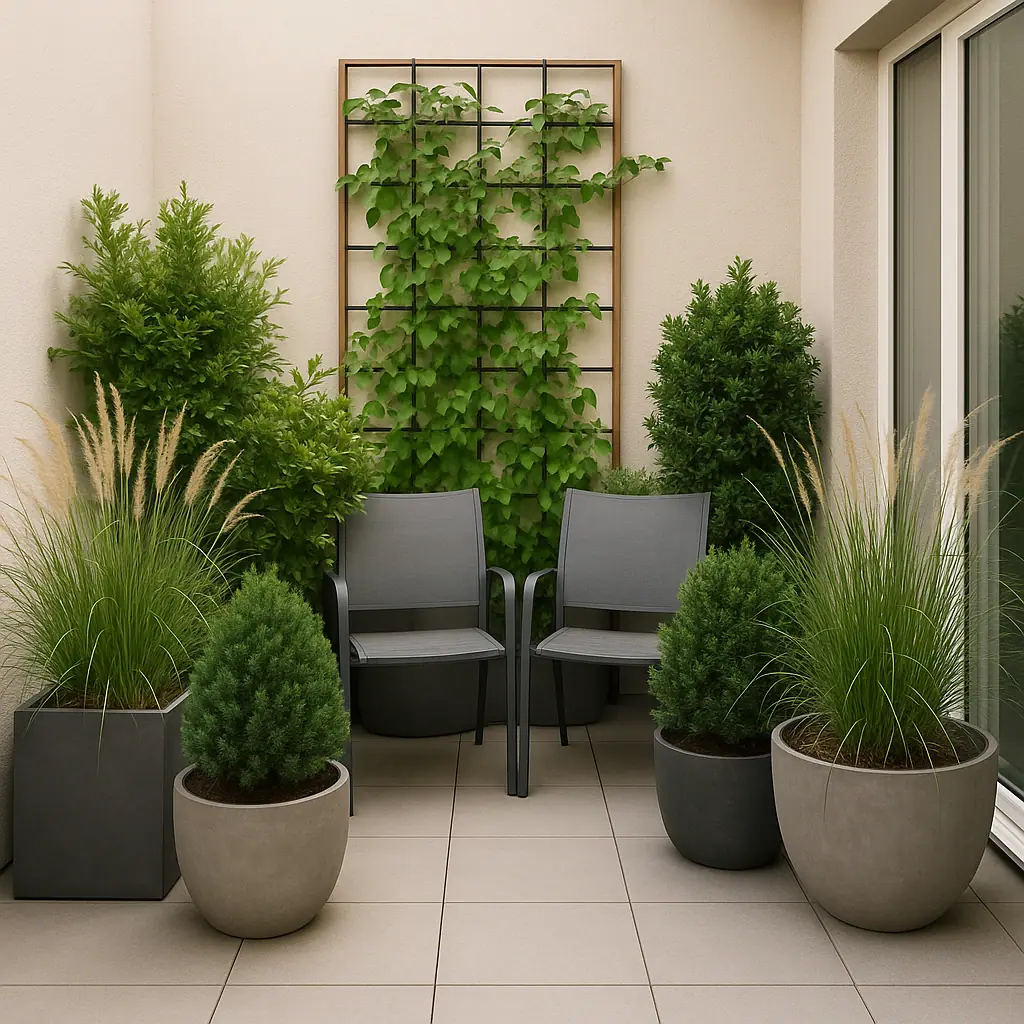
If you also want plants for screening, keep mobility in mind from the beginning. PatioSprout's guide to adding patio privacy with potted plants can help you avoid making the privacy layer so heavy that it cannot be adjusted later.
How to Build a Movable Balcony Garden Step by Step
Use this process before buying a full set of containers. It keeps the garden flexible while still looking intentional.
- Choose one main movable zone: pick a corner, wall edge, or railing-adjacent area where plants can live most days without blocking the door.
- Limit the first round: start with one herb container, one flower container, one edible container, and one lightweight accent plant.
- Select lighter materials: consider resin, fiberglass, plastic, fabric grow bags, or lined baskets instead of large ceramic or concrete pots.
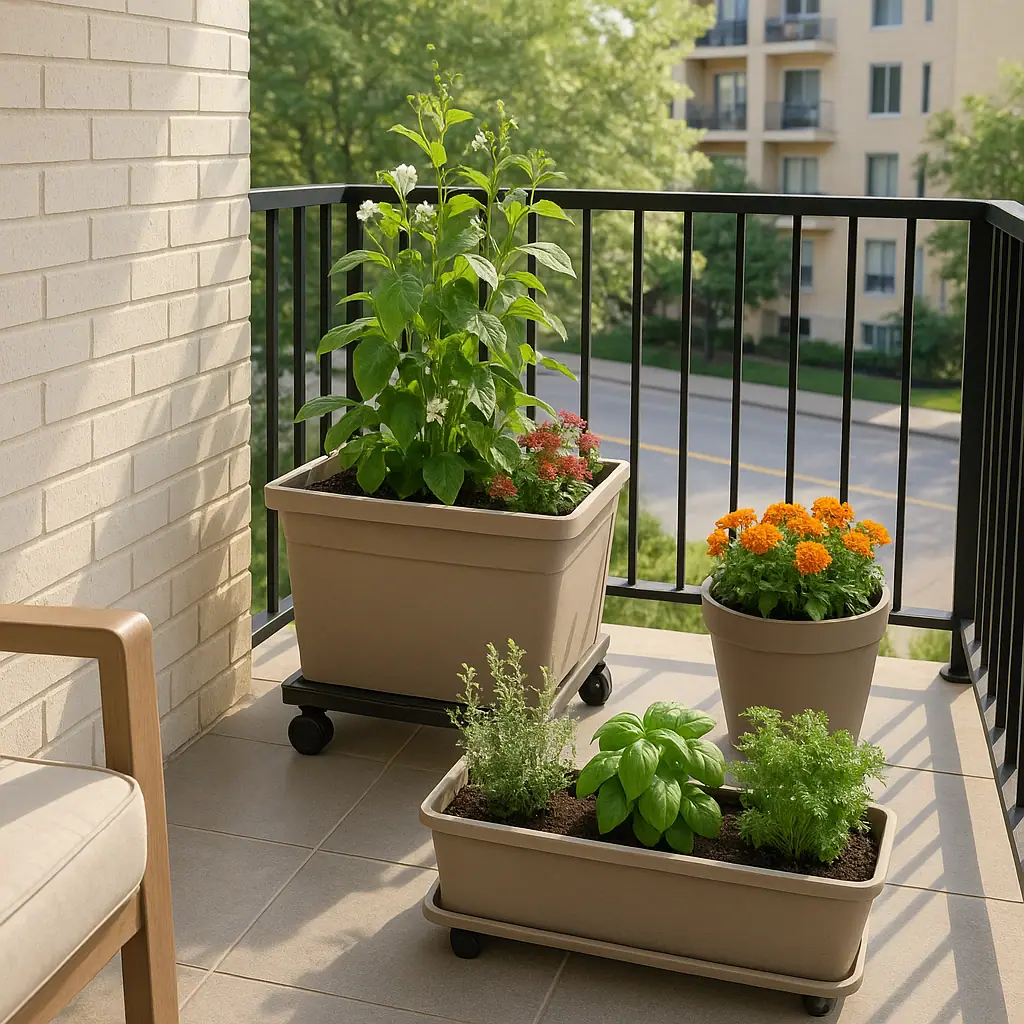
- Use rolling help carefully: put larger containers on stable plant caddies or low rolling platforms rated for the expected weight.
- Keep tall plants anchored: choose wide bases, lower stands, and compact varieties where wind is a concern.
- Plan drainage before placement: use detachable saucers, trays, or a watering spot where excess water can be managed without dripping below.
- Test the route: move each container from its normal spot to its backup spot while the balcony is arranged as usual.
- Review after two weeks: remove anything that is too heavy, unstable, thirsty, or awkward to move.
Think in movable groups
One of the easiest balcony garden ideas is grouping small pots in a tray or shallow crate. You can carry the group to a brighter spot, rotate it for care, or clear a table quickly. This works well for herbs, compact flowers, and small starter plants.
Use wheels for weight, not clutter
Wheels help only when the container still has a clear path. A rolling pot trapped behind chairs, storage boxes, or other planters is not truly movable. Keep the route simple and check that wheels can lock or sit securely on your balcony surface.
Easy-to-Move Balcony Garden Layout Ideas
Use these ideas as starting layouts, then adapt them to your light, climate, and building rules.
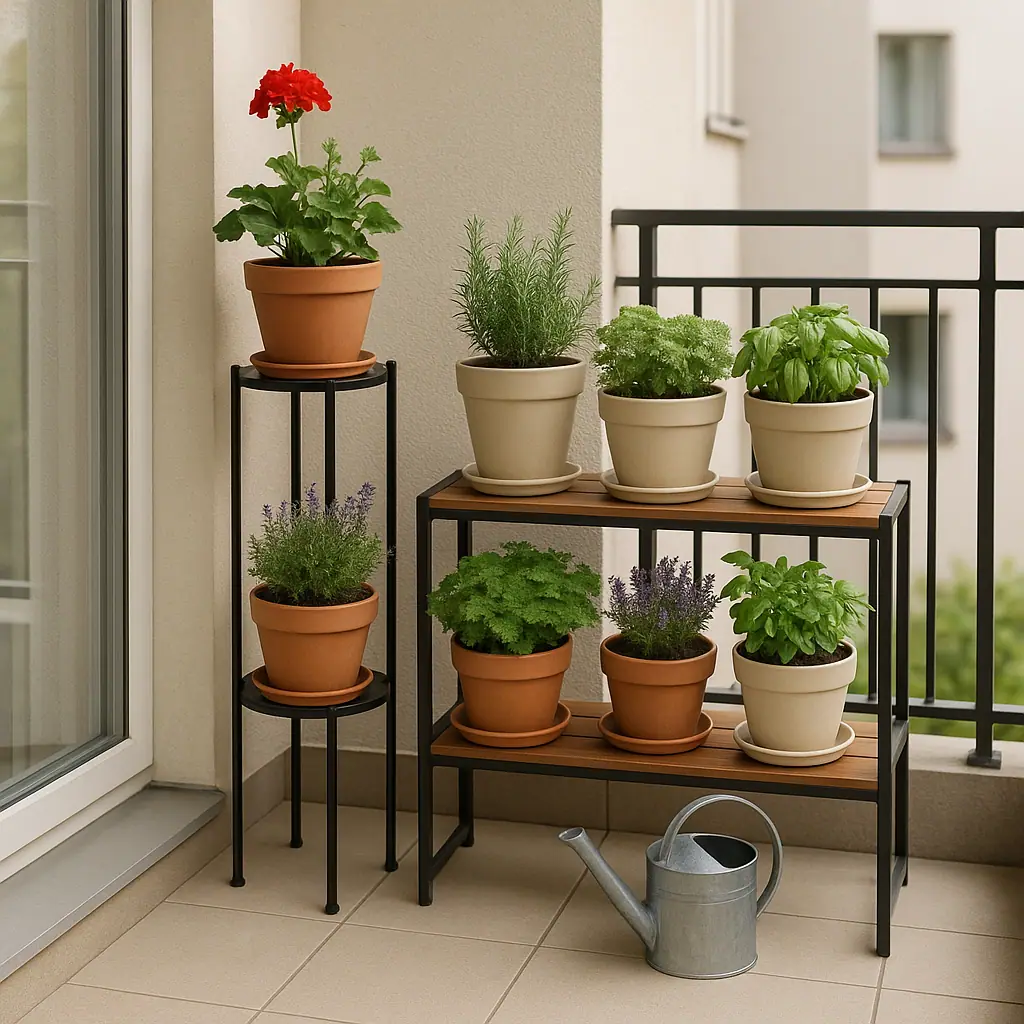
- The herb tray: three or four small herb pots grouped in one tray near the brightest practical spot.
- The rolling edible pot: one tomato, pepper, or compact vegetable container on a sturdy caddy, with support added early.
- The low flower cluster: two lightweight flower pots grouped near seating for color without tall wind-catching shelves.
- The movable privacy pair: two medium planters with compact upright plants that can shift as seating or sun changes.
- The seasonal swap basket: a lined basket or light planter that holds short-term annuals and can be refreshed without changing the whole garden.
- The corner shelf: a freestanding, low shelf for small pots only, not heavy soil bags or large ceramic containers.
- The grow bag row: fabric grow bags for herbs or compact vegetables, arranged where they can be lifted or emptied more easily at season's end.
Drainage still matters in every movable idea. Illinois Extension emphasizes that a bottom drainage hole is critical because it lets water drain freely and keeps air available around roots. It also recommends detachable saucers over permanently attached saucers that are hard to empty: container drainage options.
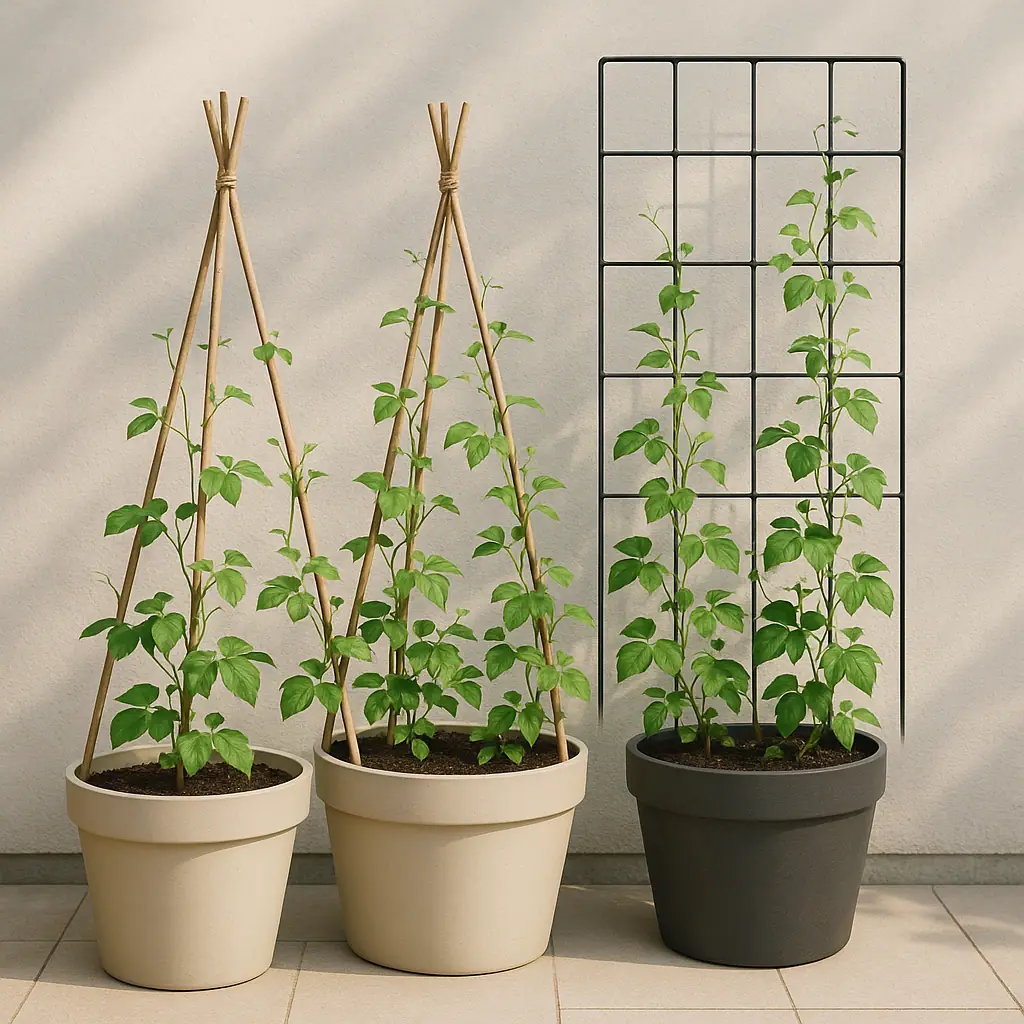
For a no-drill vertical element, choose something that can stand on its own and stay balanced. PatioSprout's guide to no-drill trellis ideas for patio containers offers more ways to add height without committing to permanent hardware.
Pros and Cons of a Movable Balcony Garden
Easy to adjust
You can move containers as sunlight, heat, wind, and seating needs change through the season.
Good for renters
Freestanding pots, caddies, and plant stands can usually move with you and avoid permanent balcony changes.
Beginner-friendly
A smaller, flexible setup lets you test plant choices before committing to heavy containers or a dense layout.
Weight can sneak up
Wet potting mix, mature plants, stakes, and saucers can make a container much harder to move than expected.
Wheels need clear space
Rolling caddies are only useful if the balcony surface, walkway, and parking spots stay open enough to use them.
Common Renter-Friendly Outdoor Upgrade Mistakes to Avoid
The biggest mistake is confusing movable with flimsy. A lightweight garden still needs stable containers, safe drainage, and realistic plant choices.
- Buying tall narrow pots: they may look elegant but can become top-heavy in wind or with mature plants.
- Skipping saucer checks: a movable pot that drips downstairs can create neighbor or building problems.
- Using wheels on uneven surfaces: test caddies before loading them with heavy, watered containers.
- Overloading shelves: freestanding shelves should hold small pots, not large soil bags or heavy ceramic planters.
- Forgetting backup spots: movable plants need a safe place to go during storms, heat, guests, or maintenance.
- Choosing thirsty plants only: smaller containers dry quickly, so mix beauty with realistic watering habits.
A Simple Checklist
Use this checklist before calling a balcony garden movable.
- Can I move it safely? Test the pot, tray, or cart before the plant gets larger.
- Does it drain cleanly? Water should not pool around roots, stain the floor, or drip where it should not.
- Is it stable in wind? Wider, lower containers are often safer than tall narrow ones.
- Is the path clear? Make sure doors, chairs, and walkways still work when plants are in place.
- Can it be reset? A renter-friendly setup should be easy to clean, move, or remove at the end of the season.
- Does it match the light? Move plants for better conditions, but do not rely on constant daily rearranging to keep them alive.
When to Get Extra Help
Ask your property manager, landlord, or HOA before using railing planters, hanging hardware, tall shelves, heavy pots, or anything attached to the building. Rules vary, and the safest answer is the one confirmed for your specific balcony.
Ask a local extension office, nursery, or experienced gardener if you are unsure whether a plant is suitable for your climate, wind exposure, pets, or edible container setup. Do not guess with plant safety or building limits.
Frequently Asked Questions
What should I check first for a movable balcony garden?
Check weight, drainage, wind exposure, and rules. A container that is light, stable, and allowed by your building is a better starting point than a beautiful pot that is hard to move.
How often should I review a movable balcony garden?
Review it every two to four weeks during the growing season. Move plants that are struggling, remove items that block the walkway, and adjust for hotter, windier, or shadier conditions.
What should I do if I am not sure a container is too heavy?
Do not guess. Test the empty container first, estimate the added weight of wet potting mix and water, and choose a smaller pot or rolling support if the setup feels awkward.
Can I undo a movable balcony garden later?
Yes. That is the point of keeping it freestanding. You can change plant groupings, move containers to a new light zone, store seasonal pieces, or take the setup with you when you move.
Final Thoughts
Balcony garden ideas that are easy to move work best when they start with real-life limits: weight, wind, drainage, rules, and the amount of space you need to live comfortably. A flexible garden is not a compromise. It is a smarter first version for many renters and small-space gardeners.
Begin with one tray of small pots, one movable feature container, and one clear backup spot. After a few weeks of watering and adjusting, you will know whether to add more plants, simplify the layout, or keep the garden light and easy to reset.