Knowing when to replace old potting mix in containers can save a patio gardener from two common mistakes: throwing away useful material too soon, or asking tired, compacted mix to support another season of healthy roots.
Container mix works harder than garden soil because it sits in a limited pot, dries and rewets repeatedly, collects fertilizer salts, and loses structure over time. On a balcony or small patio, that change can show up as slow drainage, weak growth, crusty surface residue, fungus gnat problems, or roots that never seem comfortable no matter how carefully you water.
Why Old Potting Mix Matters in Containers
Old potting mix is not automatically bad. If last season's plant was healthy, the mix still drains well, and there were no disease or pest problems, you may be able to refresh part of it instead of replacing every handful. The decision should come from what the container is telling you.
University of Maryland Extension explains that container growing media should allow good air and water movement, while dense soil can hold too much water around roots: UMD Extension guidance on growing media for containers.
Start With a Simple Potting Mix Check
Before you buy a new bag, empty one container onto a tarp or into a shallow bin and inspect the mix in daylight. This keeps the decision practical. You are looking for structure, smell, drainage clues, and plant history, not a perfect laboratory answer.
Check texture and drainage first
Healthy container mix should feel loose enough to crumble. It may contain bark, coir, peat, compost, perlite, or other light ingredients, depending on the product. If it has collapsed into a dense, muddy block, stays wet for days, or pulls away from the pot in a hard mass, it is no longer doing its main job well.
Use plant history as evidence
Think about what grew in the pot last. A vigorous annual flower, healthy herb, or leafy green that simply finished its season is different from a plant that had root rot, persistent fungus gnats, recurring disease, or unexplained decline. The more serious the previous problem, the less you should reuse the mix for a fresh planting.
When to Replace Old Potting Mix in Containers
Replace the mix when the risk is higher than the savings. For small patio pots, the cost of fresh growing media is often worth it when the old mix has clear warning signs.
- Replace after root disease: if roots were black, mushy, foul-smelling, or collapsed, start over with clean mix and a washed container.
- Replace after persistent pests: repeated fungus gnats, root pests, or unknown larvae in the mix are good reasons to discard it rather than carry the problem forward.
- Replace when drainage fails: if water pools on top or the pot stays soggy long after normal watering, the structure may have broken down.
- Replace when the mix smells sour: a stale, swampy smell can point to poor air movement and over-wet conditions.
- Replace in seed-starting or baby herb pots: young roots are less forgiving, so fresh, clean mix gives them a better start.
- Replace if salt crust is heavy: a white crust on the surface or pot edge can mean mineral or fertilizer salts have built up.
For more context on white crust and residue, University of Maryland Extension notes that mineral and fertilizer salt deposits can appear as white crystallized residue on leaves or growing media: UMD Extension guidance on mineral and fertilizer salt deposits.
When a Refresh Is Enough
If the old potting mix drains well, smells normal, and came from a healthy plant, a partial refresh can be reasonable. This is especially useful for large patio containers, decorative pots, and seasonal flower planters where replacing everything would be wasteful and heavy.
Remove the old root ball, shake out large roots, and discard any matted or compacted chunks. Then blend the remaining mix with fresh potting mix and, when appropriate for the plants you are growing, a modest amount of finished compost. Keep the final blend light and free-draining.
If you are still learning how different materials behave in pots, PatioSprout's guide to container gardening soil mix for beginners explains why container mix is different from garden soil.
Use a refresh for low-risk seasonal pots
A flower pot that grew healthy annuals last season is often a good candidate for refreshing. Remove debris, loosen the mix, add fresh material, and watch drainage after the first watering.
Be stricter with edible containers
For herbs, lettuce, strawberries, peppers, or tomatoes, be more conservative if the previous plant struggled. Edible containers are watered often and can become crowded with roots, so fresh mix is often the simpler choice for a new crop.
How to Replace or Refresh Potting Mix Step by Step
Work over a tarp, bin, or old sheet so cleanup is easy and you do not scatter mix across a shared balcony. Wear gloves if the old pot had pests, mold, or unknown debris.
- Remove the old plant and roots: pull out the root ball, stems, labels, stakes, and dead leaves.
- Inspect the mix: check smell, texture, moisture, insects, root condition, and any white crusting.
- Choose replace or refresh: replace risky mix; refresh clean, loose mix from healthy containers.
- Clean the container: wash the pot and saucer, especially if there was disease, pests, or heavy residue.
- Add fresh mix: use a container potting mix that stays light and drains well for the plant you plan to grow.
- Water once and observe: make sure water moves through the pot and does not sit on top for long.
- Label the reset: note the month so you remember which pots were refreshed or fully replaced.
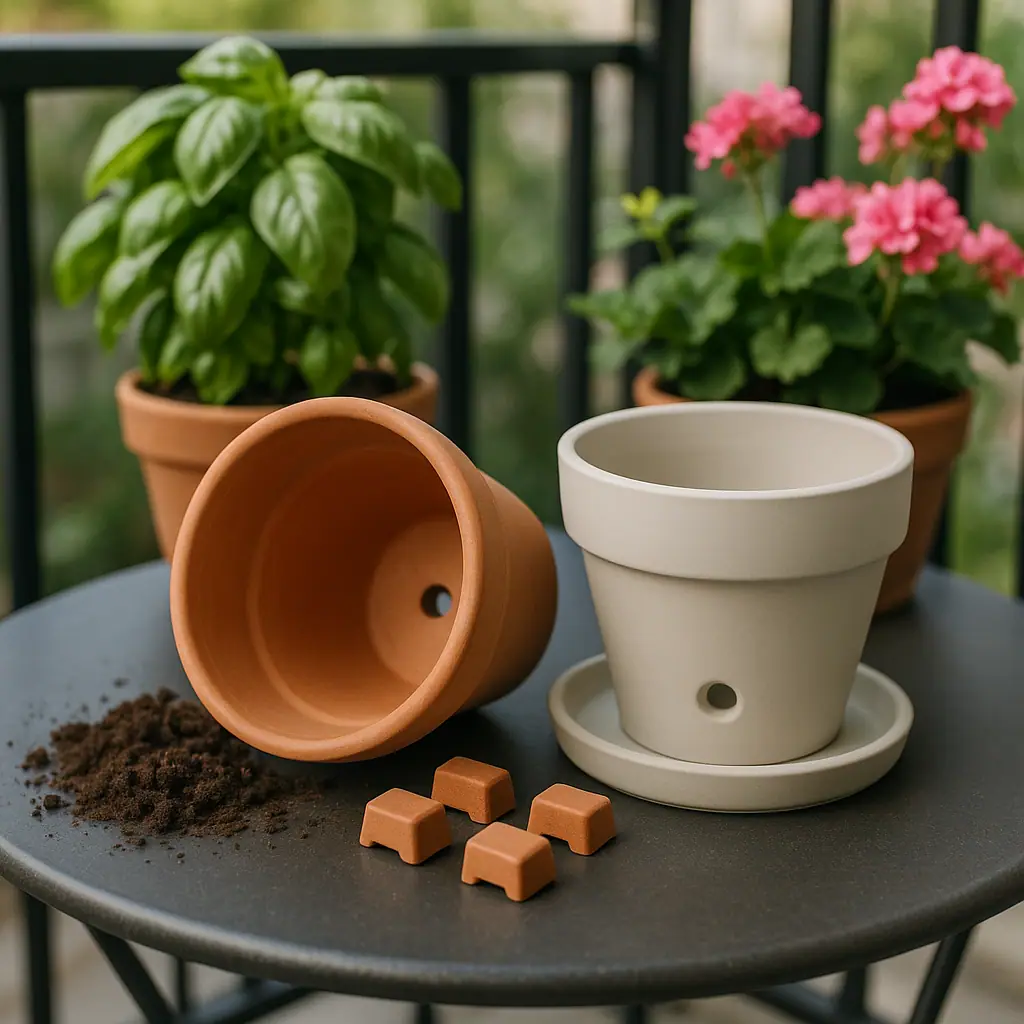
If drainage has been a recurring issue, review PatioSprout's guide to drainage holes in pots before blaming the mix alone. A good mix still needs an exit path for excess water.
Pros and Cons of Reusing Old Potting Mix
It reduces waste
Refreshing healthy mix keeps usable material out of the trash and makes large containers less expensive to reset.
It works for healthy seasonal pots
Containers that grew vigorous plants without pest or disease issues may only need old roots removed and fresh mix blended in.
It is practical for balconies
Replacing every pot completely can be messy and heavy, so a careful refresh can fit small-space gardening better.
It can carry problems forward
Disease, pests, compacted roots, and poor drainage can return if the mix was already unhealthy.
It may lose structure
Old mix can break down into a dense texture that holds too much water and leaves less air around roots.
Common Mistakes to Avoid
The main mistake is treating all old potting mix the same. Some containers only need a refresh, while others need a full reset. Use the plant's history and the condition of the mix to decide.
- Keeping diseased mix: do not reuse mix from a plant with clear root rot or serious disease symptoms.
- Adding garden soil to fix everything: garden soil can be too dense for ordinary patio containers and may change drainage in the wrong direction.
- Ignoring the saucer: pests and residue can remain under the pot even after the top looks clean.
- Reusing mix for seedlings: small new plants are better started in fresh, clean media.
- Refreshing without removing roots: old root mats can block water movement and crowd the next plant.
- Over-fertilizing tired mix: fertilizer cannot fix compacted structure, poor drainage, or pest problems.
A Quick Replacement Checklist
Use this checklist at the start of a new planting season, after a failed container, or before planting a more valuable edible crop.
- Replace it: sour smell, mushy roots, recurring pests, heavy crust, poor drainage, or unknown disease.
- Refresh it: healthy previous plant, loose texture, normal smell, good drainage, and no pest history.
- Use fresh mix: seedlings, baby herbs, small edible containers, or any plant you really do not want to risk.
- Clean the pot: wash containers and saucers before refilling, especially after pest or disease issues.
- Track the date: write the refresh month on a plant tag or in a simple garden note.
Frequently Asked Questions
Do I need to replace potting mix every year?
Not always. Small pots, edible containers, and pots with pest or disease issues often benefit from fresh mix. Large healthy containers may only need old roots removed and fresh mix blended in.
Can I reuse potting mix from a dead plant?
Only if you are confident the plant died from age, heat, drought, or neglect rather than disease or root problems. If roots were mushy, black, or foul-smelling, replace the mix.
What should I do with old mix I do not reuse?
Do not dump it over a balcony or into shared landscaping. Bag it for disposal, add clean disease-free material to an appropriate compost system, or follow local yard waste rules.
Can fertilizer make old potting mix good again?
Fertilizer can add nutrients, but it cannot restore collapsed structure, remove pests, fix sour smell, or undo disease issues. If the mix no longer drains well, replace it.
Final Thoughts
When to replace old potting mix in containers depends on drainage, root health, pest history, salt buildup, and what you plan to plant next. The safest rule is simple: reuse only clean, loose mix from healthy containers, and replace anything that looks, smells, or behaves risky.
Start with one pot today. Empty it, inspect the mix, remove old roots, and decide whether it deserves a refresh or a full reset. That small habit keeps patio gardening cleaner, calmer, and easier to repeat next season.