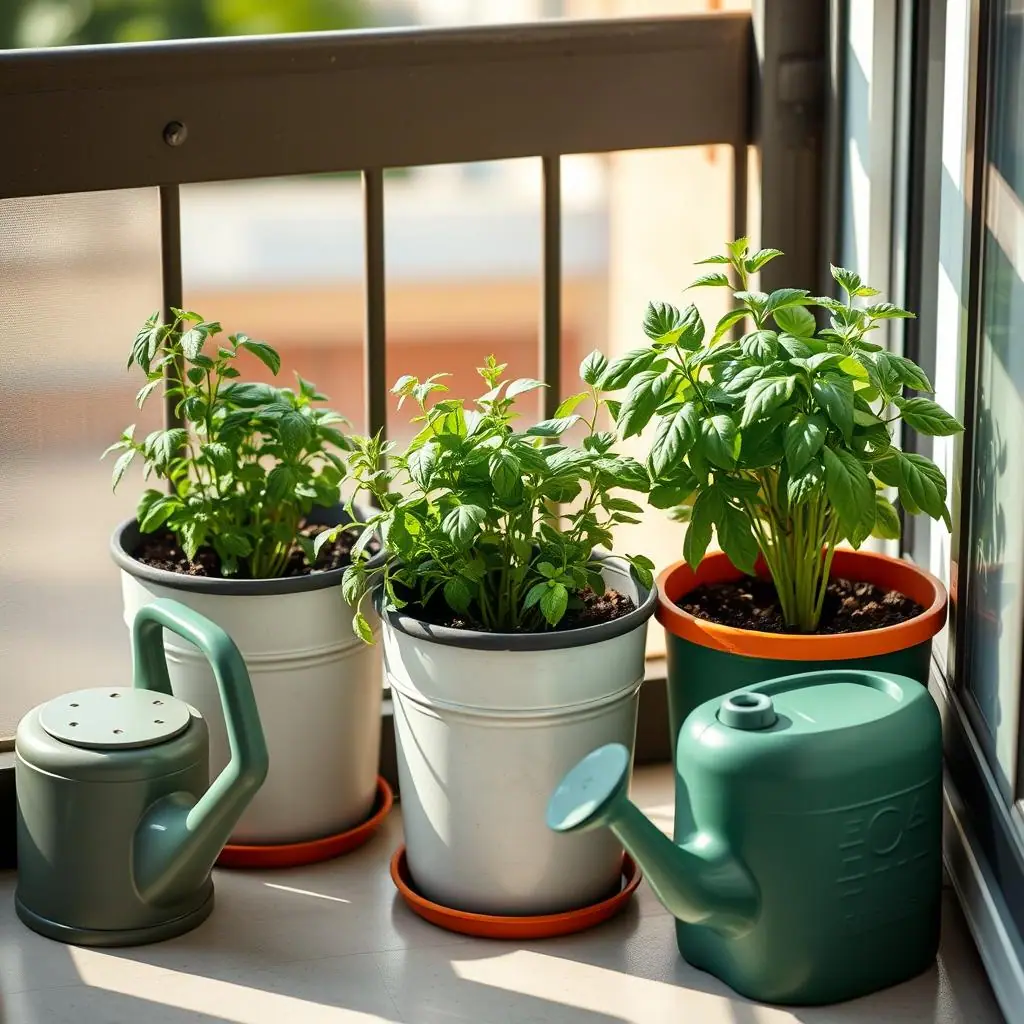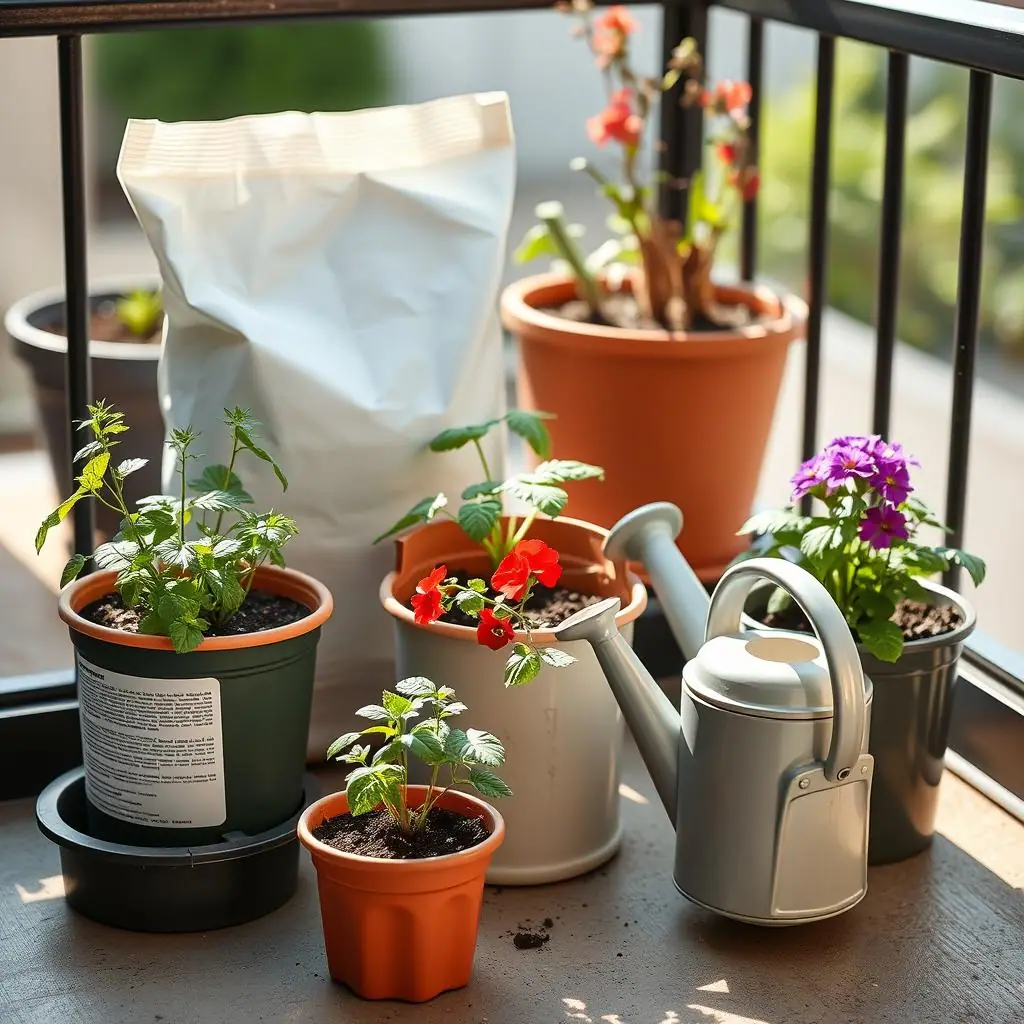
Outdoor pots can make a small patio feel alive, but they can also leave rings, stains, scratches, and damp marks if they sit directly on the surface for weeks. The goal is not to block drainage. The goal is to lift, catch, or separate the pot in a way that protects the patio while still letting excess water move away from the roots.
This guide walks through what to put under outdoor pots to protect a patio, especially if you are new to container gardening. Start with drainage, match the protection to your surface, and check the setup after watering and rain instead of assuming one saucer solves everything.
Why This Matters
A patio pot has weight, moisture, soil particles, and sometimes fertilizer salts moving through it. Over time, those can mark concrete, wood, composite decking, stone, tile, or balcony flooring. Heavy containers can also scratch surfaces when they are dragged instead of lifted.
At the same time, plants still need healthy drainage. The University of Illinois Extension explains that drainage holes let excess water leave the container and help keep air available around roots: container drainage guidance. That is the balance to keep in mind. Patio protection should not turn a draining pot into a sitting-in-water pot.
Start With Containers, Soil, And Drainage
Before choosing anything to place under a pot, check the container itself. A pot without a drainage hole behaves differently from a pot with one large bottom hole or several smaller holes. A light herb pot behaves differently from a tall ceramic planter full of wet potting mix.
If the pot drains freely, you need a plan for where that water goes. If the pot does not drain freely, you need to be cautious because trapped water can stress the plant and still damage the patio. Garden soil, compacted soil, and clogged holes can also make runoff less predictable.
Match the protector to the surface
Concrete and stone often need stain control. Wood and composite decks need airflow and less trapped moisture. Balcony floors may need runoff control because water can drip to a neighbor below. Tile can scratch if rough pot bottoms are dragged across it.
Match the protector to the pot
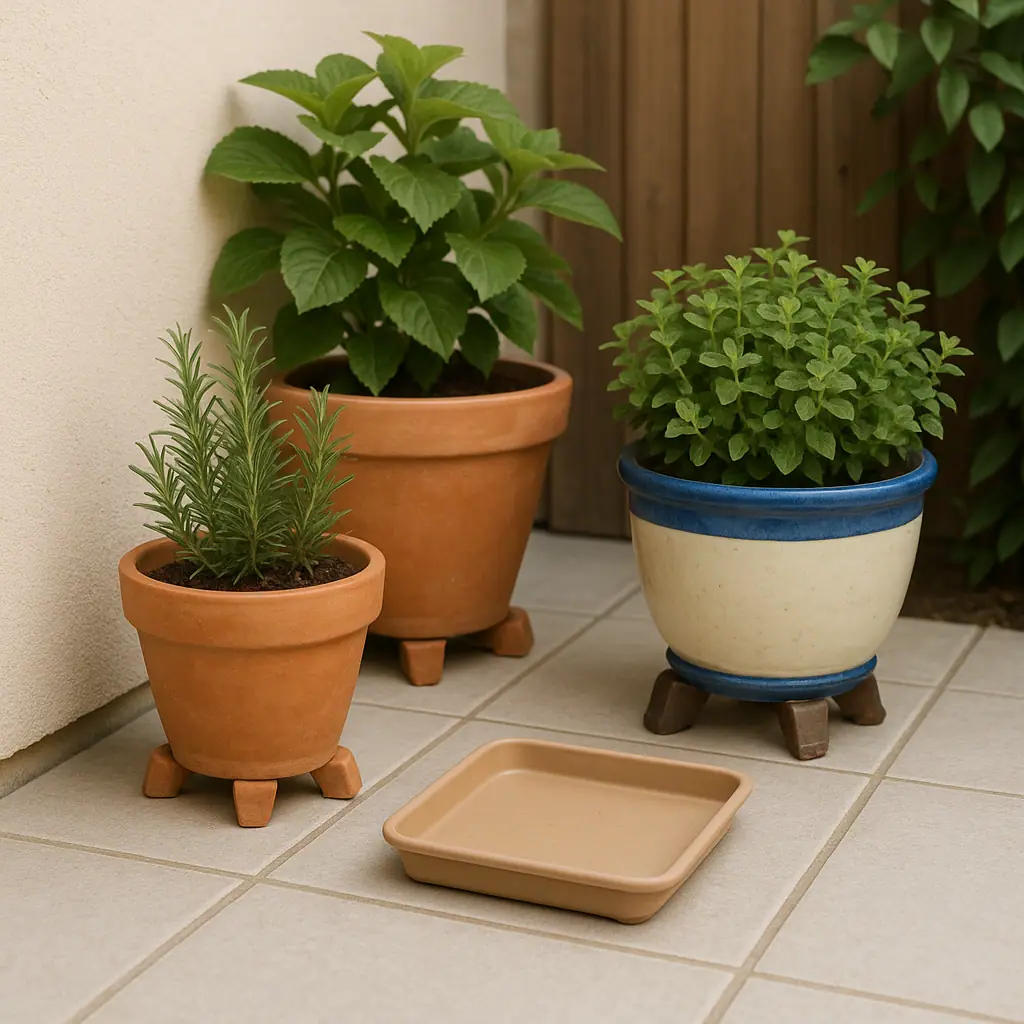
A small plastic nursery pot may only need a removable saucer. A large ceramic pot may need plant feet or a sturdy rolling caddy rated for the loaded weight. If the pot is tall, narrow, or exposed to wind, do not use a wobbly stand just to keep marks away.
What to Check First for Patio Pot Protection
Start with three simple checks: what the patio is made from, whether water can drain safely, and how often you can inspect the setup. A saucer that is emptied after watering may be fine. A saucer that stays full after every storm can become a plant health problem and a mosquito-friendly puddle.
Also look for lease, HOA, or balcony rules if you are not on your own property. Some buildings do not allow water to drip over balcony edges, and some surfaces require furniture pads or protective mats under heavy objects. When you are unsure, ask before setting up a large container.
What to Put Under Outdoor Pots Step by Step
Use this sequence before buying a large set of trays or stands. It keeps the choice practical and avoids creating a new drainage problem.
- Choose the drainage path: decide whether water will drain into a saucer, onto a removable tray, or through a raised pot into a safe area.
- Add lift when moisture matters: use plant feet, pot risers, or a sturdy caddy to create airflow under heavy containers.
- Use saucers carefully: saucers protect against drips, but empty them after watering or rain so roots are not sitting above trapped water.
- Use mats for scratch protection: a breathable outdoor mat or protective pad can reduce scuffs, but avoid anything that stays wet against wood or decking.
- Recheck after the first rain: look under the pot, not just at the plant. If you see standing water, staining, or soft debris, adjust the setup.
Common Containers, Soil, And Drainage Mistakes to Avoid
The most common mistake is putting every pot on a deep saucer and forgetting about it. That may protect the surface for one watering, but it can leave the pot sitting over water for too long if the saucer is not emptied.
Another mistake is using a solid plastic sheet under several containers. It may catch water, but it can also trap moisture and grit against the patio. A better setup is usually smaller, removable, and easier to clean.
- Do not block drainage holes: make sure feet, pads, or trays do not press directly against the hole.
- Do not drag heavy pots: lift with help or use a caddy that can handle the full wet weight.
- Do not ignore stains early: a faint ring is easier to clean than a season-long mineral mark.
- Do not trust one setup forever: plants grow, seasons change, and watering volume changes.
Pros and Cons
They reduce direct surface contact
Lifted pots are less likely to trap damp rings directly against the patio.
They make cleanup easier
A tray or saucer can be removed, emptied, rinsed, and checked before stains build up.
They help you spot drainage problems
Standing water under the pot becomes visible sooner when the setup is easy to inspect.
Saucers can hold too much water
If they are not emptied, they can keep the lower pot area wet after watering or rain.
Unstable risers can tip
A narrow stand or weak caddy can be risky under a heavy container in wind or foot traffic.
A Simple Checklist
- Surface checked: concrete, wood, composite, tile, stone, or balcony floor.
- Drainage confirmed: pot has working holes and water can leave safely.
- Protection chosen: saucer, tray, feet, riser, caddy, or breathable mat.
- Water plan set: saucers and trays will be emptied after watering or storms.
- First-week review: lift or move the pot carefully and inspect for rings, dampness, or grit.
When to Get Extra Help
Ask a landlord, building manager, deck installer, or manufacturer if you are dealing with a new deck coating, a balcony with strict runoff rules, expensive stone, or a very heavy planter. Do not guess about load limits or waterproofing layers.
Frequently Asked Questions
What is the safest thing to put under outdoor pots?
For many beginners, a sturdy saucer or tray plus pot feet works well because it catches drips while allowing some airflow. Empty collected water regularly.
Should outdoor pots sit directly on a patio?
They can, but direct contact can create stains, scratches, and damp rings over time. Heavy or frequently watered pots usually benefit from lift or a removable protector.
Are saucers bad for outdoor plants?
Not if they are managed. The problem is leaving water in the saucer for long periods, especially after rain or repeated watering.
How often should I check under patio pots?
Check after the first watering, after the first rain, and then during normal plant care. Warm weather, fertilizer use, and heavy watering can change what collects underneath.
Final Thoughts
The best thing to put under outdoor pots is the option that protects your specific patio without blocking drainage. For one pot, that may be a saucer you empty. For a heavier container, it may be feet, a riser, or a rated caddy. For a balcony, it may be a tray that controls runoff.
Start with one container and inspect it for a week. If the patio stays clean, the pot drains well, and the plant looks healthy, you can repeat the setup with more confidence.