Learning how to keep balcony planters from dripping downstairs is part plant care, part neighbor care, and part renter common sense. Container plants need drainage, but the water should not surprise the person below you or stain a shared walkway.
The good news is that you do not need a complicated irrigation setup to solve it. Most balcony drip problems come from a few fixable habits: watering too fast, using pots without catch trays, letting saucers overflow, or choosing potting mix that sheds water before it can soak in.
This guide walks through a beginner-friendly system for catching runoff, watering more slowly, and keeping plants healthy without turning your balcony into a drip zone.
Why Balcony Planter Drips Matter
Balcony runoff can create muddy splashes, mineral stains, slippery spots, and frustration for neighbors. In apartments and condos, it can also become a lease or building-rule issue if water regularly falls over the edge or lands on someone else's space.
At the same time, blocking drainage completely is not a safe fix for most plants. Oregon State University Extension notes in its container gardening basics that containers should have good drainage, and trays or saucers should be emptied so roots are not left sitting in excess water.
Start With Containers, Soil, and Drainage
The easiest way to prevent balcony planters from dripping downstairs is to design the setup before the first deep watering. Look at each container as a small water system: water enters from the top, moves through potting mix, exits through holes, then needs somewhere controlled to collect.
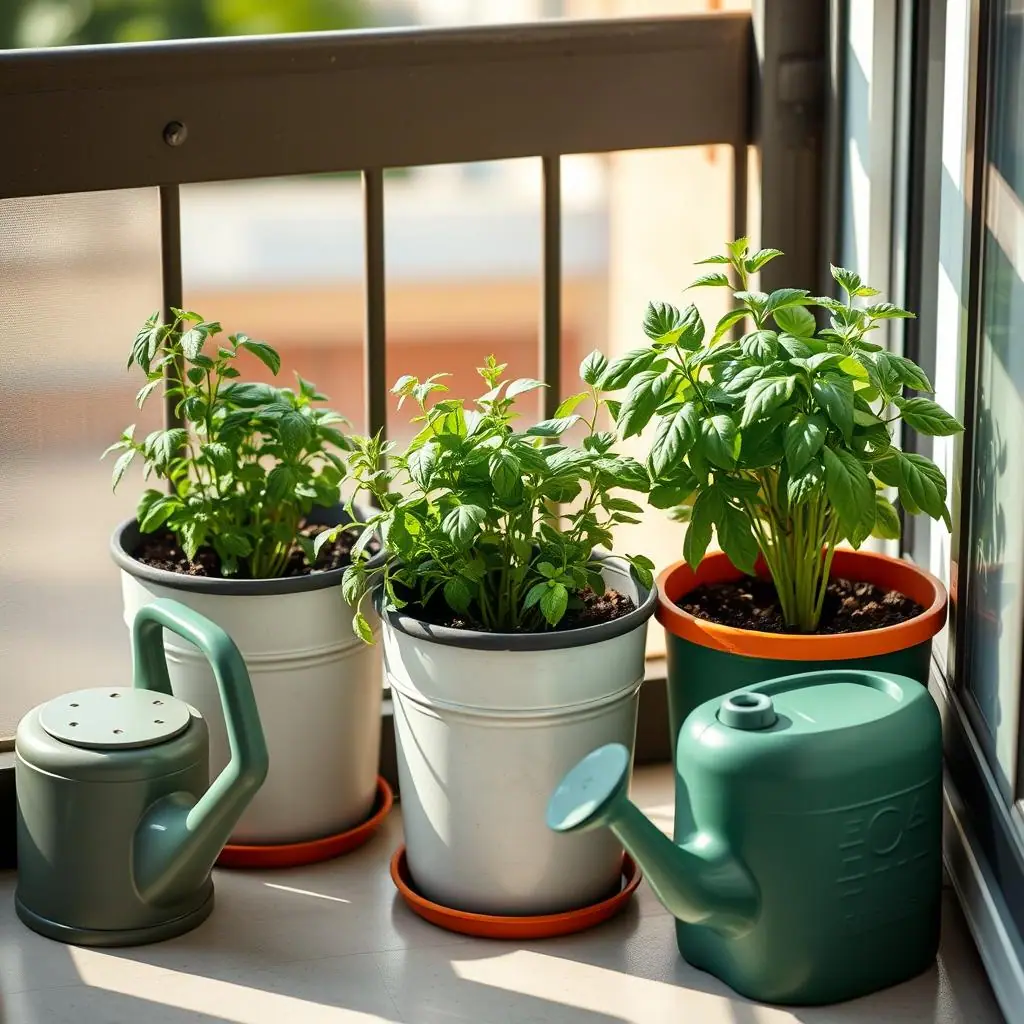
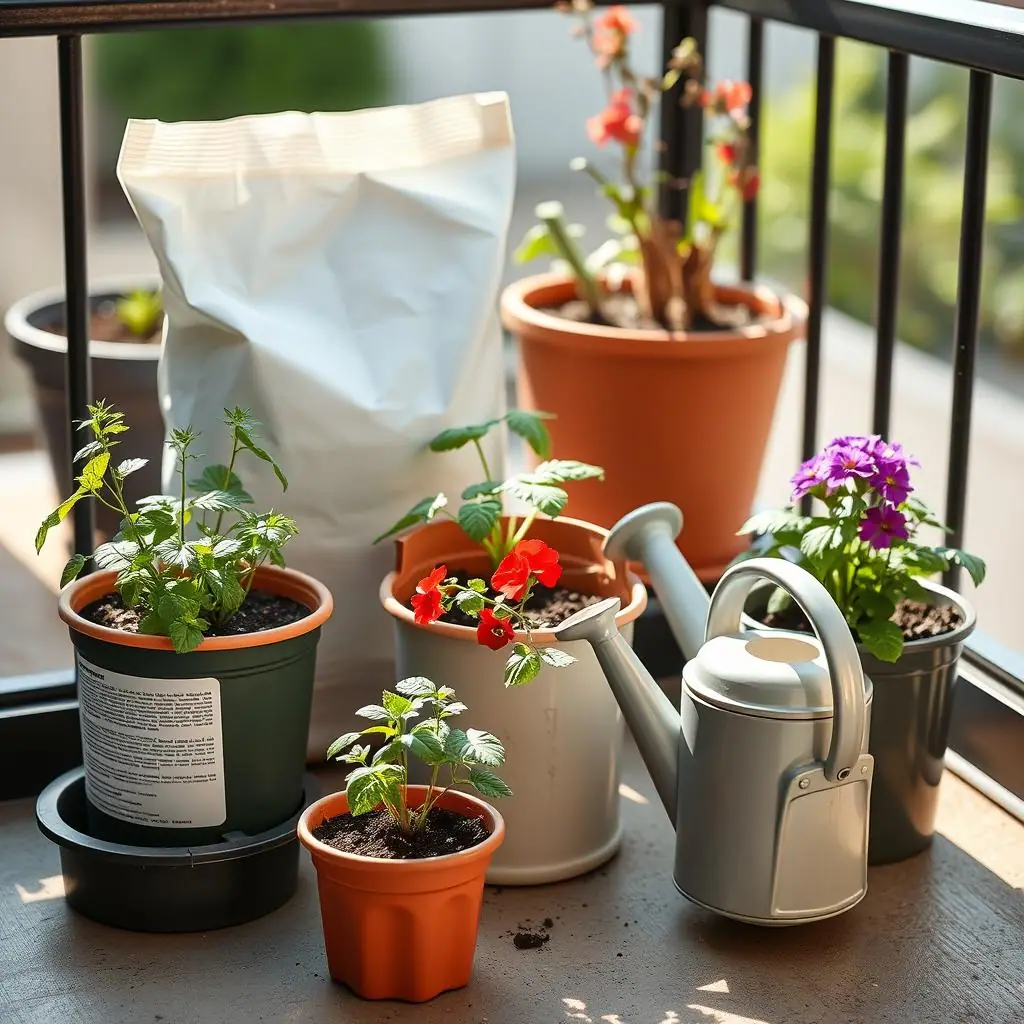
A basic beginner setup has four parts: a pot with drainage holes, a container potting mix, a saucer or tray that fits the pot, and a stable surface that keeps the pot level. If one of those parts is missing, runoff becomes harder to predict.
Use a real saucer, not a tiny rim
Many decorative pots come with shallow attached trays that look tidy but hold very little water. For balcony use, a separate saucer or boot tray often works better because you can see the water level and empty it before it spills.
Check the potting mix, too
Old, compacted, or very dry potting mix can reject water at first. Water may run down the sides and out the holes before the root ball is evenly moist. Slower watering helps, but replacing tired mix may be the better long-term fix.
What to Check First Before Watering
Before you water, take one minute to inspect the balcony arrangement. You are not trying to make it perfect. You are trying to remove the obvious drip paths that send water over the edge.
- Saucer size: the tray should extend beyond the pot base and hold the normal runoff from one watering.
- Balcony slope: if the floor slopes outward, water can slide away from the saucer after it overflows.
- Railing placement: avoid hanging boxes where overflow drops directly outside the balcony.
- Drainage holes: confirm holes are open, but not aimed over a gap, crack, or railing edge.
- Plant thirst: do not water by habit if the top inch of mix is still damp and the plant looks steady.
How to Keep Balcony Planters From Dripping Downstairs Step by Step
Use this simple routine when you water balcony containers. It gives the mix time to absorb moisture and gives you time to stop before the saucer overflows.
- Move risky pots inward: keep containers at least a few inches away from balcony edges, rail gaps, and drainage openings.
- Water in two passes: pour a small amount first, wait a minute, then water again. This helps dry mix absorb water instead of shedding it.
- Aim at the soil: water the potting mix, not leaves, railings, or the outside of the container.
- Stop when runoff appears: once water enters the saucer, pause and let the pot finish draining.
- Check the saucer level: if the tray is close to full, empty some water into a bucket or sink.
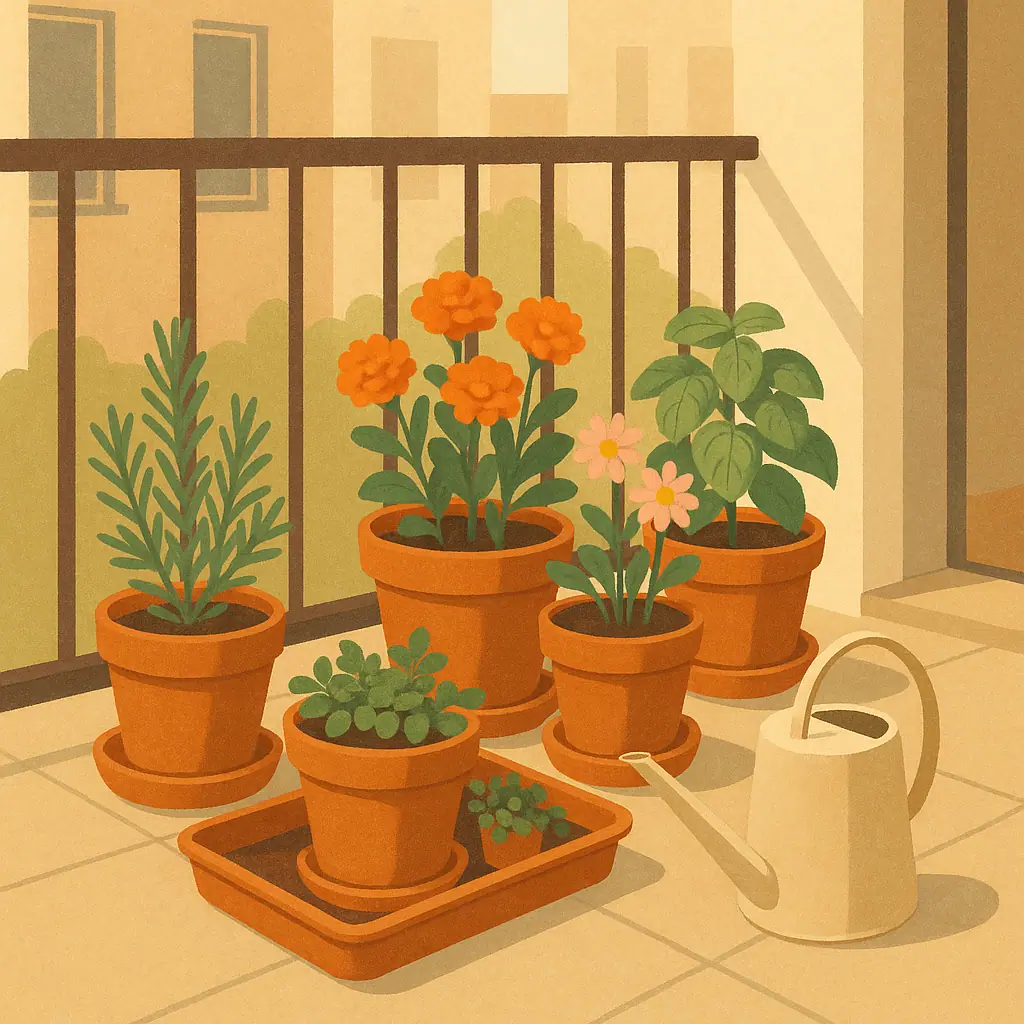
- Use a catch tray for groups: place several small pots inside one larger waterproof tray when you need extra protection.
- Review after rain: storms can fill saucers even when you did not water. Empty standing water when it is safe to do so.
Common Drainage Mistakes to Avoid
The most common mistake is solving the neighbor problem by sealing the plant problem. A pot with no drainage may stop drips for a while, but it also makes overwatering much harder to correct. For most beginners, a draining inner pot inside a waterproof outer cachepot is safer than planting directly into a sealed container.
Another mistake is using oversized watering cans on small balcony pots. A strong pour can splash soil, fill saucers too quickly, and send water across the floor before you notice. Smaller pours are easier to control.
- Leaving saucers full: a saucer is a catch system, not a permanent pond.
- Using trays you cannot reach: if a tray is hidden behind furniture, you will not empty it often enough.
- Letting vines or leaves hang below the rail: water can travel along foliage and drip outside the balcony.
- Ignoring building rules: some buildings restrict railing planters, hanging baskets, or anything that drains over an edge.
- Watering at the hottest moment: plants may be stressed, but fast evaporation and dry mix can make watering messier.
Pros and Cons of Common Drip-Control Options
Separate saucers are easy to inspect
You can see when water has collected and empty the tray before it reaches the rim.
Group trays protect larger areas
A boot tray or shallow waterproof tray can catch runoff from several small herb pots at once.
Slow watering improves control
Two gentle passes help the mix absorb water and reduce sudden overflow.
Saucers can hold too much water
If you forget to empty them, roots may sit above standing water after heavy watering or rain.
Self-watering planters still need checks
Overflow holes, reservoirs, and fill tubes vary by design, so read the product instructions before using one on a balcony.
A Simple Balcony Drip Checklist
Use this checklist before watering day, especially if you just added a new planter or moved pots around.
- Is every pot sitting over a saucer, tray, or waterproof catch area? If not, add one before watering.
- Can the saucer be emptied without lifting a heavy pot? If not, switch to a wider tray or use a small siphon-style bulb made for plant care.
- Are pots set back from rail edges? Move them inward so overflow stays on your balcony.
- Does the mix absorb water slowly? Water in two rounds instead of one heavy pour.
- Did rain fill the trays? Check after storms, not just after your own watering.
- Do building rules allow your planter style? Review lease, condo, or balcony guidelines before using railing boxes.
When to Get Extra Help
Ask your building manager before installing railing planters, hanging baskets, or any setup that extends beyond your balcony. Even a lightweight-looking planter can be treated differently when it hangs over shared space.
For plant health questions, a local nursery or extension office can help you choose better potting mix, container size, and watering frequency for your climate. Local advice matters because wind, heat reflection, and rainfall patterns change how quickly balcony pots dry.
Frequently Asked Questions
Can I use a pot without drainage holes to stop balcony drips?
It may stop drips, but it also raises the risk of soggy roots. A safer beginner option is a draining nursery pot inside a waterproof decorative outer pot.
How often should I empty planter saucers?
Check them after each deep watering and after rain. If water is still standing once the pot has finished draining, empty the saucer when practical.
What is the best tray for several small balcony pots?
A shallow waterproof tray with a raised rim is usually easiest. Choose one wide enough to catch runoff while still letting you reach and empty it.
What should I do if water already dripped downstairs?
Pause watering, move the pot inward, empty the saucer, and adjust your setup before the next watering. If it affected a neighbor or shared area, communicate politely and check building rules.
Final Thoughts
Keeping balcony planters from dripping downstairs is mostly about giving water a clear, controlled path. Let the pot drain, catch the runoff, water slowly, and keep containers away from balcony edges.
Start with one pot and one tray, then watch what happens during a normal watering and after the next rain. Once you understand that pattern, your balcony garden becomes easier to care for and much easier to live with.