Grow bags vs plastic pots is a common question when a patio garden starts to feel real. Both can grow healthy herbs, flowers, and compact vegetables, but they behave differently in heat, wind, watering, storage, and long-term use.
The better choice is not one universal container. It is the container that fits your patio surface, your watering routine, your plant size, and how often you need to move things around. A sunny balcony with strong afternoon wind may need a different answer than a sheltered patio corner beside the kitchen door.
This guide compares grow bags and plastic pots in plain language so you can buy fewer wrong containers and start with a setup you can actually maintain.
Why Grow Bags vs Plastic Pots Matters
Containers are the root zone, water reservoir, and support system for a patio plant. In a garden bed, roots can spread into surrounding soil. In a pot or bag, everything depends on the container volume, drainage, and how fast the mix dries.
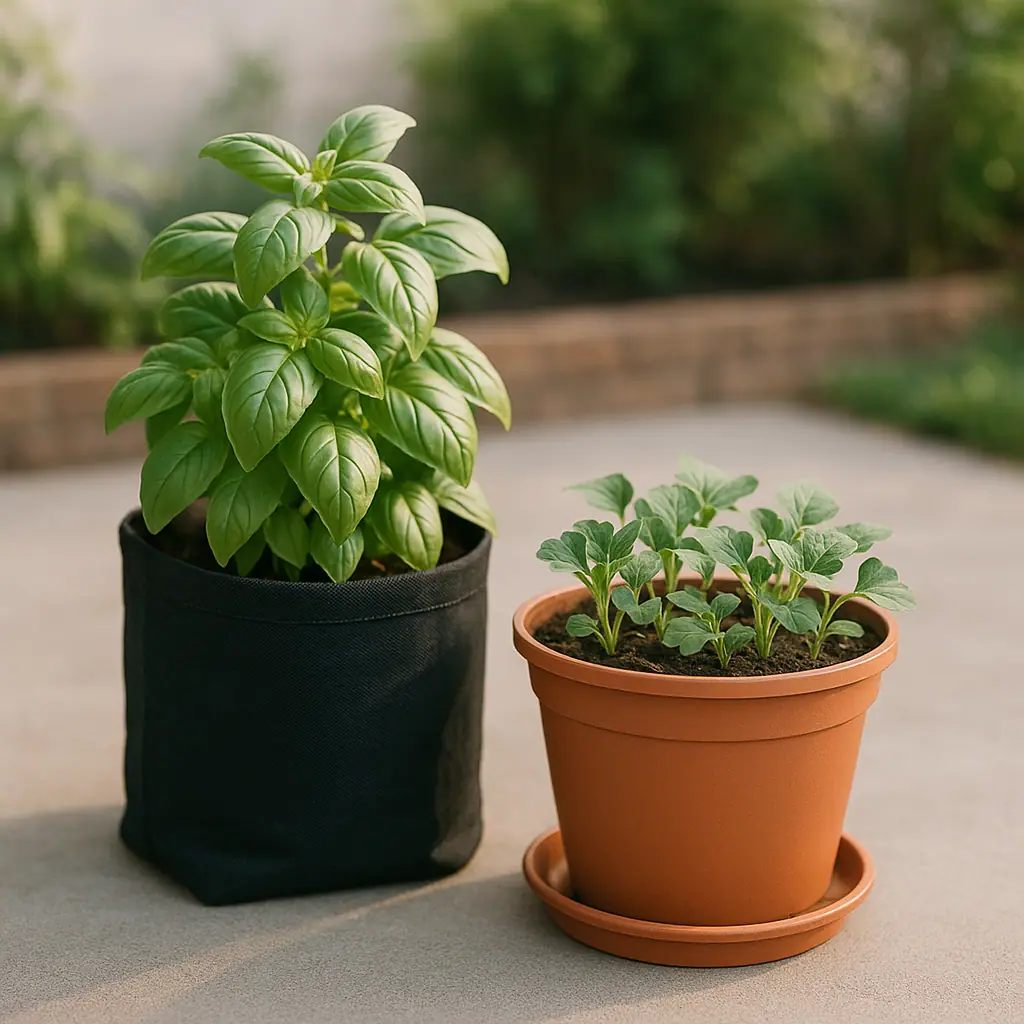
Grow bags are usually made from breathable fabric or similar flexible material. Plastic pots are rigid, widely available, and often easier to fit into saucers, plant stands, and decorative layouts. Neither option removes the need for good potting mix and drainage.
Start With Containers, Soil, and Drainage
Before comparing materials, check the basics. A patio container should hold enough potting mix for the plant, allow excess water to leave, and sit safely on the surface below it. That applies to both fabric grow bags and plastic pots.
The University of Maryland Extension notes that drainage is critical for container success and explains that many container types can work when they are sized and drained properly. Its guide to types of containers for growing vegetables is a useful reference when comparing practical container choices.
Grow bags usually breathe more
Fabric sides let more air move around the root zone. That can help excess moisture leave the container, but it also means the potting mix may dry faster in sun, heat, and wind.
Plastic pots usually hold moisture longer
Plastic sides do not breathe the same way fabric does. That can make watering easier for beginners who forget a day, but it can also keep a wet mix damp too long if drainage holes are poor or the plant is overpotted.
What to Check First for Grow Bags vs Plastic Pots
Start with the place where the container will live. A container that works on a ground-level patio may be awkward on a narrow balcony. A bag that is easy to fold and store may not look as tidy beside a seating area. A rigid pot that looks polished may be heavier and harder to move once filled.
- Sun and wind: exposed patios dry containers quickly, especially fabric bags and small pots.
- Drainage path: make sure water can leave the container without staining, dripping on neighbors, or pooling under roots.
- Plant size: tomatoes, peppers, small shrubs, and mixed flowers need more root room than a few herbs.
- Mobility: handles on grow bags help, but a filled bag can still be heavy and flexible. Plastic pots are sturdier but may need a caddy.
- Storage: empty grow bags fold flat, while plastic pots stack but still take up space.
How to Choose Step by Step
Use this simple sequence before buying a full set. It keeps the decision practical instead of turning it into a container debate.
- Pick the plant first: choose the herb, vegetable, flower, or small ornamental you actually want to grow.
- Check mature size: match the container volume to the plant's mature root needs, not the tiny plant you bring home.
- Map your watering routine: if you travel, forget watering, or get strong afternoon sun, a fast-drying grow bag may need extra attention.
- Look at the floor below: balconies and upper patios may need saucers, trays, or careful watering so runoff does not become a problem.
- Try one before switching everything: test a grow bag and a plastic pot with similar plants for a few weeks in your own light.
- Adjust with mulch or placement: moving a container into morning sun or adding a light mulch layer can change how quickly it dries.
Common Container Mistakes to Avoid
The first mistake is choosing by appearance alone. A neat plastic pot is not helpful if it has no drainage holes. A large grow bag is not automatically easier if you cannot keep up with watering in hot weather.
The second mistake is comparing container material while ignoring potting mix. A heavy garden soil can perform badly in either container. For most patio setups, use a fresh potting mix labeled for containers and leave space below the rim for watering.
- Buying too small: small containers dry quickly and restrict roots sooner.
- Skipping saucer planning: drainage is good, but uncontrolled runoff can create stains or neighbor issues.
- Overwatering plastic pots: a rigid pot can stay wet longer, especially in shade or cool weather.
- Underwatering grow bags: breathable sides can dry quickly during summer afternoons.
- Moving containers when soaked: wet potting mix is heavy, and flexible bags can be awkward to lift safely.
Pros and Cons of Grow Bags
Good airflow
Fabric sides allow more air movement around the root zone and can help excess moisture leave the mix.
Easy off-season storage
Empty bags fold down, which helps renters and small-space gardeners with limited storage.
Useful for trial gardens
They make it easier to test a temporary tomato, pepper, herb, or flower setup without committing to heavy planters.
They dry faster
Grow bags may need closer watering checks in hot, sunny, or windy patio conditions.
They can look casual
Some fabric bags look more practical than decorative, especially beside finished patio furniture.
Pros and Cons of Plastic Pots
Plastic pots are often the easiest starting point because they are inexpensive, common, and available in many sizes. They also work well with saucers and decorative outer pots, which can matter on balconies and patios where runoff needs control.
The tradeoff is that plastic pots can hold moisture longer than expected. In shade, cool weather, or oversized containers, that can make it easier to overwater. Black plastic can also heat up in strong sun, so placement matters.
- Best for: tidy layouts, saucers, plant stands, decorative groupings, and beginners who need a slower-drying setup.
- Watch for: weak drainage holes, brittle thin plastic, overheating on hot hardscapes, and pots that are too small for the plant.
- Simple upgrade: use pot feet or a tray plan so water can drain without leaving the pot sitting in a puddle.
A Simple Grow Bags vs Plastic Pots Checklist
Before you buy, answer these quick questions. They help make the choice less about trends and more about your actual patio.
- Do you water consistently? If yes, grow bags are easier to manage. If not, plastic may be more forgiving.
- Is the space windy? Wind increases drying, so grow bags may need larger sizes or more frequent checks.
- Do you need a polished look? Plastic pots usually blend more easily into decorative patio layouts.
- Do you need storage flexibility? Grow bags fold away when empty.
- Are you growing edibles? Choose food-safe, clean containers and verify plant size, sun, and local guidance.
- Will water drip below? Plan saucers, trays, or careful watering before planting.
When to Get Extra Help
Ask a local nursery or extension office for help when you are growing food crops, placing heavy containers on a balcony, or dealing with unusual heat, wind, or pest pressure. Local climate changes the watering answer more than container material does.
Do not guess about balcony weight limits, pet-safe plants, edible container safety, or local invasive plant guidance. A small patio garden is still connected to your building rules and local growing conditions.
Frequently Asked Questions
Are grow bags better than plastic pots?
Grow bags are better when you want airflow, quick drainage, and easy storage. Plastic pots are better when you want a tidier look, slower drying, and easier saucer control.
Do grow bags need more water?
Often, yes. Breathable sides can dry the potting mix faster, especially on sunny or windy patios. Check moisture more often until you learn the pattern.
Can I use plastic pots for vegetables?
Yes, if the pot is clean, appropriately sized, drains well, and is suitable for edible growing. Check reliable local or manufacturer guidance when you are unsure.
Which is easier for a beginner patio garden?
Plastic pots are often easier for a first tidy setup, while grow bags are useful for flexible edible trials. Start with one or two containers before buying a full set.
Final Thoughts
Grow bags vs plastic pots is really a question about water, space, and habit. Choose grow bags if you want breathable, flexible containers and can check moisture often. Choose plastic pots if you want a more structured layout, better saucer control, and a setup that dries more slowly.
For a first patio garden, the safest answer is a small test. Try one grow bag and one plastic pot with plants that have similar needs. After a few weeks of sun, wind, and watering, your own patio will make the better choice much clearer.